
Key Takeaways
- Check government travel notices prior to any trip and revise plans often. Risks may shift swiftly and in a localized way.
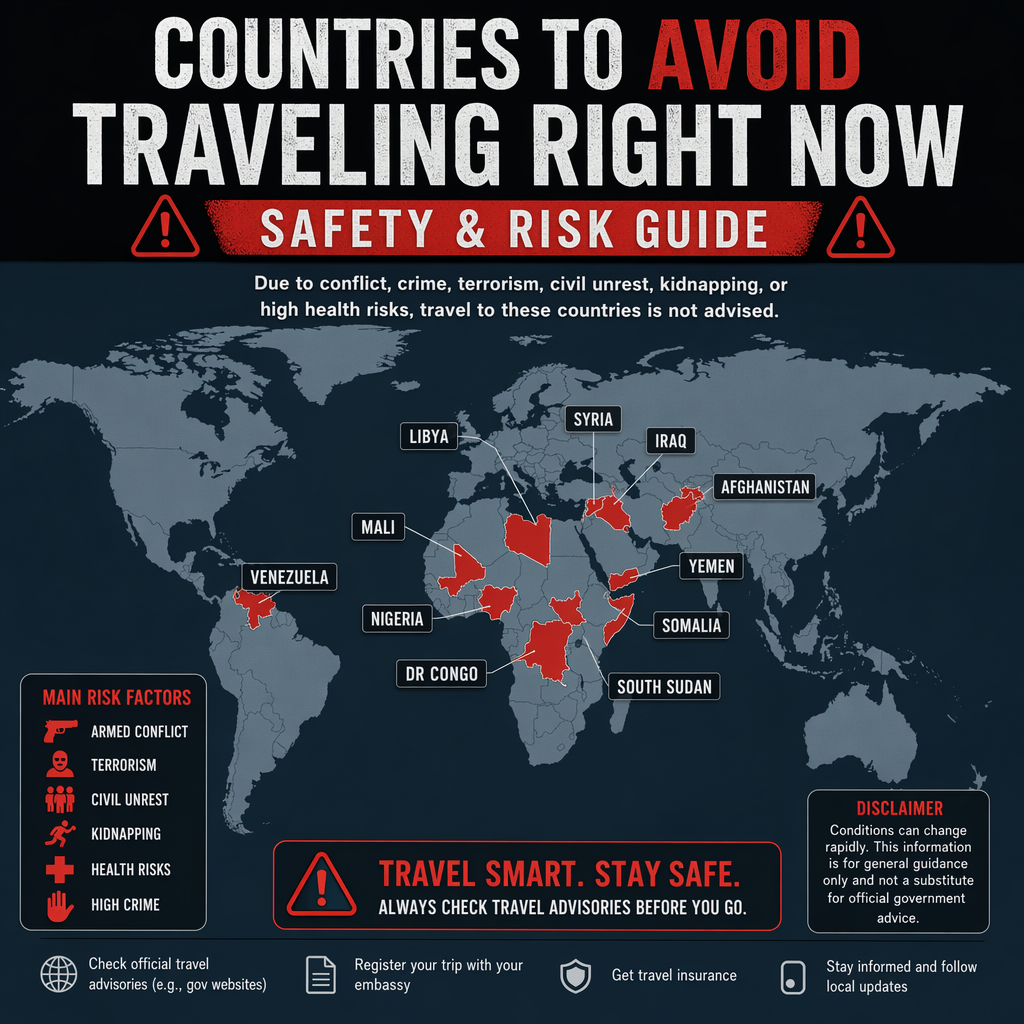
- Avoid nonessential travel to Level 4 countries, including Afghanistan, Syria, and Libya, and obtain institutional approval for locations listed as “reconsider travel.”
- Consult several sources such as government advisories, local news, and international agencies to cover real-time threats and localized risks.
- Get practical. Register with embassy services, purchase robust travel and evacuation insurance, and put together an emergency plan.
- Secure your digital and health assets with a VPN, two-factor authentication, required vaccines, and a personalized medical kit.
- Fight typical traveler bias by re-evaluating the dangers for each trip, checking details with government or official websites, and seeking expert advice when making high-risk travel choices.
Safe or risky Countries you should avoid traveling to right now addresses where travel presents increased risk because of conflict, crime, health outbreaks or volatile leadership. Instead, the list prioritizes immediate, measurable factors like travel advisories, ongoing conflicts, elevated violent crime rates per 100,000, and disease outbreaks. It singles out countries with limited medical access, few evacuation possibilities and broken travel connections.
Each entry contains current advisory level, main risks, and practical considerations like border closures and flight suspensions. The goal is clear: provide factual context to help readers weigh options and plan alternatives. The core of the post dissects areas, contrasts danger statistics, and recommends alternate paths or timing for travel.
Why Travel Safety Matters Now
Travel safety matters now because more countries carry Level 4 warnings advising against travel for clear reasons: unrest, violent crime, health threats, kidnapping, terrorism, wrongful detention, or other hazards. This increasing number of high-risk advisories shifts how we plan trips. Understand if your point of travel is within a general national caution or if there are only designated areas impacted.
There are safe pockets in some countries and travel can be carefully managed. Others are just unsafe. That nuance is important for students, transients, and professionals deciding on where to study, work, or play.

World chaos and terrorism are centered in a few states but cross borders. Afghanistan, Syria, and Ukraine are just a few of the most recent hot spots where armed conflict, targeted attacks, and fluctuating front lines have rendered travel dangerous. Violent crime can surge unexpectedly in certain cities or regions,
such as kidnappings associated with organized groups or opportunistic criminals in regions with depleted policing. Consulting U.S. State Department travel advisories and risk classifications is mandatory. Advisories spell out the specific causes for caution and identify inaccessible areas, so check them prior to reserving airfare or accommodation.
Natural disasters and health crises pile on another layer. Nations such as Haiti and Yemen experience repeated storms, earthquakes, or public health disruption that compromise services and emergency care. Middle East infrastructure could be overwhelmed in war, boosting medevac likelihood. When a health system is overwhelmed, routine care and emergency response are no longer dependable. That raises risk and cost for travelers.
Hazards can shift rapidly. A city that was stable one week might experience protests, checkpoints, or surprise curfews the following week. Flexible plans allow you to postpone or redirect travel. Stay informed through multiple sources: official advisories, local news, and contact points like your embassy.
Be aware of local laws and requirements, such as OFAC-related rules or restrictions related to Countries of Concern. Noncompliance could result in fines, denied entry, or trouble with the law. For students or volunteers, verify support from your institution and plans for emergencies.
Keep your information up to date, have a map of safe versus unsafe areas, and have backup plans such as alternate flights and medical evacuation coverage.
Decoding Official Travel Advisories
Official travel advisories condense known risks and provide a rough feeling for whether a journey makes sense. They employ a graded scale of risk from Level 1 (Exercise Normal Precautions) to Level 4 (Do Not Travel) for various countries and often regions within countries. Advisories rely on crime data, terrorism calculations, health issues, and diplomatic capability, and they fluctuate as situations evolve.
1. Exercise Precautions
Level 2 advisories mean you should keep your wits about you in specific locations. Think regions of India or Mexico where petty theft or localized protests are the norm. Maintain a clean itinerary with complete contact information, and sign up with STEP so the nearest embassy can contact you.
Read local news and embassy alerts every day because quick shifts, such as strikes and roadblocks, happen regularly. Book through reputable tour companies or licensed guides and ensure that there is a consular presence on the ground who can help if your assistance is required.
2. Increased Caution
Level 3 regions require increased caution. Consider areas with cartel violence or periodic protests like certain regions of Colombia or occasionally Jamaica. STEER CLEAR OF DEMOS AND KNOWN CRIME HOTSPOTS. Travel with robust travel insurance covering emergency medical evacuation, as hospitals can be sparse. Prior to traveling, review recent situation reports and U.S. State Department notes to try to get a sense of how the violence manifests and when and where at least some travel is safe. Know backup contacts and an exit strategy.
3. Reconsider Travel
Advisories to ‘reconsider travel’ typically indicate war, political unrest or strict limitations such as Lebanon, Russia and Venezuela. Dangers comprise wrongful detention, inadequate rescue possibilities and weak infrastructures. For institutional or work travel, pre-clearance from entities like an organization’s risk committee or MIT’s risk policy, if it applies, is essential. Formalize a security plan, verify workers’ compensation and insurance coverages, and be familiar with evacuation and local medical options.
4. Do Not Travel
Level 4, ‘Do Not Travel,’ includes countries like Afghanistan, Syria, Libya, or parts of Yemen that have extreme threats. These regions tend to have limited dependable embassy assistance, ongoing fighting, and terrorist organizations. Kidnapping, sanctions, and violent attacks are actual risks, and insurance and government assistance might not be accessible. Bypass unnecessary travel, and if it cannot be avoided, make certain any needed risk waivers or special insurance are onboard.
Beyond Government Warnings
Government warnings provide an overview, but they may be slow to update in rapidly changing situations or fail to capture localized dangers. Putting all of your trust in a single source can leave travelers blind to local incidents, targeted fraud, or other hacks.
Beyond official government advisories, I rely on a blend of embassy notices, local press in the destination’s language or English digests, international bodies, and real-time feeds from trusted organizations. Create a shortlist of unofficial but dependable sources: local press, expat boards run by authenticated users, and local NGO newsletters. Consult them on a daily basis when itineraries shift.
Political Instability
Countries with coups, massive strikes or ongoing protests like Sudan and Belarus can go from business-as-usual to unsafe in a hurry. Borders will close, curfews will materialize on short notice and transport hubs will close down. Cell calls might be throttled and flights delayed or canceled. Keep an eye on embassy updates and commercial flight status pages. No travel during elections, big anniversaries, or scheduled mass demonstrations. If you’re forced to go, be registered with your embassy and have flexible tickets and backup accommodation.
Health Crises
Other locations battle outbreaks of tropical diseases or have insufficient hospital capacity. Cross-check vaccination lists and bring medicines, personal first-aid kit, copy of prescriptions, and more. Think about evacuation insurance that includes air medevac and international hospital care, as your typical policies may fall short. In addition to government warnings, read recent situation reports from WHO and regional health bodies and follow local clinic notices. Pack rapid tests if applicable and consider limited pharmacy access in remote locations.
Natural Disasters
If you’re in an earthquake, hurricane, or tropical storm prone area—some parts of the Caribbean, Japan, or California—be sure to do a little extra prep. Visit local disaster plans and highlight evacuation routes and shelters on a map. Subscribe to emergency alert systems where available and carry basic supplies: water, a torch, a power bank, and a compact first-aid kit. Travel to recently devastated areas is best avoided until transportation, electrical, and water infrastructure is restored and stable.
Economic Conditions
Economic turmoil can imply scarcities, strikes and increasing petty crime. Have some extra cash and at least one back-up card in case ATMs fail. Stay on top of currency trends and any sanctions that may impact banking. Look beyond government warnings.
| Destination type | Banking reliability | Shortage risk | Crime trend |
|---|---|---|---|
| Stable economy | High | Low | Low |
| Emerging market | Medium | Medium | Medium |
| Sanctioned/volatile | Low | High | High |
The Traveler’s Blind Spot
The traveler’s blind spot identifies locations and customs travelers miss. It spans areas overlooked by guides but still dangerous and personal prejudices that hide new dangers. Many readers straddle curiosity with caution, this section demonstrates what to watch for and how to mitigate unnecessary risk.
Normalcy Bias
Normalcy bias is the tendency to believe that things will always continue as they have been. We rely on previous trips and standard reports, so we can overlook indicators of increasing crime, political instability, or emergency travel restrictions. A beach town that was once safe can transform in a few months following economic hardship or local unrest, and assuming otherwise is a surefire way to become stuck or require a lifeboat evacuation.

Challenge assumptions: check recent local news, embassy notices, and travel advisories within 30 days of departure. Build a short checklist: current advisory level, recent incidents, local curfew rules, nearest medical care in kilometers, and evacuation routes. Use that checklist before every trip, even to a familiar city.
Overconfidence
Egotism causes seasoned travelers to be reckless. Language confidence or having been before might seduce you into disregarding local laws or trespassing in restricted areas. Honor local regulations, dress codes, and attendance caps. Those rules can shift post new policies or scaling tensions. Institutional ratings, like university or company travel policies, provide explicit risk levels and what to do.
If you are traveling somewhere complicated or potentially dangerous, reach out to an expert evaluation group, such as security companies, in-house travel departments, or accredited travel risk managers, to obtain customized risk reduction strategies. Small things like signing up with an embassy and sharing an itinerary reduce risk. Recognize skills, but each trip is new.
Misinformation
Inaccurate or old travel data travels quick on the web. Social posts and forums can still reflect stale conditions or one-off experiences masquerading as the norm. Verify facts with official sources: government travel advisories, embassy alerts, and export-control updates when relevant. Don’t let hearsay dictate your key route or stay decisions. Follow official updates and reliable newsletters. Cross-check evacuation exits, local emergency numbers, and health advisories. A single trusted source tends to save both time and lives.
Proactive Safety Measures
Proactive steps minimize risk and empower travelers when the situation shifts. The tips below address how to prepare yourself, both physically and digitally, before you travel and what to do while traveling.
- Register travel plans with your embassy or consulate.
- Research local laws, protest activity, and travel advisories.
- Buy comprehensive travel and evacuation insurance in your currency.
- Have digital and physical copies of passports, visas, and insurance.
- Forward an itinerary and check-in times with a trusted contact.
- Pack a travel safety kit that includes first aid supplies, prescription medications, water purification tablets, a flashlight, and a portable charger.
- Establish strong authentication on accounts and download a reliable VPN.
- Learn basic local phrases and emergency numbers.
- Map out detour routes and local meeting places for your party.
- Have cash in small bills and hide backups in separate locations.
Digital Security
Consider a trusted VPN on phones and laptops to encrypt traffic, particularly on public Wi-Fi. Instead, opt for mobile hotspots or tether to your phone. Disable automatic Wi-Fi connection and Bluetooth when not in use. Turn on two-factor authentication for email, banking, and cloud storage. Use an authenticator app over SMS when possible.
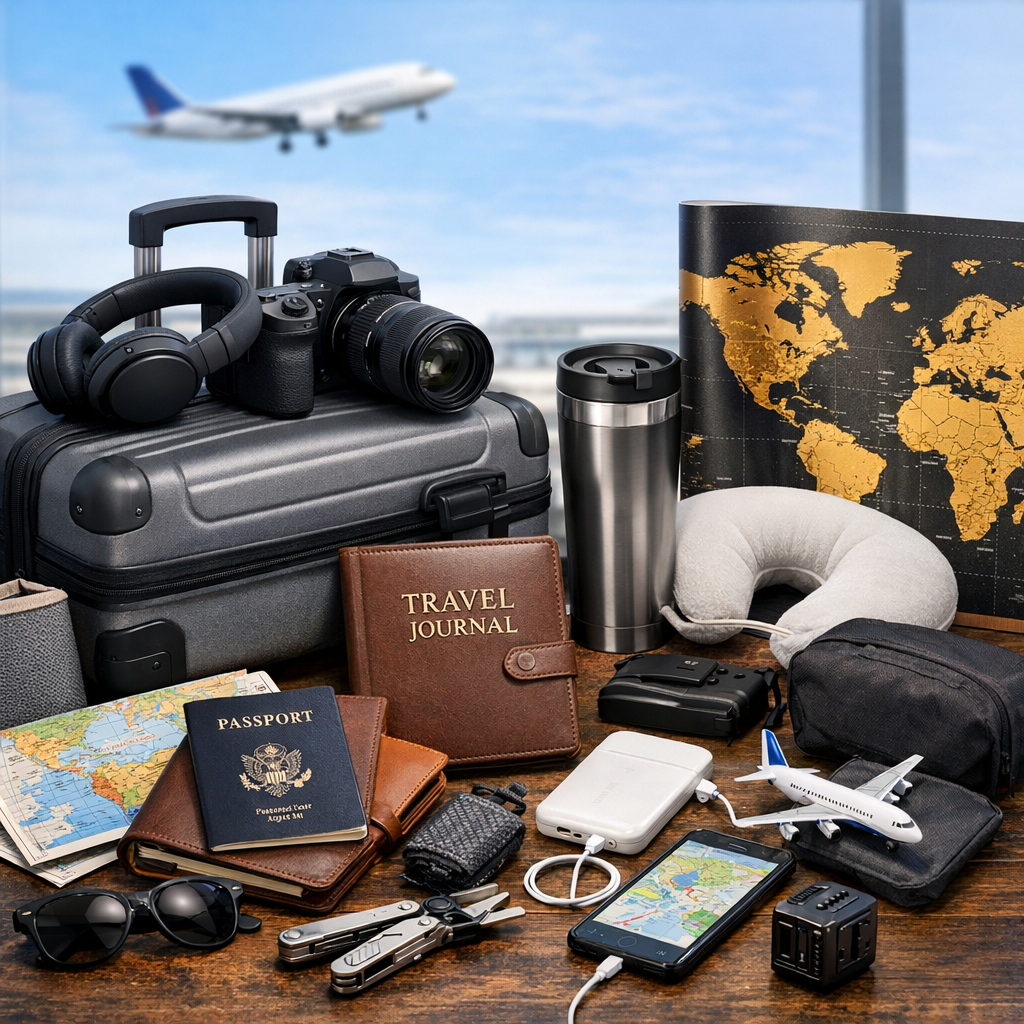
Back up passports, tickets, and medical records to encrypted cloud storage and carry offline encrypted copies on a secure USB. Watch for increased surveillance or targeted cyberattacks in specific states. Don’t discuss sensitive matters on local networks in countries renowned for hacking or monitoring. Avoid public computers, never access important accounts on shared devices, and clear history and password caches if you have to!
Health Preparations
Schedule a pre-travel clinic appointment 4 to 6 weeks before you leave to go over vaccinations and regional health warnings. Pack a personalized medical kit that includes prescription meds in original containers, over-the-counter pain relievers, antidiarrheals, bandages, antiseptic, and oral rehydration salts. Pack a basic thermometer and extra eyeglass or contact supplies.
Research local health risks such as water safety, endemic diseases, and seasonal air quality, and plan accordingly by bringing bottled water, mosquito nets, or masks for pollution. Secure travel health insurance that includes in-hospital care overseas and emergency evacuation. Check network hospitals and repatriation conditions.
Emergency Plans
Create a checklist: emergency contacts, embassy info, insurance numbers, and duplicate documents. Locate a minimum of two safe meeting points and annotate several evacuation paths on offline maps. Conduct a quick drill with travel partners so you’re all on the same page about the strategy and responsibilities. Save copies of important documents in the cloud, on your phone, and with a trusted person back home.
Essential Safety Resources
This section outlines critical resources to utilize prior to and while traveling to gauge risks, seek immediate assistance, and communicate clear plans.
Government travel advisories and consular pages check country pages from your government and the destination’s foreign ministry for entry rules, security levels and evacuation notices. Use these sites to sign up travel plans when available. They frequently provide listings of local hospitals and safe contact points. Examples include updated travel advisories, local curfew notices, and evacuation route maps.
Interactive global maps and live notification applications. Access interactive maps of incidents, weather, and transport outages. Download official apps for live alerts and situation reports, like government alert apps or trusted international services that push out notifications of unrest, natural disasters, or border closures. Toggle crime reports, health outbreaks, and road closures with layered maps.
Local embassy and consulate contacts. Put together a table of embassy phone numbers, 24-hour lines, and in-country rescue services contacts for each destination. Note addresses and office hours, plus social media handles or WhatsApp lines if included. Save online and hard copies. Example table headers: Country | Embassy Phone | 24/7 Line | Local Rescue | Address | Notes.
Critical safety information. National emergency numbers for police, ambulance, and fire by country and nearest hospitals with English-speaking staff. This includes urgent care clinics and air-medical evacuation providers. Store locations so maps can direct you fast. For example, EU emergency number 112 versus country-specific lines.
Insurance and assistance contacts. Write down policy emergency numbers, claim emails, and contact procedures. Save key emails like insurance@mit.edu and exportcontrolhelp@mit.edu for fast reference in case your institution or insurer provides guidance. Export emails to your contacts and back them up offline.
Local transit and lodging checks. Save local cab company contacts, approved shuttle lines and host or hotel emergency protocols. Find out if accommodations have safe rooms, generators or evacuation-trained staff.
Personal document and communication backups. Save encrypted versions of your passport, visas, and health records. Share your itinerary with a trusted contact and leave hard copies at home. Check out offline maps and download country guides to use without cell service.
Conclusion
The safe travel map continues to shift. Consult government travel advice and local news. Preview recent crime and health reports. Chat up the locals. Bring a simple first-aid kit and photocopies of important documents. Tell someone back home your itinerary and schedule check-ins. Opt for routes and accommodations that have definitive ratings and images.
Carry basic functional gear and a local SIM or roaming phone. Keep cash divided and set bank alerts for unusual fees. Prefer travel during the day and in public spaces for new arrivals. Little things such as these trim dangers and maintain journeys flying. Here’s a list of places to go and to avoid right now. Begin with the newest travel safety alerts and a brief risk checklist.
Frequently Asked Questions
What does a “travel advisory” actually mean?
A travel advisory is an informational statement issued by a government regarding risks to safety in a country or region. It aggregates hazards such as crime, unrest, health, or natural disasters and provides useful advice for travelers.
How do I check reliable travel advisories?
Consult official government sources, such as your own country’s foreign affairs or state department, and trusted international bodies. Compare various sources for agreement and recent changes.
Are all countries labeled “risky” unsafe to visit?
No. Advisories are region specific and can be precautionary. Certain regions can be dangerous and surrounding regions safe. Read the guidance at a detailed level, not just headline level.
What factors should I consider beyond official warnings?
Think about local crime trends, healthcare and transport quality, recent incidents, and cultural or political tensions. Talk to locals, expats, and recent travelers for context.
How can I reduce personal safety risk while traveling?
Be informed, sign up with your embassy, purchase travel insurance, maintain digital and hard copies of documents, steer clear of dangerous locations after dark, and leave your itinerary with a trusted confidant.
When should I cancel or postpone a trip?
Cancel if officials recommend against all travel or local services are not operating, or if your safety cannot be reasonably addressed. Don’t let headlines and inconvenience get in the way of real present danger.
What resources help if an emergency happens abroad?
Entrust your embassy or consulate, local emergency numbers, travel insurance hotline, and reliable local contacts. Have offline maps and medication information available if you need a fast hand.