
- Key Takeaways
- How AI Redefines Security
- Streamlining Security Operations
- Beyond the Checkpoint
- The Data Powering AI
- Navigating Ethical Dilemmas
- The Future of Secure Travel
- Conclusion
- Frequently Asked Questions
- How does AI improve travel security?
- What are common uses of AI at airports?
- Can AI help prevent cyberattacks in travel systems?
- Is personal data safe in AI-driven security systems?
- Does AI replace human security staff?
- What challenges does AI face in travel security?
- How will AI shape the future of travel security?
Key Takeaways
- AI fortifies travel security in multiple ways by enhancing threat detection, expediting identity verification, and facilitating rapid response to incidents.
- AI-powered systems assist airports in detecting suspicious activity, optimizing baggage checks, and strengthening perimeter security for secure travel hubs.
- Predictive analytics and real-time data help optimize resources and adjust security protocols to align with emerging threats and passenger flow.
- Automation reduces manual errors, boosts passenger throughput, and enables security personnel to concentrate on important tasks. This enhances both effectiveness and the traveler experience.
- Ethical considerations like privacy, algorithmic bias, and accountability will be key to building trust and ensuring fair treatment for all passengers.
- Continued partnership and iteration will be vital as airports, governments, and technology collaborators unite to address changing global security demands with next generation AI.
AI’s role in travel security measures is to help spot risks, track data and find threats faster than ever before. AI can scan faces, flag fakes, and spot weird patterns in travel data. Many airports and borders employ AI to sift through large data sets, monitor live streams, and assist teams in maintaining vigilance. AI can reduce wait times and streamline checks for travelers. It assists teams in identifying issues before they escalate and provides live alerts so personnel can respond quickly. This post covers the key ways AI is influencing travel security. Readers can witness how these modifications help maintain journeys safe and fast for all.
How AI Redefines Security
AI is transforming security in travel hubs. Expanding airports and jammed terminals have made it impossible for human teams to identify every threat. AI tools provide a different array of possibilities, from pattern checks in the moment to immediate alerts and improved authentication. These systems help reduce errors that occur when personnel monitor screens for too long and they ensure threats are detected quickly. Travelers and airport teams around the globe now depend on these intelligent solutions to maintain worry-free journeys.
1. Threat Identification
AI-driven models parse camera feeds and data streams to identify red flags before they escalate. Video analytics can detect abnormal behavior, such as someone abandoning a bag or behaving abnormally. It aids guards in intervening before a genuine threat escalates. These automated monitoring tools will even send out real-time alerts if an item, such as a suitcase, is abandoned or left alone for too long. Our predictive AI scans historical incidents and fresh intelligence to anticipate where danger could strike, putting your teams a step ahead of the threat.
2. Baggage Screening
How AI is reimagining security. Employing advanced imaging, these tools see them even if they’re buried deep in a bag. Some airports in Europe utilize these scanners already, and others are considering it. Real-time CT scans tested at a few airports accelerate checks and reduce lines. AI learns whether certain bag patterns are dangerous so the process can be quicker and safer.
3. Perimeter Defense
AI cameras track along bustling airport fences, detecting intrusions or unusual activities immediately. They assist in tailing pedestrians or cars attempting to enter where they shouldn’t. Guards know what’s going on and can act fast with embedded real-time alerts. Physical walls and smart implements stand shoulder to shoulder, primed for fresh security trials as airports expand.
4. Predictive Analytics
AI analyzes large amounts of travel data to predict when and where threats might emerge. By learning when crowds are heaviest, security teams can deploy more people where they’re most needed. These systems identify emerging threat trends and assist leadership in adapting policies accordingly. The effect is more intelligent deployments of resources and less bottlenecking.
5. Identity Verification
Biometric checks such as face or iris scans let airports verify who’s flying, streamlining lines and security. Digital ID programs help accelerate check-ins. By AI-powered ID verification, we reduce fraud exposure by ensuring only the right people get in. These instruments protect sensitive information while ensuring the mechanism functions for all.
Streamlining Security Operations
AI helps bring order and velocity to travel security. With air travel expanding worldwide and security requirements more stringent, airports and transit hubs seek to keep people protected while minimizing delays. AI-powered surveillance and predictive analytics help define a more robust security ecosystem that can protect millions of travelers across the globe. By connecting AI to existing platforms, security teams can identify threats and resolve issues before they escalate while simplifying the process for all parties.
Faster Throughput
AI accelerates screening with smart scanners and facial recognition for ID verification. Automated bag scanners, already in use at several European airports, can scan bags quicker and with less human assistance. These systems operate 24/7 and do not get tired, so they flag things with consistent precision.
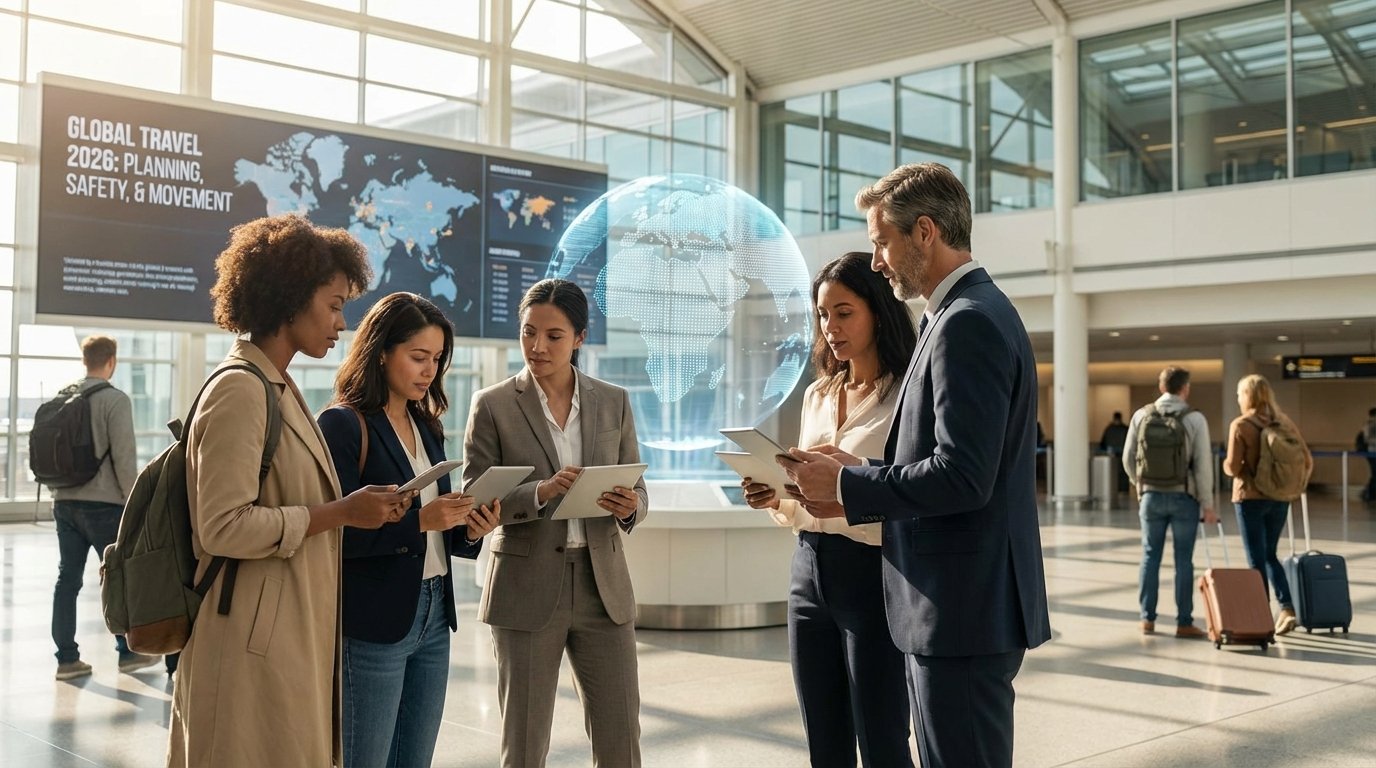
Real-time passenger flow data enables airports to redirect personnel to crowded areas, preventing long queues. AI software monitors the number of people in each zone and modulates lines to maintain momentum. Travelers wait less, which makes travel less stressful and more efficient. This strategy is critical in hectic terminals where tens of thousands pass through each terminal every day.
Fewer Errors
AI detects threats humans might overlook, such as during lengthy shifts. Systems learn from each scan, improving in identifying hazardous materials in baggage. For instance, when a bag is left too long in one spot, AI can immediately flag it and alert staff.
Gunshot detection systems provide an additional layer by detecting audio and transmitting location to authorities in seconds. Automated alerts from these tools help staff respond rapidly and minimize the chances of something slipping through the cracks. Training programs leverage AI to simulate actual threats, allowing staff to exercise and perfect their skills without real-world risk.
Human Augmentation
- Checklist for AI integration: * Define specific objectives for each AI utility.
- Connect AI to existing security tools.
- Test all systems frequently for precision and security.
- Provide training to staff on new tools.
- Update processes as threats evolve.
AI chatbots direct travelers, responding to inquiries and assisting their screening preparation, which allows staff to prioritize other high-pressure duties. Agents receive live AI updates, enabling them to make better calls during tense situations. When man and AI work shoulder to shoulder, the entire operation flows better, with each component leveraging its advantages.
Beyond the Checkpoint
AI impacts travel security far beyond that initial checkpoint. Security teams must monitor expansive airport terminals and surveillance from hundreds of camera feeds 24/7. AI-enabled cameras now highlight left bags or suspicious motion, so squads receive notifications without having to observe every single thing for themselves. These systems assist in reducing errors that occur when people gaze at screens too long. Some airports are using AI to scan bags quicker and with fewer mistakes, optimizing how they manage crowds and threats. As more locations depend on AI, certain nations and U.S. States have expressed concerns regarding privacy, imposing restrictions or even prohibiting these tools.
Digital Threats
With airports operating a mix of legacy and new digital systems, they are an obvious target for cyberattacks. AI tools analyze network traffic to detect unusual patterns that could indicate a breach, such as unexpected data spikes or abnormal login activities. Once a threat is detected, AI can prompt swift responses by blocking entry, isolating networks, or notifying the appropriate personnel. This makes it more difficult for sensitive passenger information, such as travel histories or payment data, to leak. AI facilitates collaboration, enabling airports and law enforcement to exchange threat intelligence and coordinate responses to cyber threats in real-time.
Supply Chain Integrity
Airports depend on consistent, safe supply chains for fuel, food, and baggage. AI monitors shipments, scans for tampered items, and inspects compliance at every checkpoint. If a package veers off course or sticks in some strange location, the system alerts. This helps identify threats before they become breaches. AI-powered data provides transparent insights into supplier behaviors and maintains an audit trail for later verification. These checks decrease smuggling and enable airports to comply with worldwide security requirements.
Incident Response
AI assists airports in responding to emergencies quickly. When an event occurs, the AI systems mine raw data from cameras, sensors, and logs to rate its severity. Take gunshot detection, which can locate a shot’s origin in seconds, enabling police to react with reduced lag. With automated tools, it’s effortless to report, track, and review incidents, maintaining an easy-to-access record of what’s occurred and when. AI-powered platforms connect security teams, accelerating communications and ensuring the whereabouts of key stakeholders.
The Data Powering AI
AI in travel security rides data. It requires numerous varieties and sources, frequently gathered on-the-fly, to function properly in high-traffic locations such as airports. Here’s a chart that displays the primary data behind training AI for travel security.
| Data Type | Examples |
|---|---|
| Images and Videos | Security camera feeds, X-ray images |
| Sensor Data | Motion sensors, RFID tags |
| Behavioral Data | Passenger movement, queue patterns |
| Biometric Data | Facial, fingerprint, iris scans |
| Historical Incident Logs | Past security events, threat reports |
| System Analytics | Equipment status, alarm logs |

Airports transit thousands daily. Human moderators stare at screens for hours, and they do make errors. AI helps by scanning images and video feeds more rapidly and with fewer errors. It can identify, for instance, unattended bags or anomalous behavior that individuals may overlook. AI bag scanning at Amsterdam Airport Schiphol, for instance, accelerates checks and detects threats more accurately. These tools can simultaneously notify personnel so that they can take action before issues escalate.
It turns out AI plays best with good analytics. By seeing what the system identifies, teams can adjust how AI detects threats. When AI detects a pattern that frequently results in a problem, developers can train the system to identify it earlier in the future. This feedback loop means AI improves and becomes intelligent, enabling airports to be more secure and reducing costly or dangerous errors.
Keeping all of this data requires strong security. Sensitive files such as biometrics or travel logs should be stored securely out of sight. Most airports encrypt the data at rest and have very tight access controls. This safeguards the traveling public and maintains trust.
Data privacy is a huge concern. Airports and tech partners adhere to strict regulations frequently established by local or international legislation. Others discuss bans or limits on AI surveillance, so teams need to verify new regulations before implementing new tools. Adhering to these rules while maintaining AI robustness requires continuous effort between tech, legal, and airport teams.
Navigating Ethical Dilemmas
While we love the many benefits AI in travel security brings, it evokes genuine ethical concerns. Privacy, bias, and accountability are major issues. To deal with them is to look beyond mere technical remedies. A lot of travelers concern themselves with what their data is being utilized for. There are issues of bias in automated systems and accountability when they make mistakes. Not for the first time, these issues are nothing new; consider the “trolley problem” in ethics, where all decisions involve tradeoffs and competing interests.
Privacy Concerns
- Regularly update security protocols to protect stored passenger data.
- Restrict data access to authorized personnel with strict monitoring.
- Use encryption for sensitive data during storage and transfer.
- Define retention periods to delete data.
Anonymization techniques mitigate risks by disrupting identification of personal identifiers with data. This strikes a good balance between the demands of security and the demands of privacy. Nearly two-thirds of consumers are concerned about the misuse of their information, so it’s critical to maintain these protections.
Passengers should be aware of how their information is collected, maintained, and secured. Open communication via posted notices and online FAQs builds trust and mitigates data breach risk. In 2023, seventy-seven percent of businesses experienced breaches involving their AI tools, highlighting the importance of transparency.
Establishing transparent policies on data storage and access guarantees tourists know what occurs with their data. Treat data as a treasure. This is why you should be cautious, ethical, and transparent in its usage.
Algorithmic Bias
AI can exhibit bias, potentially resulting in unjust consequences for certain travelers. Bias frequently emanates from the training data for these systems. Utilizing heterogeneous and balanced datasets is crucial to equitable AI decision-making.
Tracking and auditing algorithms aids in identifying prejudice before it escalates. Frequent inspections can identify issues before they impact individuals. Collaborating with external experts and community organizations introduces fresh perspectives and helps in mitigating issues.
Describing how AI decides is equally necessary. Technologies such as explainable AI (XAI), like DeepLIFT, can help make this process more transparent. Transparency enables us all to verify that mechanisms serve all travelers equitably.
Accountability Gaps
- Appoint independent oversight groups to review AI deployments.
- Require detailed logs of AI actions and decisions.
- Develop avenues for travelers to appeal or report problems.
To establish clear oversight is important. Let experts in law, ethics, and tech ensure responsible use of AI. Lawyers assist with laws and policies that vary from nation to nation.
We need transparency in AI’s decisions to build trust. Describing what is occurring and why, in simple terms, makes travelers comfortable and honored. A multidisciplinary approach that incorporates insights from ethics, philosophy, law, and the social sciences ensures AI in travel remains equitable and resilient.
The Future of Secure Travel
AI is transforming global travel security. It’s not just the speedier lines or reduced waiting. Airports are harnessing the new wave of AI tools to detect threats, verify travelers and even predict where risks may arise. Most airports are now utilizing biometric programs such as facial recognition and iris scans. These ways of doing things are going to be the norm everywhere, not just major hubs. For instance, airports in Japan, the UK and US already employ these instruments to verify IDs efficiently and with fewer mistakes. A number of U.S. Airports have adopted TSA Touchless ID and Digital ID, so more travelers are in store for this touch-free experience soon.

AI systems will have a larger presence in security checks, especially by 2025. Europe, the Middle East, and Asia are rushing to implement these instruments for domestic and international flights. They can verify travel itineraries, facial recognition, and baggage scans immediately. This assists TSA agents in spotting potential threats without impeding passenger traffic.
CT scanners are another trend to watch. These machines provide crisper, more detailed images of the inside of a bag. Combined with AI, they simplify identifying anything amiss. European airports are front-runners in deploying AI for bag scanning. The goal is simple: cut down on mistakes that happen when human staff spend long hours watching screens. AI does not get tired or overlook small details, which means safer journeys for travelers.
AI is disrupting how airports anticipate and respond to emerging threats. Predictive analytics and AI-powered surveillance systems leverage massive data sets to anticipate future threats. This enables airports to prevent issues before they occur, instead of simply responding once something is amiss. Working together is important. Airport operators, governments, and tech companies need to collaborate to make these transformations last. When they collaborate and contribute insights and information, the entire ecosystem becomes more secure for all travelers, wherever they take flight.
Conclusion
How AI defines the future of travel security. Intelligent systems detect threats quickly and empower teams to respond quickly. Facial scans and live scans keep lines short and catch threats early. Data helps identify patterns and fine-tune strategies, but demands caution with privacy. At airports, stations and borders, AI moves people safely and smoothly. Tech moves fast, so fresh concepts keep rolling in. All for safe, smooth, and respectful travel. To learn more about how AI transforms travel for the better, catch up on recent news and hear from industry insiders. Stay inquisitive and embrace change.
Frequently Asked Questions
How does AI improve travel security?
AI rapidly processes big data to identify dangers, vet passengers, and identify suspicious activity. This enables security teams to react more quickly and precisely, which makes travel safer and more streamlined for all.
What are common uses of AI at airports?
AI drives facial recognition, baggage screening, and predictive analytics for security checks. It aids in risk detection, crowd management, and efficient resource allocation across the airport.
Can AI help prevent cyberattacks in travel systems?
Indeed, AI observes network activity and identifies anomalous behaviors that could indicate cyber threats. Early detection enables travel operators to respond before data breaches or interruptions materialize.
Is personal data safe in AI-driven security systems?
Trusted travel security providers employ robust encryption and stringent privacy controls. The deployment of personal data remains ethically fraught, and vigilant oversight is crucial.
Does AI replace human security staff?
AI assists and doesn’t supplant humans. It performs rote work and sifts information, freeing humans to take on judgment and nuance.
What challenges does AI face in travel security?
AI grapples with concerns like data privacy, ethics, and algorithmic bias. Fairness, transparency, and accountability remain top of mind.
How will AI shape the future of travel security?
AI will still advance threat detection, automate processes, and personalize passenger experiences. Its continuous evolution promises to keep travel safer and easier across the globe.