
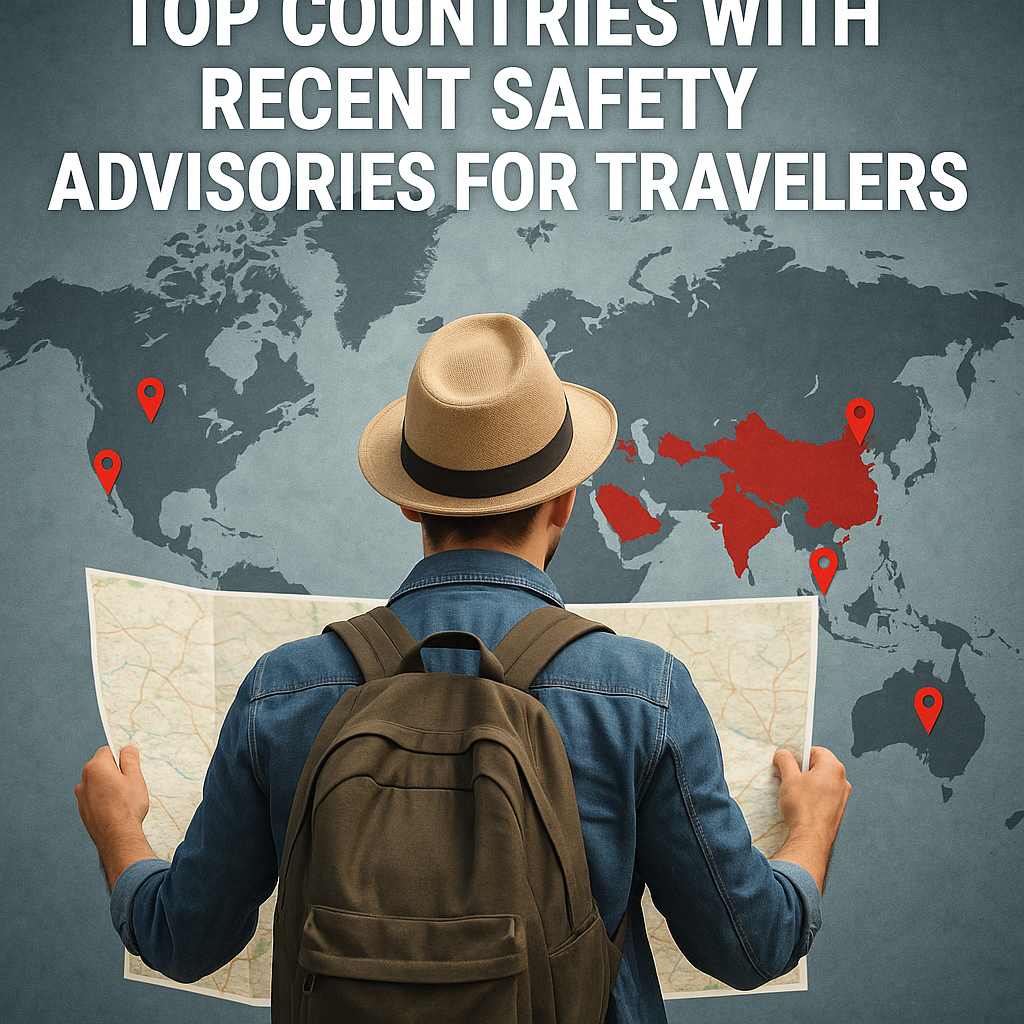

Safety Advisories for Travelers: Navigating Global Risks
Staying informed about global travel advisories is paramount for any international traveler. The U.S. Department of State issues comprehensive travel warnings and alerts to help U.S. citizens abroad make informed decisions. These advisories categorize countries into four distinct levels, ranging from exercising normal precautions to a strict “Do Not Travel” recommendation. Understanding travel advisories and risk assessment associated with each destination is crucial for your safety and preparedness.
Understanding Travel Advisory Levels
Travel advisories range from Level 1, “Exercise Normal Precautions,” to Level 4, “Do Not Travel.” Each level signifies varying degrees of risk. You must assess these travel warnings seriously before planning any trip. The U.S. government prioritizes your security abroad. For those considering travel to Mexico, it’s essential to review the Mexico Travel Advisory, safety tips, and documents needed for safe, secure travel.
Countries with Highest Travel Advisory Levels
Several nations currently carry a Level 4 “Do Not Travel” advisory from the U.S. Department of State. This designation indicates severe travel risks. These include terrorism, civil unrest, kidnapping, and wrongful detention. Your international safety is paramount, and these travel warnings are crucial.

As of March 2026, over 20 countries are designated Level 4. These include Iran, Afghanistan, Belarus, and Syria. The U.S. government advises against all travel to these destinations. Consular support in such areas is often severely limited or unavailable for U.S. citizens abroad.
Current Country Risk Levels Based on U.S. Government Advisories
The U.S. Department of State provides critical travel advisories. As of March 2026, 21 countries are rated Level 4, “Do Not Travel.” Furthermore, 31 countries are at Level 3, “Reconsider Travel.” Another 44 are at Level 2, “Exercise Increased Caution,” with numerous others at Level 1, “Exercise Normal Precautions.” Nations like Iran, Mexico (certain states), and Iraq show notable risk variations, impacting international safety.
Impact of Ongoing Conflicts on Travel Advisories
Ongoing conflicts significantly influence travel advisories. Recent events, such as the Iran war and cartel violence in Mexico, have led to increased risk levels. For instance, Iran’s advisory was upgraded to Level 4 due to the Middle East conflict. Mexican states like Sinaloa moved to Level 4 following cartel attacks. The U.S. Department of State has noted these security alerts affect over 46,000 flights and traveler safety perceptions, causing widespread travel disruptions.
Factors Influencing Travel Advisory Levels
Travel advisories consider various factors to determine risk levels. These include war, terrorism risks, civil unrest, health risks, and incidents like kidnapping. Level 4 countries, such as Iraq, are associated with significant violence, arbitrary arrests, and terrorist threats. Conversely, Level 1 countries are generally safe with usual safety precautions. The U.S. Department of State continuously assesses these factors to ensure U.S. citizens abroad receive accurate travel warnings.
Specific Risks in Level 4 Countries
Iran, for example, faces a high risk of terrorism, unrest, kidnapping, and wrongful detention of U.S. citizens. Similarly, Ukraine and Russia are categorized at Level 4 due to ongoing conflict and limited U.S. consular support. Other nations like North Korea and Libya are also highlighted for their inherent dangers. The U.S. Department of State issues these specific travel advisories to ensure U.S. citizens understand the severe travel risks involved.
“Travelers must understand that a Level 4 advisory means the U.S. government has determined that life-threatening risks are present. Your safety cannot be guaranteed.”
Travel Safety Recommendations for High-Risk Countries
For Level 4 countries, the U.S. Department of State advises against all travel. If travel is unavoidable, U.S. citizens abroad should enroll in the Smart Traveler Enrollment Program (STEP). Develop clear communication plans and secure critical documents. Be aware that U.S. government assistance in such regions is severely limited. These safety precautions are essential for your international safety.
Countries Requiring Reconsideration for Travel (Level 3)
Several countries, including Israel, Jordan, United Arab Emirates, and Venezuela, are designated Level 3: “Reconsider Travel.” The U.S. Department of State advises U.S. citizens to reconsider travel due to risks of terrorism, kidnapping, and civil unrest. Nicolas Maduro’s regime in Venezuela, for example, presents unique challenges. Elizabeth Warren has commented on the complexities of U.S. citizens abroad in such regions, highlighting the need for increased safety precautions.
Countries with Increased Caution (Level 2)
Destinations such as Colombia, Turkey, and Mexico (excluding high-risk states like Sinaloa, Colima, and Chihuahua) are categorized as Level 2: “Exercise Increased Caution.” The U.S. Department of State recommends that travelers exercise increased caution due to organized crime, civil unrest, or regional security issues. For instance, Turkey travel requires vigilance due to terrorism risks, as reported by Turkish Radio and Television. Mexico travel safety varies significantly by region, with states like Sinaloa, Colima, and Chihuahua having higher risks than Yucatan or Campeche.
Current Country Risk Levels Based on U.S. Government Advisories
The global security landscape is constantly evolving. As of March 2026, the U.S. Department of State categorizes countries into four distinct risk levels. This information is crucial for informed travel planning and ensuring your international safety.

There are 21 countries currently rated Level 4, signifying “Do Not Travel.” An additional 31 countries are at Level 3, advising “Reconsider Travel.” Furthermore, 44 countries are at Level 2, recommending “Exercise Increased Caution.” Numerous others remain at Level 1, suggesting “Exercise Normal Precautions.”
The U.S. government issues these travel advisories to inform U.S. citizens abroad about potential travel risks. These warnings are paramount for anyone planning international travel. You can see the detailed breakdown in the table below.
| Advisory Level | Recommendation | Number of Countries (March 2026) | Example Countries |
|---|---|---|---|
| Level 4 | Do Not Travel | 21 | Iran, Iraq, Afghanistan, Syria, Russia, Ukraine |
| Level 3 | Reconsider Travel | 31 | Israel, Jordan, United Arab Emirates, Venezuela, Saudi Arabia, Kuwait |
| Level 2 | Exercise Increased Caution | 44 | Turkey, Mexico (certain states), Colombia, Bahrain |
| Level 1 | Exercise Normal Precautions | Numerous | Most European countries, Canada, Australia |
Countries with Highest Travel Advisory Levels: Level 4 “Do Not Travel”
Several nations currently carry a Level 4 “Do Not Travel” advisory from the U.S. Department of State. This designation indicates severe travel risks, including terrorism, civil unrest, kidnapping, and wrongful detention. As of March 2026, over 20 countries are designated Level 4. These include Iran, Afghanistan, Belarus, and Syria, due to high risks of terrorism, civil unrest, kidnapping, and wrongful detention. Travelers are strongly advised to avoid these destinations altogether.
Specific Risks in Level 4 Countries
Iran, for instance, faces high risks of terrorism, unrest, kidnapping, and wrongful detention. The ongoing Iran war and associated Middle East conflict contribute significantly to these dangers. Ukraine and Russia are also categorized at Level 4 due to ongoing conflict and limited U.S. consular support, as noted by sources like The Associated Press and CNBC. Other countries, such as North Korea and Libya, are consistently highlighted for their extreme dangers to U.S. citizens abroad.
Travel Safety Recommendations for High-Risk Countries
Trafels.com advises travelers to avoid all travel to Level 4 countries. If travel is unavoidable, recommendations include enrolling in the Smart Traveler Enrollment Program (STEP), developing communication plans, and securing critical documents. Be aware of the limited U.S. assistance available in such regions, which can impact your international safety.
Impact of Ongoing Conflicts on Travel Advisories
Recent conflicts have significantly impacted travel advisories. The Iran war, for example, led to an upgrade of Iran’s advisory to Level 4. Similarly, cartel violence in Mexico, particularly in states like Sinaloa and Colima, caused some areas to move to Level 4. These travel disruptions and security alerts affect over 46,000 flights and significantly alter traveler safety perceptions. The Middle East conflict, including tensions involving Israel and Lebanon, also plays a critical role in these updated travel warnings.
Factors Influencing Travel Advisory Levels
The U.S. Department of State considers various factors when determining travel advisory levels. These include war, terrorism risks, civil unrest, health risks, and incidents like kidnapping. Level 4 countries are associated with significant violence, arbitrary arrests, and terrorist threats, as reported by The New York Times. In contrast, Level 1 countries are generally safe, requiring only usual safety precautions. Elizabeth Warren and other public figures often emphasize the gravity of these warnings for U.S. citizens abroad.
Countries Requiring Reconsideration for Travel (Level 3)
Countries like Israel, Jordan, United Arab Emirates, and Venezuela are listed as Level 3. U.S. citizens are advised to reconsider travel due to risks of terrorism, kidnapping, and civil unrest. The situation in Venezuela, under Nicolas Maduro and Cilia Flores, presents unique challenges, including arbitrary detentions. Saudi Arabia and Kuwait also fall into this category, with specific safety concerns that necessitate caution for Middle East travel.
Countries with Increased Caution (Level 2)
Destinations such as Colombia, Turkey, and Mexico (non-high-risk states) are classified as Level 2. Travelers should exercise increased caution because of organized crime, civil unrest, or regional security issues. For Turkey travel, Turkish Radio and Television often reports on regional variations in risk. Mexico travel safety, while generally Level 2, has specific states like Chihuahua and parts of Yucatan and Campeche that require extra vigilance due to localized crime. NATO also monitors regional stability in areas like Turkey.
Impact of Ongoing Conflicts on Travel Advisories
Recent global events significantly influence travel advisories. Ongoing conflicts and regional instability elevate travel risks, directly impacting the international safety of U.S. citizens abroad. The U.S. Department of State continually monitors these situations to provide up-to-date travel warnings.
The Iran War and Middle East Conflict
The ongoing Iran war has profoundly impacted travel advisories across the Middle East. This conflict has led to increased risk levels for several nations, prompting the U.S. government to issue severe travel warnings. For instance, Iran’s advisory was upgraded to Level 4, signifying “Do Not Travel.”
The U.S. government is warning all Americans abroad, especially those in the Middle East, that U.S. interests may be targeted. This creates significant terrorism risks for U.S. citizens. You must exercise extreme caution if you are considering Middle East travel.
The Middle East conflict has spilled into neighboring countries. Israel has struck Lebanon, and Iran has targeted Saudi Arabia, Kuwait, Qatar, Bahrain, and the United Arab Emirates. This has resulted in Level 3 advisories for these nations, urging travelers to reconsider travel due to the heightened Level 3 risk.
According to The Associated Press, Turkey, a NATO member, intercepted three Iranian missiles. This incident, also reported by Turkish Radio and Television, highlights the widespread nature of the Middle East conflict. Such events lead to significant travel disruptions and airspace closures, impacting Turkey travel and other regional routes. Elizabeth Warren, a key figure in foreign policy discussions, has frequently commented on the escalating tensions.
Cartel Violence in Mexico
Mexico travel safety has also seen notable changes. Cartel violence has escalated in specific regions, prompting the U.S. Department of State to upgrade advisories for certain Mexican states. These travel warnings are critical for anyone planning a trip to Mexico.
States like Sinaloa and Colima are now designated Level 4: “Do Not Travel.” Other states, including Jalisco and Baja California, are Level 3: “Reconsider Travel.” These changes followed significant cartel attacks affecting traveler safety, demonstrating how localized violence can dramatically alter travel warnings. The New York Times and CNBC have extensively covered these security alerts, emphasizing the severe travel risks.
Countries with Highest Travel Advisory Levels
Competitors highlight that Iran, Afghanistan, Belarus, and Syria are designated Level 4 “Do Not Travel” countries due to high risks of terrorism, civil unrest, kidnapping, and wrongful detention. Over 20 countries fall into this category, emphasizing the need for travelers to avoid these destinations altogether. Iraq also remains at Level 4, with significant terrorism risks and civil unrest.
Current Country Risk Levels Based on U.S. Government Advisories
As of March 2026, the U.S. Department of State categorizes 21 countries at Level 4, 31 countries at Level 3, and 44 at Level 2, with numerous others at Level 1. Specific nations like Iran, Mexico (certain states), and Iraq show notable risk variations, reflecting complex international safety concerns. This data, often cited by Insider Travel Report, is crucial for informed travel planning.
Factors Influencing Travel Advisory Levels
Travel advisories consider war, terrorism, civil unrest, health risks, and incidents like kidnapping. For example, Level 4 countries are associated with significant violence, arbitrary arrests, and terrorist threats, while Level 1 countries are generally safe with usual precautions. These comprehensive factors ensure that travel warnings are robust and reflect current international safety conditions.
Specific Risks in Level 4 Countries
Iran faces a high risk of terrorism, unrest, kidnapping, and wrongful detention. Ukraine and Russia are also categorized at Level 4 due to ongoing conflict and limited U.S. consular support. Countries like North Korea and Libya are similarly highlighted for their extreme dangers, making Level 4 advisory designations critical for U.S. citizens abroad. Abolfazl Shekarchi, a prominent figure, has been associated with statements regarding these risks.
Travel Safety Recommendations for High-Risk Countries
Trafels.com advises that travelers avoid all travel to Level 4 countries. If travel is unavoidable, recommendations include enrolling in the Smart Traveler Enrollment Program (STEP), developing communication plans, and securing critical documents. Be aware of limited U.S. assistance in such regions. These safety precautions are paramount for your international safety.
Countries Requiring Reconsideration for Travel (Level 3)
Countries like Israel, Jordan, United Arab Emirates, and Venezuela are designated Level 3, where Americans are advised to reconsider travel due to risks of terrorism, kidnapping, and civil unrest. These countries have specific safety concerns that necessitate caution. Nicolas Maduro and Cilia Flores are key figures in Venezuela, a nation with persistent Level 3 risk factors.
Countries with Increased Caution (Level 2)
Destinations such as Colombia, Turkey, and Mexico (non-high-risk states) are identified as Level 2. Travelers should exercise increased caution because of organized crime, civil unrest, or regional security issues. Turkey travel, for instance, requires vigilance given its proximity to the Middle East conflict and potential for travel disruptions.
Factors Influencing Travel Advisory Levels
Travel advisories are not arbitrary. The U.S. Department of State bases them on a comprehensive assessment of various threats. This includes the potential for civil unrest, terrorism risks, and the impact of the ongoing Iran war on Middle East travel.

These factors include war, terrorism risks, civil unrest, and health risks. Incidents such as kidnapping and arbitrary detention also play a critical role. For example, countries warranting a Level 4 advisory are associated with significant violence, arbitrary arrests, and terrorist threats. Conversely, Level 1 countries are generally safe with usual safety precautions.
The presence of strong diplomatic and security support significantly influences these decisions. If the United States has limited ability to assist its U.S. citizens abroad, the advisory level will be higher. This is a crucial consideration for your personal international safety.
Current Country Risk Levels Based on U.S. Government Advisories
As of March 2026, the U.S. Department of State has issued specific travel warnings. There are 21 countries currently rated Level 4, indicating “Do Not Travel.” Another 31 countries are at Level 3, advising travelers to “Reconsider Travel.” Forty-four nations are at Level 2, where “Exercise Increased Caution” is recommended, while numerous others remain at Level 1, requiring “Exercise Normal Precautions.”
Notable risk variations exist. For instance, the entirety of Iran is a Level 4 destination. Certain states within Mexico, such as Sinaloa, also carry a Level 4 advisory due to cartel violence. Iraq is another prominent Level 4 country, underscoring severe travel risks in these regions. These advisories are critical for planning safe international travel.
Countries with Highest Travel Advisory Levels: Level 4 – Do Not Travel
The U.S. Department of State designates certain countries as Level 4, urging U.S. citizens abroad to “Do Not Travel.” As of March 2026, over 20 countries fall into this critical category. These include Iran, Afghanistan, Belarus, and Syria, primarily due to high risks of terrorism, widespread civil unrest, kidnapping, and wrongful detention. The ongoing Iran war and regional instability in the Middle East are significant contributors to these extreme warnings.

Other countries like Ukraine and Russia are also categorized at Level 4. This is due to ongoing conflict and limited U.S. consular support. North Korea and Libya are similarly highlighted for their inherent dangers, presenting extreme travel risks. Travelers must avoid these destinations altogether to ensure their international safety.
Specific Risks in Level 4 Countries
Countries under a Level 4 “Do Not Travel” advisory present extreme dangers for U.S. citizens abroad. For example, Iran faces a high risk of terrorism, pervasive civil unrest, kidnapping, and wrongful detention. The U.S. Department of State emphasizes that the U.S. government has limited ability to provide emergency services to its citizens in Iran.
Similarly, Ukraine and Russia are at Level 4 due to the ongoing conflict. This includes dangers from active combat, potential for arbitrary detention, and limited U.S. consular services. Nations like North Korea and Libya are also highlighted for their severe dangers, including state-sponsored threats and widespread lawlessness. These specific risks underscore why Level 4 advisories are paramount.
Travel Safety Recommendations for High-Risk Countries
For countries designated Level 4, the U.S. Department of State advises U.S. citizens abroad to avoid all travel. If travel is absolutely unavoidable to such high-risk regions, stringent safety precautions are essential. Travelers should enroll in the Smart Traveler Enrollment Program (STEP) to receive security alerts and locate them in an emergency.
Developing a robust communication plan with family and securing critical travel documents are also paramount. Be aware that U.S. assistance in these regions may be extremely limited, impacting your international safety. These recommendations are vital for managing the severe travel risks associated with Level 4 destinations.
Countries Requiring Reconsideration for Travel (Level 3)
The U.S. Department of State advises U.S. citizens abroad to “Reconsider Travel” to Level 3 countries. This category includes nations like Israel, Jordan, the United Arab Emirates, and Venezuela. These advisories are due to risks of terrorism, kidnapping, and civil unrest. Specific safety concerns necessitate increased caution, especially in the context of the broader Middle East conflict.
In Venezuela, for instance, political instability and crime are significant concerns. For Israel and its neighbors, regional tensions contribute to a higher travel risk. Travelers to these areas must be highly vigilant and stay informed about current events to ensure their international safety.
Countries with Increased Caution (Level 2)
For destinations designated Level 2, the U.S. Department of State advises U.S. citizens abroad to “Exercise Increased Caution.” This category includes countries such as Colombia, Turkey, and certain states in Mexico (excluding high-risk areas like Sinaloa). These advisories are typically due to concerns regarding organized crime, localized civil unrest, or regional security issues.
For example, while Turkey travel generally allows for tourism, specific areas near its borders with Syria and Iraq may face heightened terrorism risks. Similarly, some Mexican states, while not Level 4, still warrant caution due to criminal activity. Understanding these regional variations is key to maintaining your international safety.
Travel Safety Recommendations for High-Risk Countries
If a country is under a Level 4 “Do Not Travel” advisory from the U.S. Department of State, the recommendation is unequivocal: avoid all travel. Your personal safety is the paramount concern. However, if travel to such a region is deemed unavoidable, you must implement extreme safety precautions. This applies particularly to areas impacted by the ongoing Iran war or severe civil unrest.
First, enroll in the Smart Traveler Enrollment Program (STEP). This crucial service allows the U.S. embassy to contact you directly in an emergency. It also facilitates communication between your family and friends and you. This is a fundamental safety precaution for U.S. citizens abroad, especially given heightened terrorism risks.
Second, develop a comprehensive communication plan. Ensure your family and trusted contacts know your precise itinerary and how to reach you at all times. Secure all critical documents, keeping copies separate from the originals. Be acutely aware that U.S. government assistance in these high-risk regions is severely limited, particularly in Level 4 advisory countries like Iraq or Lebanon.
Specific Risks in Level 4 Countries: What Travelers Need to Know
Level 4 countries, such as Iran, Ukraine, and Russia, present extreme travel risks. For instance, Iran faces a high risk of terrorism, civil unrest, kidnapping, and wrongful detention. The U.S. Department of State explicitly warns against travel due to these pervasive dangers. Similarly, Ukraine and Russia are categorized at Level 4 due to ongoing conflict and severely limited U.S. consular support, making international safety a major concern for U.S. citizens abroad.
Other nations like North Korea and Libya are also highlighted for their inherent dangers. Travelers to these regions face significant violence, arbitrary arrests, and persistent terrorist threats. The U.S. government’s ability to provide emergency services is often compromised, underscoring the importance of rigorous safety precautions and adherence to travel warnings.
Countries Requiring Reconsideration for Travel (Level 3)
Several countries, including Israel, Jordan, the United Arab Emirates, and Venezuela, are currently designated Level 3 by the U.S. Department of State. For these destinations, U.S. citizens are advised to reconsider travel due to elevated risks such as terrorism, kidnapping, and potential civil unrest. For example, specific safety concerns in Venezuela, driven by political instability involving figures like Nicolas Maduro and Cilia Flores, necessitate extreme caution.
These Level 3 risk countries have specific safety concerns that require heightened vigilance and thorough preparation. While not as severe as a Level 4 ‘Do Not Travel’ advisory, the recommendation to reconsider travel reflects a significant assessment of international safety challenges and potential travel disruptions.
Countries with Increased Caution (Level 2)
Destinations such as Colombia, Turkey, and certain states in Mexico (excluding high-risk areas like Sinaloa or Colima) are currently categorized as Level 2. Travelers to these locations should exercise increased caution due to prevalent issues such as organized crime, civil unrest, or regional security concerns. Turkey travel, for instance, requires awareness of regional tensions, as highlighted by Turkish Radio and Television.
Even in Level 2 areas, understanding the specific travel risks is crucial. While the U.S. government does not advise against travel, being informed about local conditions and maintaining situational awareness are essential safety precautions. This approach helps mitigate potential risks associated with travel to countries like Mexico, where safety can vary significantly by state.
Countries Requiring Reconsideration for Travel (Level 3)
A Level 3 “Reconsider Travel” advisory from the U.S. Department of State indicates significant travel risks. These countries include Israel, Jordan, the United Arab Emirates, and Venezuela. U.S. citizens are advised to reconsider travel due to elevated risks of terrorism, kidnapping, and civil unrest. This advisory level is a critical indicator for international safety.
Specific Concerns in Level 3 Nations
In Israel, the ongoing Middle East conflict presents considerable security concerns, leading to increased security alerts. Jordan faces similar regional instability, directly impacted by the broader Middle East conflict. The United Arab Emirates and other Gulf nations like Saudi Arabia, Oman, Kuwait, and Bahrain have also moved to Level 3 advisories due to the heightened Middle East conflict and potential travel disruptions.
Venezuela, under Nicolas Maduro, presents distinct challenges for U.S. citizens abroad. Risks include crime, civil unrest, and limited U.S. government services. U.S. officials, including Elizabeth Warren, have highlighted concerns regarding wrongful detention in certain countries, a key factor in such travel warnings and advisories. These factors contribute to the Level 3 risk designation.
Countries with Increased Caution (Level 2)
A Level 2 advisory from the U.S. Department of State means you should “Exercise Increased Caution.” These destinations present identifiable risks that warrant extra vigilance for U.S. citizens abroad. Countries such as Colombia, Turkey, and certain states in Mexico fall into this category.
These travel advisories are a critical indicator for international safety. While not as severe as a Level 3 “Reconsider Travel” or a Level 4 “Do Not Travel” warning, Level 2 still signals significant potential travel risks.
Regional Variations in Risk Within Countries
Even within Level 2 countries, risks can vary significantly by region. For example, while Mexico as a whole is Level 2 for U.S. citizens, specific states like Yucatan and Campeche are generally safer. Conversely, areas like Chihuahua or sections of Colima carry higher risks due to organized crime and cartel violence, impacting Mexico travel safety.
This nuanced approach to travel warnings is vital. The U.S. government emphasizes that travelers must understand localized threats, which can shift rapidly. Always check the latest State Department updates before and during your trip.
Turkey Travel Safety: A Closer Look
Turkey travel also requires increased caution. Regional security issues, particularly near its borders with Syria and Iraq, contribute to this advisory. The U.S. Department of State highlights concerns regarding terrorism risks and civil unrest in certain areas.
Despite these travel advisories, many U.S. citizens still travel to Turkey. Insider Travel Report notes this trend, underscoring the importance of awareness regarding localized risks. Staying informed about security alerts and following safety precautions is essential for international safety in the Middle East.
Effect of Diplomatic and Security Support on Travel Decisions
The availability of diplomatic and security support profoundly impacts travel advisories. When the U.S. Department of State has limited capacity to assist U.S. citizens abroad, the advisory level rises. This is a critical aspect of international safety, especially when considering Middle East travel or areas with significant terrorism risks.
In regions with active conflicts or political instability, consular services may be suspended or severely restricted. This means that in an emergency, your access to U.S. government assistance could be minimal. You must consider this before traveling to areas with high travel risks, such as those under a Level 4 advisory like Iraq or Iran.
Travel Safety Recommendations for High-Risk Countries
For destinations under a “Do Not Travel” Level 4 advisory, the U.S. Department of State strongly advises against all travel. If travel is unavoidable, for example, to areas with ongoing civil unrest or terrorism risks, extreme safety precautions are necessary. Always enroll in the Smart Traveler Enrollment Program (STEP) to receive security alerts and make your whereabouts known to the U.S. government.
Develop a comprehensive communication plan with family and friends, and ensure all critical documents, such as passports and visas, are securely maintained and easily accessible. Be aware that in Level 4 countries like Ukraine, Russia, or North Korea, U.S. consular support is severely limited or non-existent, making self-reliance paramount for U.S. citizens abroad.
Regional Variations in Risk Within Countries
Even within countries with a general Level 2 or Level 3 risk, regional variations can be significant. For instance, Mexico travel safety varies drastically; while the Yucatan or Campeche states might be relatively safe, states like Sinaloa, Colima, and Chihuahua are often under a Level 4 “Do Not Travel” advisory due to cartel violence and high travel risks. These specific areas present dangers comparable to those found in countries experiencing an Iran war or Middle East conflict.
Similarly, Turkey travel, generally a Level 2, requires increased caution in certain border regions due to terrorism risks. Always check specific security alerts and travel warnings for your exact destination, not just the country’s overall Level 3 risk or Level 4 advisory. The U.S. Department of State provides detailed breakdowns of these regional dangers to help you make informed travel decisions and understand potential travel disruptions.
Statistics and Data Points on Travel Disruptions
Global events frequently trigger significant travel disruptions. These can manifest as airspace closures, widespread flight cancellations, and stringent border restrictions. For instance, the recent Iran war significantly impacted air travel, affecting over 46,000 flights. This critical data point from sources like The New York Times and CNBC underscores the immense scale of potential interruptions for U.S. citizens abroad.
Such disruptions can leave travelers stranded, complicating vital evacuation efforts. Monitoring global news from reputable sources is crucial for staying informed about potential impacts on your travel plans and understanding evolving travel risks. These events often lead to increased travel advisories, sometimes escalating to a Level 4 advisory, or “Do Not Travel,” for affected regions like the Middle East.
Impact of Ongoing Conflicts on Travel Advisories
Ongoing conflicts profoundly influence travel advisories issued by the U.S. Department of State. Recent events, such as the Iran war and escalating cartel violence in Mexico, have directly led to increased risk levels. The advisory for Iran, for example, was upgraded to a Level 4, signaling extreme danger for U.S. citizens abroad due to high risks of terrorism, civil unrest, kidnapping, and wrongful detention. Similarly, certain Mexico travel safety concerns, particularly in states like Sinaloa, saw advisories move to Level 4 following significant cartel attacks, directly affecting traveler safety perceptions and necessitating a “reconsider travel” stance for many.
These heightened travel warnings are not isolated incidents. The Middle East conflict, involving countries like Israel and Lebanon, consistently contributes to elevated terrorism risks and civil unrest. Such situations demand serious safety precautions from travelers. The U.S. government continually assesses these dynamic environments to provide timely and accurate guidance, often through security alerts and updated travel advisories, reinforcing the importance of international safety awareness.
Methods for Travelers to Stay Informed and Safe
Staying informed is your best defense against unexpected travel risks. You must proactively seek out current information, especially concerning international safety and civil unrest. The U.S. Department of State website is your primary resource for official travel advisories and travel warnings.
Enroll in the Smart Traveler Enrollment Program (STEP). This U.S. government service provides you with critical security alerts and warnings directly from the nearest U.S. embassy or consulate. This is vital for U.S. citizens abroad, particularly when navigating complex regions like the Middle East.
Follow reputable news organizations for real-time updates. The Associated Press, The New York Times, and CNBC offer comprehensive coverage of global events, including the Iran war and other Middle East conflict developments. Turkish Radio and Television also provides valuable regional insights, particularly for Turkey travel.
Maintain situational awareness at all times. Be discreet and avoid drawing unnecessary attention to yourself. Have an emergency plan, including contact information for family and the nearest U.S. embassy. Your preparedness directly contributes to your personal security, especially when considering travel risks like terrorism risks or areas with Level 4 advisory designations.
Current Country Risk Levels Based on U.S. Government Advisories
As of March 2026, the U.S. Department of State provides clear guidance on international safety. There are 21 countries currently rated Level 4, indicating a “Do Not Travel” advisory due to high travel risks. Another 31 countries are at Level 3, advising travelers to “Reconsider Travel.” Furthermore, 44 nations are categorized as Level 2, recommending “Exercise Increased Caution,” while numerous others fall under Level 1, requiring only “Exercise Normal Precautions.”
Countries with Highest Travel Advisory Levels: Do Not Travel (Level 4)
Numerous countries are designated Level 4, meaning the U.S. government advises U.S. citizens to do not travel there. This includes nations like Iran, Afghanistan, Belarus, and Syria, primarily due to high risks of terrorism, civil unrest, kidnapping, and wrongful detention. The Iran war has significantly contributed to Iran’s Level 4 advisory. Over 20 countries fall into this critical category, emphasizing the need for travelers to avoid these destinations altogether due to severe international safety concerns and limited U.S. consular support. Iraq also remains at a Level 4.
Specific Risks in Level 4 Countries
In Level 4 countries, the risks are substantial. Iran faces a high risk of terrorism, widespread civil unrest, kidnapping, and wrongful detention, making Middle East travel particularly dangerous. Ukraine and Russia are also categorized at Level 4 due to ongoing conflict and limited U.S. consular support. Countries like North Korea and Libya are similarly highlighted for their extreme dangers, including the threat of arbitrary arrests and significant violence. These travel warnings underscore the severe safety precautions required.
Countries Requiring Reconsideration for Travel (Level 3)
Several nations, including Israel, Jordan, United Arab Emirates, and Venezuela, are currently under Level 3 advisories, advising U.S. citizens to reconsider travel. These designations are due to various travel risks, including terrorism risks, potential for kidnapping, and civil unrest. For instance, Venezuela, under the leadership of Nicolas Maduro and Cilia Flores, has specific safety concerns that necessitate extreme caution for any U.S. citizens abroad. Lebanon travel advisory also places it in this category due to its volatile regional situation.
Countries with Increased Caution (Level 2)
Destinations such as Colombia, Turkey, and Mexico (excluding specific high-risk states) are categorized as Level 2. Travelers to these areas should exercise increased caution due to organized crime, civil unrest, or regional security issues. Turkey travel, for example, warrants extra vigilance, while Mexico travel safety varies significantly by state, with some areas facing higher risks due to cartel violence.
Impact of Ongoing Conflicts on Travel Advisories
Recent conflicts have profoundly impacted travel advisories and led to significant travel disruptions. The ongoing Iran war, for instance, has led to Iran’s advisory being upgraded to Level 4. Similarly, cartel violence in Mexican states like Sinaloa, Colima, and Chihuahua has resulted in Level 4 advisories for those specific regions. These events have caused widespread airspace closures and affected over 46,000 flights, according to sources like The New York Times and CNBC, altering traveler safety perceptions globally and affecting Middle East conflict zones.
Factors Influencing Travel Advisory Levels
Travel advisory levels are determined by a comprehensive assessment of various factors. These include the presence of war, terrorism risks, civil unrest, health risks, and specific incidents like kidnapping. Level 4 countries, such as Iraq, are associated with significant violence, arbitrary arrests, and pervasive terrorist threats. In contrast, Level 1 countries are generally safe, requiring only usual precautions. The U.S. Department of State continuously monitors these conditions to provide up-to-date travel warnings.
Travel Safety Recommendations for High-Risk Countries
For Level 4 “Do Not Travel” countries, the recommendation is to avoid all travel. If travel is unavoidable or you are a U.S. citizen abroad in such an area, critical safety precautions are necessary. Enroll in the Smart Traveler Enrollment Program (STEP), develop a detailed communication plan with family, and secure all critical documents. Be aware that U.S. government assistance, including consular support, is extremely limited in these regions. For countries like Saudi Arabia and Qatar, while not Level 4, constant vigilance and adherence to local laws are essential for international safety.
Frequently Asked Questions About Travel Advisories
Staying informed about global travel risks is paramount for any international traveler. The U.S. Department of State issues comprehensive travel advisories to help U.S. citizens make informed decisions. Here, we address common questions regarding these advisories and the essential safety precautions you should take.
What does a Level 4 “Do Not Travel” advisory mean for U.S. citizens?
A Level 4 “Do Not Travel” advisory signifies that the U.S. government has determined there is a high likelihood of life-threatening risks in that destination. These severe travel risks can include ongoing war, pervasive civil unrest, significant terrorism risks, the threat of kidnapping, or wrongful detention. The U.S. Department of State strongly advises against all travel to these areas, which currently include countries like Iran, Afghanistan, Belarus, and Syria. Consular assistance for U.S. citizens abroad in such regions may be extremely limited or entirely unavailable. For instance, countries like Iraq are often at Level 4 due to persistent security challenges and the presence of various armed groups, making any travel exceptionally dangerous.
How often are travel advisories updated?
Travel advisories are dynamic and updated regularly by the U.S. Department of State. They constantly monitor global conditions, including international safety, security alerts, political changes, and ongoing conflicts. Updates can occur frequently, especially in response to new terrorism risks, civil unrest, or other significant events. For example, the Middle East conflict can lead to rapid changes in advisories for countries like Israel, Lebanon, and Saudi Arabia. You must check advisories close to your departure date and continuously monitor them during your trip, particularly when traveling to regions with known volatility.
Can I still travel to a country with a Level 3 “Reconsider Travel” advisory?
Yes, you can still travel to a country with a Level 3 “Reconsider Travel” advisory. However, the U.S. government urges U.S. citizens to reconsider their need for travel due to serious risks. If you choose to go, you must exercise extreme caution. Be acutely aware of the specific travel risks outlined in the advisory, such as terrorism, kidnapping, or civil unrest, which may affect countries like Israel, Jordan, or Venezuela. Develop robust contingency plans for emergencies and understand that while consular assistance is available, it might be strained. The Associated Press and The New York Times frequently report on incidents in these regions, underscoring the need for vigilance.
What should I do if a travel advisory changes while I am abroad?
If an advisory changes while you are abroad, immediately assess your situation and prioritize your international safety. If you are enrolled in the Smart Traveler Enrollment Program (STEP), contact the nearest U.S. embassy or consulate for guidance. Follow local news, official government guidance, and security alerts. Be prepared for potential travel disruptions, such as airspace closures, or the need for early departure. For example, recent Middle East travel advisories have seen rapid changes affecting flight paths and requiring immediate action from U.S. citizens abroad.
Does travel insurance cover countries with high-level advisories?
Coverage for countries with high-level advisories, particularly Level 3 or Level 4, varies significantly by insurance provider and policy. Many standard travel insurance policies explicitly exclude coverage for destinations under these high-level travel warnings due to the increased travel risks. Always review your policy’s terms and conditions carefully before purchasing and before your trip. If you must travel to a high-risk area, consider specialized high-risk travel insurance, which is designed for such challenging environments. CNBC and Insider Travel Report often discuss the complexities of insurance coverage for destinations like Turkey or Mexico travel safety concerns.
Understanding Current Country Risk Levels from the U.S. Government
As of March 2026, the U.S. Department of State maintains a dynamic system of travel advisories. Currently, 21 countries are rated Level 4 “Do Not Travel,” including Iran, Afghanistan, and North Korea, due to extreme international safety concerns like war and terrorism risks. Another 31 countries are at Level 3 “Reconsider Travel,” such as Israel, Jordan, and Venezuela, where U.S. citizens should exercise increased caution. Furthermore, 44 countries are at Level 2, requiring increased caution, including Colombia and Turkey travel, while numerous others are at Level 1, advising normal precautions. These rankings highlight the U.S. government’s continuous assessment of global security threats.
Impact of Ongoing Conflicts on Travel Advisories
Ongoing global conflicts significantly influence travel advisories. For instance, the Iran war has directly led to Iran’s advisory being upgraded to Level 4, citing high risks of terrorism, civil unrest, and wrongful detention of U.S. citizens. Similarly, cartel violence in Mexico, particularly in states like Sinaloa, Colima, and Chihuahua, has resulted in Level 4 advisories for specific regions, impacting over 46,000 flights and severely affecting Mexico travel safety perceptions. The Middle East conflict, involving nations like Israel and Lebanon, also frequently triggers security alerts and airspace closures, leading to rapid changes in travel warnings. The U.S. Department of State constantly monitors these situations to update its guidance for U.S. citizens abroad.
Factors Influencing Travel Advisory Levels
The U.S. Department of State considers a multitude of factors when determining travel advisory levels. These include the presence of war, terrorism risks, widespread civil unrest, significant health risks, and specific incidents such as kidnapping or arbitrary arrests. Countries designated Level 4, like Ukraine and Russia, face ongoing conflict, limited U.S. consular support, and a high risk of violence. In contrast, Level 1 countries generally present minimal international safety concerns, requiring only usual safety precautions. The advisory for Saudi Arabia travel, for example, might consider regional stability and potential terrorism threats, while Yucatan and Campeche in Mexico are generally Level 1.
Specific Risks in Level 4 Countries
Level 4 “Do Not Travel” countries present unique and severe dangers. For example, Iran faces a high risk of terrorism, widespread civil unrest, and the threat of wrongful detention, with prominent figures like Abolfazl Shekarchi often making headlines related to security. Ukraine and Russia are also categorized at Level 4 due to the ongoing conflict, resulting in significant security alerts and extremely limited U.S. consular support. Other nations like North Korea and Libya are highlighted for their extreme dangers, including arbitrary arrests and the absence of diplomatic relations. The U.S. government strongly advises against any travel to these regions due to the overwhelming travel risks to U.S. citizens.
Travel Safety Recommendations for High-Risk Countries
For destinations with high-level travel advisories, particularly Level 4, the U.S. government strongly recommends avoiding all travel. If travel is unavoidable or you find yourself in such a region, extreme safety precautions are critical. Enroll in the Smart Traveler Enrollment Program (STEP) to receive security alerts and facilitate contact with the U.S. embassy or consulate. Develop clear communication plans with family and friends, secure all critical documents, and be prepared for limited U.S. assistance. For Level 3 “Reconsider Travel” countries, like Venezuela, where Nicolas Maduro and Cilia Flores are prominent figures, U.S. citizens are advised to exercise extreme caution due to risks like civil unrest and arbitrary law enforcement.
Countries Requiring Reconsideration for Travel (Level 3)
Several countries are currently designated Level 3, advising U.S. citizens to “Reconsider Travel.” These include Israel, Jordan, the United Arab Emirates, and Venezuela. The primary reasons for this designation are typically terrorism risks, the potential for kidnapping, or significant civil unrest. For instance, the Middle East conflict frequently elevates the risk profile for countries like Israel and Jordan, while Venezuela faces political instability and crime. While travel is not prohibited, the U.S. Department of State emphasizes the need for heightened safety precautions and thorough contingency planning before considering travel to these regions. Elizabeth Warren and other officials often comment on the complexities of travel to such nations.
Countries with Increased Caution (Level 2)
Countries designated Level 2 require travelers to “Exercise Increased Caution.” This category includes destinations such as Colombia, Turkey, and certain non-high-risk states within Mexico. The reasons for this advisory typically involve organized crime, sporadic civil unrest, or regional security issues. For example, Turkey travel might involve exercising increased caution due to terrorism risks or political tensions, as reported by Turkish Radio and Television. Similarly, while large parts of Mexico are safe, specific areas might pose risks due to criminal activity. Travelers to these regions should be vigilant, aware of their surroundings, and review specific advisories for localized threats.