
Table of Contents
- Understanding International Travel Codes
- The Core of Aviation: Airport Codes
- ICAO Codes: Global Flight Operations
- IATA Codes: Passenger Travel and Logistics
- FAA Location Identifiers (LIDs): United States Domestic Operations
- How Airport Codes Enhance Flight Planning and Navigation
- Regional and Country-Specific Patterns in ICAO Codes
- Understanding IATA Airport Codes and Their Origins
- Airport Area Codes and Multiple Airport Cities
- Frequently Asked Questions
Understanding International Travel Codes
International travel involves a complex system of codes, crucial for seamless global operations. Understanding these identifiers is paramount for any traveler or aviation professional.
This guide will demystify the various airport codes and location identifiers used in the aviation industry. We will focus on their purpose and application, ensuring accurate navigation and communication in global flight operations.
Differences Between ICAO, IATA, and FAA Airport Codes
Navigating the world of aviation requires a clear understanding of the distinct airport codes. The International Civil Aviation Organization (ICAO), the International Air Transport Association (IATA), and the Federal Aviation Administration (FAA) each play a vital role in assigning and utilizing these crucial identifiers.

ICAO codes are four-letter identifiers used globally, primarily for flight operations, air traffic control, and flight plans. IATA codes, on the other hand, are three-letter codes mainly for passenger convenience, ticketing, and baggage handling. Most large airports in the United States, for example, have IATA codes that overlap with their FAA LIDs. However, some exceptions exist, particularly for smaller airfields.
FAA Location Identifiers (LIDs) are specific to domestic flight operations within the United States. While many large airports share their IATA code with the last three letters of their ICAO code (after dropping the leading ‘K’ for the United States), smaller and private airports often have unique FAA LIDs. Pilots and aviation professionals must be proficient in all three systems for efficient global flight operations.
Structure and Rules Governing ICAO Codes
ICAO codes are the backbone of international civil aviation, providing a standardized system for airport identification worldwide. These four-letter codes are meticulously structured to convey geographical information, aiding air traffic control and navigation charts.
The first letter of an ICAO code indicates the geographic region. For instance, ‘E’ signifies Northern Europe, ‘C’ is for Canada, and ‘S’ typically points to South America. The second letter often represents the specific country within that region. For example, EGLL identifies London Heathrow in the United Kingdom, while CYYZ identifies Toronto Pearson International Airport in Canada.

The final two letters are assigned to the specific airport. With over 46,000 ICAO codes assigned globally, the system ensures precision in aviation communications. Rules dictate that codes should avoid starting with ‘I’ or ‘J’ to prevent confusion with other aviation-related identifiers, ensuring clarity in flight operations and weather reports.
Understanding IATA Airport Codes and Their Origins
IATA airport codes are the three-letter identifiers most familiar to the traveling public, appearing on boarding passes, baggage tags, and flight information displays. These codes are primarily for commercial purposes and streamline passenger logistics within the air transport association framework.
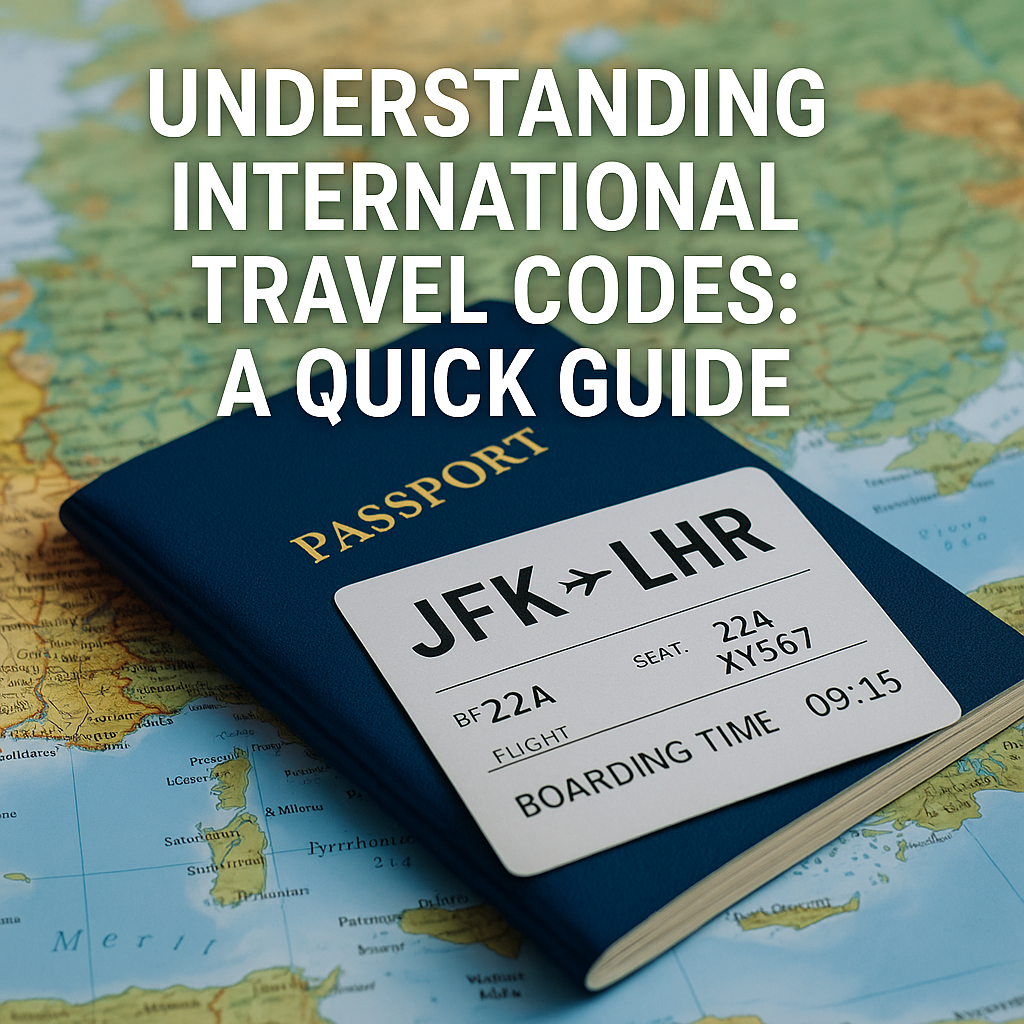
The origin of many IATA codes is steeped in history or phonetic convenience. For example, Orlando International Airport uses MCO, a direct reference to its past as McCoy Air Force Base. Similarly, New Orleans Lakefront Airport uses MSY, derived from Moissant Stock Yards, the original name of the land. John F Kennedy International Airport is JFK, a phonetic abbreviation.
Approximately 17,500 IATA codes exist, primarily assigned to airports with scheduled passenger flights. These codes are essential for the global aviation industry, facilitating everything from booking flights to tracking luggage, making international travel more efficient for both passengers and airlines.
Utilization of FAA Location Identifiers (LIDs)
Within the United States, the Federal Aviation Administration (FAA) utilizes Location Identifiers (LIDs) for domestic flight operations. These identifiers are typically three or four alphanumeric characters and are crucial for pilots, flight plans, and air traffic control within US airspace.
For major airports in the United States, the FAA LID often aligns with the IATA code. For instance, Orlando International Airport’s IATA code, MCO, is also its FAA LID. However, for smaller general aviation airports and private airfields, distinct FAA LIDs are assigned. These codes often follow specific rules, with certain letters avoided to prevent conflicts with international codes or other navigational aids.
The FAA’s format change in 2019 standardized the usage of these codes, ensuring consistency in aviation navigation. Pilots flying domestically, especially under Visual Flight Rules (VFR), frequently use FAA LIDs in their flight plans and communications, demonstrating their critical role in the US aviation industry.
How Airport Codes Enhance Flight Planning and Navigation
Airport codes are indispensable tools that significantly enhance flight planning and navigation for pilots and air traffic control globally. Their standardized nature ensures precision and minimizes errors in the complex world of aviation communications.
Pilots predominantly use ICAO codes for international flights and Instrument Flight Rules (IFR) operations, regardless of location. These four-letter codes are fundamental for filing flight plans, interpreting weather reports, and navigating using detailed navigation charts. For example, a flight from John F Kennedy International Airport to Cape Town would rely heavily on ICAO codes for accurate route planning and communication with various air traffic control centers.
For domestic VFR flights within the United States, FAA LIDs are widely accepted in flight plans. The integration of ICAO, IATA, and FAA codes ensures that whether a pilot is flying from Vancouver to Hong Kong, or from Honolulu, Hawaii, to Anchorage, Alaska, the correct airport identification is always readily available. This systematic approach supports safe and efficient global flight operations, from Brazil to Russia, China to Indonesia, and even distant territories like Guam, Puerto Rico, and the Virgin Islands.
The Core of Aviation: Airport Codes
Airport codes are fundamental to the aviation industry. They ensure precise identification of airports worldwide. You will encounter different types, each with a distinct function.
These codes are vital for everything from flight operations to passenger services. They streamline communication and enhance safety for global flight operations.
Differences Between ICAO, IATA, and FAA Airport Codes
Navigating international travel requires a clear understanding of airport codes. Three primary systems exist: the International Civil Aviation Organization (ICAO) codes, the International Air Transport Association (IATA) codes, and Federal Aviation Administration (FAA) Location Identifiers (LIDs). Each serves a specific purpose within the aviation industry.

ICAO codes are four letters and are used globally by pilots and air traffic control for flight plans and navigation charts. IATA codes, on the other hand, are three-letter codes primarily for passenger-related services, like ticketing and baggage. FAA LIDs are specific to United States domestic airports. Most FAA and IATA codes overlap, but exceptions exist, particularly for smaller airfields in the United States.
Structure and Rules Governing ICAO Codes
ICAO codes are crucial for international civil aviation and global flight operations. These four-letter codes begin with a regional identifier, providing immediate geographic context. For example, ‘E’ denotes Northern Europe, ‘C’ is for Canada, and ‘S’ indicates South America. The second letter typically represents the country, such as ‘EG’ for the United Kingdom or ‘SA’ for Argentina.
The final two letters specify the individual airport. For instance, London Heathrow Airport is EGLL. Over 46,000 ICAO codes are assigned globally. Strict rules govern their creation; for example, codes starting with ‘I’ or ‘J’ are generally avoided to prevent conflict with other aviation communications or navigational aids. Pilots rely heavily on these codes for precise airport identification, weather reports, and air traffic control instructions.
Understanding IATA Airport Codes and Their Origins
IATA codes are the three-letter airport codes most travelers recognize from their tickets and baggage tags. These codes are primarily for passenger-related services, including flight information displays and online booking systems. They are widely used by the air transport association for commercial purposes.

Many IATA codes have interesting historical or phonetic origins. For example, Orlando International Airport uses MCO, derived from its former name, McCoy Air Force Base. New Orleans Lakefront Airport is MSY, reflecting its history as Moissant Stock Yards. Approximately 17,500 IATA codes exist, predominantly assigned to airports with scheduled passenger flights. John F Kennedy International Airport is JFK, a widely recognized IATA code.
Utilization of FAA Location Identifiers (LIDs)
FAA Location Identifiers (LIDs) are specific to domestic flight operations within the United States, including Alaska, Hawaii, Guam, Puerto Rico, and the Virgin Islands. These can be three or four alphanumeric characters. For major airports like John F Kennedy International Airport in New York City, the FAA LID is often the ICAO code minus the leading ‘K’ (e.g., KJFK becomes JFK, overlapping with the IATA code).
Smaller airfields and private airstrips in the United States have distinct FAA LIDs. These codes often begin with specific letters to avoid conflicts with ICAO or IATA codes. Pilots flying domestically, especially under Visual Flight Rules (VFR), frequently use these LIDs for flight plans and aviation communications. The FAA’s standardization efforts, particularly after 2019, have further integrated these identifiers into domestic navigation systems.
How Airport Codes Enhance Flight Planning and Navigation
Airport codes are indispensable tools for pilots and air traffic control, significantly enhancing the safety and efficiency of global flight operations. Pilots predominantly use ICAO codes for international flights and Instrument Flight Rules (IFR) operations, ensuring precise navigation and communication across different airspaces. These four-letter codes are fundamental to flight plans, navigation charts, and weather reports.
For domestic VFR flights within the United States, FAA LIDs are commonly accepted in flight plans. The standardized usage of these Location Identifiers, especially after the FAA’s format changes in 2019, ensures accuracy in aviation navigation. Whether it’s guiding an aircraft from Calgary to London or a domestic flight within Brazil, these codes provide unambiguous airport identification, crucial for every stage of a journey.
ICAO Codes: Global Flight Operations
The International Civil Aviation Organization (ICAO) codes are the backbone of global flight operations. These four-letter codes are indispensable for pilots and air traffic control. They ensure clear and unambiguous communication across international borders, especially for international civil aviation.
Pilots predominantly use ICAO codes for international and Instrument Flight Rules (IFR) flights. This ensures accuracy in navigation and communication within the aviation industry. You’ll find these codes critical for flight plans, navigation charts, and weather reports.
Structure and Rules Governing ICAO Codes
ICAO codes follow a precise structure, a key aspect that differentiates them from IATA codes and FAA LIDs. They begin with regional identifiers. For example, ‘E’ denotes Northern Europe (including London and Paris), ‘C’ represents Canada (like Calgary and Vancouver), and ‘S’ is used for South America (such as Brazil). Russia and China also have their specific regional identifiers.
The second letter typically identifies the country within that geographic region. The last two letters are then assigned to a specific airport. This systematic approach enhances airport identification globally.
Over 46,000 ICAO codes are assigned globally. Strict rules govern their allocation. For instance, codes starting with ‘I’ or ‘J’ are generally avoided for airport identification to prevent conflicts with other aviation communication protocols, such as those used for navigational aids or Morse Code. This ensures seamless air traffic control and flight operations.
“ICAO codes are the universal language of air traffic control. Their four-letter structure provides unparalleled clarity in a global environment, minimizing errors in flight planning and execution.”
Differences Between ICAO, IATA, and FAA Airport Codes
Understanding the distinctions between ICAO codes, IATA codes, and FAA LIDs is crucial for any traveler or aviation professional. ICAO codes are four letters, primarily used by pilots and air traffic control for global flight operations and aviation navigation. They are essential for flight plans and official aviation communications.
In contrast, IATA codes are three-letter codes mainly for passengers, airlines, and ticketing systems. These are what you typically see on your boarding pass for airports like John F. Kennedy International Airport (JFK) or Orlando International Airport (MCO). Approximately 17,500 IATA codes exist, primarily for airports with scheduled passenger flights.
FAA Location Identifiers (LIDs) are specific to United States domestic flight operations. Most large airports in the United States, like New Orleans Lakefront Airport, share their FAA LID with the ICAO code, minus the leading ‘K’ (e.g., KORD becomes ORD for Orlando International Airport). However, smaller and private airports in the United States, Hawaii, Alaska, Guam, Puerto Rico, and the Virgin Islands have distinct three or four alphanumeric codes with specific rules, often avoiding letters that could conflict with ICAO or IATA usage.
IATA Codes: Passenger Travel and Logistics
While ICAO codes are vital for global flight operations, the International Air Transport Association (IATA) codes are what most travelers recognize. These three-letter codes are visible on your boarding passes, baggage tags, and airline schedules. They simplify the passenger experience and facilitate commercial operations for the entire aviation industry.
Approximately 17,500 IATA codes exist globally. They are primarily assigned to airports with scheduled passenger flights, making them crucial for air transport association members.
Understanding IATA Airport Codes and Their Origins
IATA airport codes are typically three letters. Their origins can be historical or phonetic, often reflecting the airport’s past or a unique local identifier. For example, Orlando International Airport uses MCO. This code is derived from its former name, McCoy Air Force Base, a significant historical reference in the United States.
Another example is New Orleans Lakefront Airport, which uses MSY. This code references Moissant Stock Yards, its original location. These unique origins contribute to the rich history of airport identification.
These codes are crucial for airline ticketing, baggage handling, and cargo shipping. They provide a concise way to identify airports for commercial purposes. While many derive from airport names, some, like John F Kennedy International Airport (JFK) in New York City, are more straightforward, using common abbreviations of the airport names.
Differences Between ICAO, IATA, and FAA Airport Codes
Understanding the distinctions between various airport codes is paramount for anyone navigating international civil aviation. ICAO codes are four-letter codes used globally by pilots and air traffic control for flight plans, navigation charts, and weather reports. These codes are the backbone of global flight operations, ensuring clear communication for international flights.
In contrast, IATA codes are three-letter codes primarily used for passenger travel and commercial logistics. You’ll see these on your tickets and baggage. Most FAA LIDs (Location Identifiers) are specific to United States domestic flight operations. While many FAA and IATA codes overlap for major US airports, some exceptions exist, especially for smaller airfields or those with unique historical designations.
For instance, a large airport like John F Kennedy International Airport will have a clear ICAO code, an IATA code, and an FAA LID, often with close correlation. However, a smaller domestic airport might have a distinct FAA LID that doesn’t directly correspond to its IATA code, if it even has one for scheduled passenger service.
FAA Location Identifiers (LIDs): United States Domestic Operations
While ICAO codes and IATA codes govern global flight operations and passenger logistics, the Federal Aviation Administration (FAA) assigns Location Identifiers (LIDs) specifically for operations within the United States. These codes are crucial for domestic flight operations, serving pilots and air traffic control across the United States.
FAA LIDs can be three or four alphanumeric characters. They are essential for domestic flight planning, especially for smaller and private airfields that might not have an IATA or ICAO designation.
Utilization of FAA Location Identifiers (LIDs)
Most large airports in the United States, like John F Kennedy International Airport in New York City or Orlando International Airport, share their IATA code with their ICAO code, minus the leading ‘K’. For example, John F Kennedy International Airport’s ICAO code is KJFK, its IATA code is JFK, and its FAA LID is also JFK. However, smaller and private airports, such as New Orleans Lakefront Airport, have distinct FAA LIDs. These often follow specific rules, meticulously avoiding conflicts with other identifiers to ensure clear aviation communications and airport identification.
For domestic Visual Flight Rules (VFR) flights in the United States, FAA LIDs are accepted in flight plans. The FAA standardized this usage in 2019, ensuring consistency across various aviation communications and weather reports. This system provides vital navigational aids for pilots, especially when operating within the intricate airspace of the United States, including territories like Hawaii, Alaska, Guam, and Puerto Rico.
Expert Insight
“Upon receipt of this order, users are requested to verify the proper listing of identifiers in their area of responsibility to ensure accuracy and prevent omissions or incorrect data in aviation communications.” , FAA Air Traffic Organization Policy
How Airport Codes Enhance Flight Planning and Navigation
Airport codes are indispensable tools for flight planning and navigation. They ensure that pilots and air traffic control communicate effectively, a precision vital for safety and efficiency across the aviation industry.
These codes are integral to navigational aids and global flight operations, providing a standardized language for air travel.
Pilots, Air Traffic Control, and Flight Plans
Pilots rely heavily on ICAO codes for international and Instrument Flight Rules (IFR) flights. These four-letter codes provide a standardized reference point for flight plans and navigation charts, crucial for avoiding errors in complex global airspace. For example, the ICAO code for John F Kennedy International Airport is KJFK, used consistently by pilots worldwide.
For domestic Visual Flight Rules (VFR) flights in the United States, FAA Location Identifiers (LIDs) are used. This allows for localized identification of airfields, including smaller, private airports. The consistent use of these codes, combined with aviation communications, minimizes misunderstandings. They are critical for weather reports and overall air traffic control, ensuring safe flight operations from take-off to landing.
In short, accurate airport identification is non-negotiable. It underpins the entire aviation system, ensuring that every aircraft, from a small Cessna in the United States to a large airliner flying between London and New York City, reaches its destination safely and efficiently.
Regional and Country-Specific Patterns in ICAO Codes
Understanding the systematic patterns in International Civil Aviation Organization (ICAO) codes provides invaluable insight for anyone involved in global flight operations. The first letter of an ICAO code acts as a broad geographic region identifier, immediately establishing context for an airport’s location.
For instance, ‘C’ consistently denotes airports within Canada, while ‘E’ is reserved for Northern Europe. This structured approach significantly aids in rapid airport identification during complex aviation communications and flight planning.
Examples of ICAO Regional Identifiers
Consider these critical examples that showcase the global reach and systematic nature of ICAO codes:
| First Letter (ICAO) | Geographic Region | Example Country | Example Airport (ICAO) |
|---|---|---|---|
| C | Canada | Canada | CYYC (Calgary International Airport) |
| E | Northern Europe | United Kingdom | EGLL (London Heathrow Airport) |
| F | Southern Africa | South Africa | FACT (Cape Town International Airport) |
| K | Contiguous United States | United States | KJFK (John F Kennedy International Airport) |
| P | Eastern Pacific/Oceania | United States (Hawaii) | PHNL (Honolulu International Airport) |
| R | East Asia | Japan | RJTT (Tokyo Haneda Airport) |
This organized system ensures that pilots and air traffic control can quickly and accurately identify locations, streamlining aviation communications and enhancing safety across global flight operations.
Structure and Rules Governing ICAO Codes
The International Civil Aviation Organization meticulously assigns its four-letter codes, which are indispensable for global flight operations. These codes are not arbitrary; they follow a precise structure. The initial letter designates a broad geographic region, such as ‘E’ for Europe or ‘C’ for Canada. The second letter typically narrows down the location to a specific country within that region. The final two letters then pinpoint the exact airport.
Globally, over 46,000 ICAO codes are assigned, covering everything from major international hubs to smaller airfields. Strict rules govern their assignment, including avoiding codes starting with ‘I’ or ‘J’ for specific purposes to prevent confusion within aviation communications. This systematic approach ensures unparalleled clarity for pilots, air traffic control, and all facets of the aviation industry, especially when managing complex flight plans and navigational aids.
Utilization of FAA Location Identifiers (LIDs)
Within the United States, the Federal Aviation Administration (FAA) employs its own system of Location Identifiers (LIDs), which are typically three or four alphanumeric characters. For major airports, the FAA LID often aligns with the ICAO code, simply by omitting the leading ‘K’. For example, John F Kennedy International Airport’s ICAO code is KJFK, and its FAA LID is JFK.
However, for smaller and private airports across the United States, distinct FAA LIDs are assigned, adhering to specific rules. These codes often start with letters deliberately avoided by ICAO to prevent conflicts. While ICAO codes are paramount for international civil aviation and IFR flights, FAA LIDs are widely accepted for domestic VFR flights within the United States. A significant format change by the FAA in 2019 further standardized this usage, enhancing consistency in flight plans and aviation navigation for pilots and air traffic control.
Understanding IATA Airport Codes and Their Origins
The origins of airport codes are often rooted in history and local geography, adding a fascinating layer of context to their current use in global flight operations. These three-letter identifiers, primarily used by the International Air Transport Association (IATA), serve as crucial airport identification for travelers and the aviation industry alike.
For example, the IATA code for Orlando International Airport is MCO. This code directly reflects its past as McCoy Air Force Base, which occupied the site before it transitioned into a major commercial airport. Similarly, New Orleans Lakefront Airport uses MSY, derived from Moissant Stock Yards, its original location.
Approximately 17,500 IATA codes exist globally, primarily assigned to airports with scheduled passenger flights. These codes are vital for flight plans, baggage handling, and ticketing systems, ensuring seamless air transport association operations.
Special Endings in IATA Codes
Some IATA codes feature special endings that can offer additional context. While not a universal rule, the letter ‘X’ at the end of an IATA code can sometimes indicate a specific type of airport or location.
A well-known instance is LAX for Los Angeles International Airport. This unique characteristic is part of the broader system of airport identification, aiding both aviation communications and passenger navigation.
These historical connections and unique identifiers are integral to understanding the comprehensive network of airport codes that facilitate international civil aviation and domestic flight operations across countries like the United States, Canada, and Brazil.
Airport Area Codes and Multiple Airport Cities
Large metropolitan areas often feature multiple airports. In these instances, a single IATA code may represent the entire city. This simplifies airport identification for travelers, ensuring they recognize their destination city regardless of the specific airport.
New York City, for example, is served by several major airports. These include John F Kennedy International Airport (JFK) and LaGuardia Airport (LGA). Other cities like London, Paris, and Tokyo also utilize this system.
Differences in Airport Codes for the Same Airport
It is possible for a single airport to have different codes for different purposes, a crucial aspect of global flight operations. For instance, an airport might have an ICAO code used by air traffic control and pilots for flight plans, while also possessing an IATA code primarily for passenger services and ticketing.
This distinction is vital for understanding how various parts of the aviation industry operate. Pilots and air traffic controllers predominantly use four-letter ICAO codes for international civil aviation and complex flight operations, ensuring precision in navigation charts and weather reports. Conversely, passengers and airlines typically encounter three-letter IATA codes for their booking and travel needs.
The underlying goal remains clear airport identification, which ensures safety and efficiency across both domestic flight operations and global flight operations. This system prevents confusion in aviation communications and supports seamless air transport association activities.
Differences Between ICAO, IATA, and FAA Airport Codes
Understanding the distinct roles of ICAO, IATA, and FAA airport codes is fundamental for anyone involved in international travel or the aviation industry. ICAO codes are four-letter global identifiers used primarily by pilots and air traffic control for flight planning and navigation. IATA codes are three-letter codes mainly for passengers, airlines, and ticketing, covering approximately 17,500 airports with scheduled passenger flights. FAA Location Identifiers (LIDs) are specific to United States domestic flight operations, often overlapping with IATA codes for larger airports but having unique applications for smaller facilities.
Structure and Rules Governing ICAO Codes
The International Civil Aviation Organization (ICAO) assigns over 46,000 four-letter airport codes globally, following a structured system. These codes begin with a regional identifier; for instance, ‘E’ denotes Northern Europe, ‘C’ is for Canada, and ‘S’ covers South America. The second letter typically represents the country, with the final two letters identifying the specific airport. For example, ‘EGLL’ is London Heathrow. Rules also dictate avoiding certain initial letters, like ‘I’ or ‘J’, to prevent conflicts with other aviation communication protocols, ensuring clarity in global flight operations and aviation communications.
Understanding IATA Airport Codes and Their Origins
IATA codes, managed by the International Air Transport Association, are three-letter identifiers primarily used for passenger services, baggage handling, and ticketing. These codes often have fascinating historical or phonetic origins, providing context to their current use. For instance, Orlando International Airport uses MCO, derived from its former name, McCoy Air Force Base. Similarly, New Orleans Lakefront Airport uses MSY, referencing Moissant Stock Yards. These approximately 17,500 codes simplify airport identification for travelers and are crucial for the air transport association’s operations.
Utilization of FAA Location Identifiers (LIDs)
Within the United States, the Federal Aviation Administration (FAA) utilizes Location Identifiers (LIDs), which are typically three or four alphanumeric characters. For major US airports, the FAA LID often aligns with the ICAO code, simply by omitting the leading ‘K’. For example, Los Angeles International Airport is ‘KLAX’ (ICAO) and ‘LAX’ (IATA/FAA LID). However, for smaller and private airports, distinct FAA codes are assigned, often beginning with letters avoided by ICAO to prevent conflicts. While ICAO codes are paramount for international civil aviation and IFR flights, FAA LIDs are widely accepted for domestic VFR flights within the United States. A significant format change by the FAA in 2019 further standardized this usage, enhancing consistency in flight plans and aviation navigation for pilots and air traffic control.
How Airport Codes Enhance Flight Planning and Navigation
Airport codes are indispensable for precise flight planning and navigation, particularly for pilots and air traffic control. Pilots predominantly use four-letter ICAO codes for international and Instrument Flight Rules (IFR) flights, ensuring accuracy in flight plans, navigational aids, and aviation communications. For domestic VFR flights within the United States, FAA LIDs are accepted. The standardization efforts by the FAA in 2019 further streamlined this usage, enhancing safety and efficiency across all global flight operations. These codes are vital for weather reports, air traffic control, and overall aviation industry coordination.
Frequently Asked Questions
To ensure you’re fully prepared for any journey, here are answers to common questions about international travel codes, directly impacting your navigation and safety.
What are the primary types of international travel codes?
The core international travel codes are ICAO codes, IATA codes, and FAA Location Identifiers (LIDs). Each plays a distinct role in the aviation industry. ICAO codes are four-letter identifiers crucial for global flight operations, air traffic control, and flight planning. IATA codes, typically three letters, are primarily for commercial and passenger use, found on your tickets and baggage. FAA LIDs are specific to domestic United States airports, ensuring comprehensive coverage for United States aviation.
Why are ICAO codes important for pilots?
Pilots rely heavily on ICAO codes for all international and Instrument Flight Rules (IFR) flights. These four-letter codes are fundamental for precise navigation charts, detailed flight plans, and clear communication with air traffic control systems globally. They are critical for ensuring the safety and accuracy of every flight, from a short hop within Northern Europe to a long-haul journey over South America.
How do IATA codes impact the average traveler?
As a traveler, IATA codes are your most visible airport identification. These three-letter identifiers appear prominently on airline tickets, boarding passes, and baggage tags. They significantly simplify the passenger experience, helping you easily identify your specific airport for bookings, check-in, and baggage claim. For example, when booking a flight to John F Kennedy International Airport in New York City, you’ll see “JFK” on your ticket.
What is the significance of FAA Location Identifiers (LIDs)?
FAA Location Identifiers (LIDs) are vital for airports within the United States. They are essential for domestic flight operations and navigation aids. While many larger airports, like Orlando International Airport, share their IATA code with their FAA LID, these identifiers also cover thousands of smaller and private airfields across the United States, including those in Hawaii, Alaska, Guam, and Puerto Rico. This ensures comprehensive coverage for all United States aviation communications and weather reports.
Can an airport have multiple codes?
Yes, an airport can indeed have multiple codes, each serving a unique purpose within the aviation industry. For instance, John F Kennedy International Airport (New York City) has the ICAO code KJFK, the IATA code JFK, and the FAA LID JFK. Another example is New Orleans Lakefront Airport, which has an ICAO code of KNEW and an FAA LID of NEW, but no IATA code due to its lack of scheduled commercial passenger service. This multi-code system ensures accuracy for both pilots and passengers.
Do all countries use the same system for airport codes?
While ICAO codes are globally standardized for flight operations and air traffic control, IATA codes are widely used for commercial air transport association activities worldwide. However, specific countries may implement their own internal identification systems in addition to ICAO and IATA. The United States, for example, prominently uses FAA LIDs for domestic flight operations. Countries like Canada, Brazil, Russia, and China also adhere to ICAO and IATA standards, but may have additional country-specific codes for certain navigational aids or smaller facilities.
Differences Between ICAO, IATA, and FAA Airport Codes
Understanding the distinctions between ICAO, IATA, and FAA airport codes is crucial for anyone engaging with the aviation industry. ICAO codes are four-letter identifiers used globally for precise flight operations, air traffic control, and flight plans. IATA codes, on the other hand, are three-letter codes primarily for passenger and commercial use, seen on tickets and baggage. FAA LIDs are specific to US domestic airports, with most large US airports sharing their IATA code as their FAA LID, but many smaller airports having unique LIDs. It’s a key fact that while many FAA and IATA codes overlap, there are significant exceptions, particularly for smaller airfields.
Structure and Rules Governing ICAO Codes
The International Civil Aviation Organization (ICAO) codes follow a highly structured system. These four-letter codes begin with a regional identifier; for example, ‘E’ denotes Northern Europe, ‘C’ is for Canada, and ‘S’ covers South America. The second letter typically represents the country, with the final two letters identifying the specific airport. For instance, EGLL is London Heathrow. Over 46,000 ICAO codes are assigned globally, with specific rules ensuring uniqueness and preventing conflicts, such as avoiding codes starting with ‘I’ or ‘J’ for certain purposes to maintain clarity in aviation communications.
Understanding IATA Airport Codes and Their Origins
The International Air Transport Association (IATA) codes are usually three letters, often derived from historical or phonetic reasons related to the airport or its geographic region. For example, Orlando International Airport uses MCO, a direct reference to its origin as McCoy Air Force Base. Similarly, New Orleans’ Louis Armstrong International Airport uses MSY, stemming from its original name, Moissant Stock Yards. Approximately 17,500 IATA codes exist, primarily assigned to airports with scheduled passenger flights, making them essential for airport identification in commercial air transport.
Utilization of FAA Location Identifiers (LIDs)
FAA Location Identifiers (LIDs) are typically three or four alphanumeric characters and are exclusively used within the United States. For most large airports, the FAA LID is the ICAO code minus the leading ‘K’ (e.g., KJFK for John F Kennedy International Airport becomes JFK). However, smaller and private airports, including those in Alaska, Hawaii, the Virgin Islands, and Guam, have distinct FAA LIDs. These codes adhere to specific rules, often avoiding certain initial letters to prevent conflicts with other navigational aids or morse code identifiers, ensuring clear domestic flight operations and navigation.
How Airport Codes Enhance Flight Planning and Navigation
Airport codes are indispensable for enhancing flight planning and navigation, serving as the bedrock of modern aviation. Pilots predominantly use ICAO codes for international and Instrument Flight Rules (IFR) flights, ensuring unparalleled accuracy in navigation charts, weather reports, and air traffic control communications. For domestic Visual Flight Rules (VFR) flights within the United States, FAA LIDs are widely accepted in flight plans. A significant format change by the Federal Aviation Administration (FAA) in 2019 further standardized this usage, emphasizing the critical role these codes play in maintaining safety and efficiency across all global flight operations.
References
Table of Contents
- Understanding International Travel Codes
- The Core of Aviation: Airport Codes
- ICAO Codes: Global Flight Operations
- IATA Codes: Passenger Travel and Logistics
- FAA Location Identifiers (LIDs): United States Domestic Operations
- How Airport Codes Enhance Flight Planning and Navigation
- Regional and Country-Specific Patterns in ICAO Codes
- Understanding IATA Airport Codes and Their Origins
- Airport Area Codes and Multiple Airport Cities
- Frequently Asked Questions
Understanding International Travel Codes
International travel involves a complex system of codes, crucial for seamless global operations. Understanding these identifiers is paramount for any traveler or aviation professional.
This guide will demystify the various airport codes and location identifiers used in the aviation industry. We will focus on their purpose and application, ensuring accurate navigation and communication in global flight operations.
Differences Between ICAO, IATA, and FAA Airport Codes
Navigating the world of aviation requires a clear understanding of the distinct airport codes. The International Civil Aviation Organization (ICAO), the International Air Transport Association (IATA), and the Federal Aviation Administration (FAA) each play a vital role in assigning and utilizing these crucial identifiers.
ICAO codes are four-letter identifiers used globally, primarily for flight operations, air traffic control, and flight plans. IATA codes, on the other hand, are three-letter codes mainly for passenger convenience, ticketing, and baggage handling. Most large airports in the United States, for example, have IATA codes that overlap with their FAA LIDs. However, some exceptions exist, particularly for smaller airfields.
FAA Location Identifiers (LIDs) are specific to domestic flight operations within the United States. While many large airports share their IATA code with the last three letters of their ICAO code (after dropping the leading ‘K’ for the United States), smaller and private airports often have unique FAA LIDs. Pilots and aviation professionals must be proficient in all three systems for efficient global flight operations.
Structure and Rules Governing ICAO Codes
ICAO codes are the backbone of international civil aviation, providing a standardized system for airport identification worldwide. These four-letter codes are meticulously structured to convey geographical information, aiding air traffic control and navigation charts.
The first letter of an ICAO code indicates the geographic region. For instance, ‘E’ signifies Northern Europe, ‘C’ is for Canada, and ‘S’ typically points to South America. The second letter often represents the specific country within that region. For example, EGLL identifies London Heathrow in the United Kingdom, while CYYZ identifies Toronto Pearson International Airport in Canada.
The final two letters are assigned to the specific airport. With over 46,000 ICAO codes assigned globally, the system ensures precision in aviation communications. Rules dictate that codes should avoid starting with ‘I’ or ‘J’ to prevent confusion with other aviation-related identifiers, ensuring clarity in flight operations and weather reports.
Understanding IATA Airport Codes and Their Origins
IATA airport codes are the three-letter identifiers most familiar to the traveling public, appearing on boarding passes, baggage tags, and flight information displays. These codes are primarily for commercial purposes and streamline passenger logistics within the air transport association framework.
The origin of many IATA codes is steeped in history or phonetic convenience. For example, Orlando International Airport uses MCO, a direct reference to its past as McCoy Air Force Base. Similarly, New Orleans Lakefront Airport uses MSY, derived from Moissant Stock Yards, the original name of the land. John F Kennedy International Airport is JFK, a phonetic abbreviation.
Approximately 17,500 IATA codes exist, primarily assigned to airports with scheduled passenger flights. These codes are essential for the global aviation industry, facilitating everything from booking flights to tracking luggage, making international travel more efficient for both passengers and airlines.
Utilization of FAA Location Identifiers (LIDs)
Within the United States, the Federal Aviation Administration (FAA) utilizes Location Identifiers (LIDs) for domestic flight operations. These identifiers are typically three or four alphanumeric characters and are crucial for pilots, flight plans, and air traffic control within US airspace.
For major airports in the United States, the FAA LID often aligns with the IATA code. For instance, Orlando International Airport’s IATA code, MCO, is also its FAA LID. However, for smaller general aviation airports and private airfields, distinct FAA LIDs are assigned. These codes often follow specific rules, with certain letters avoided to prevent conflicts with international codes or other navigational aids.
The FAA’s format change in 2019 standardized the usage of these codes, ensuring consistency in aviation navigation. Pilots flying domestically, especially under Visual Flight Rules (VFR), frequently use FAA LIDs in their flight plans and communications, demonstrating their critical role in the US aviation industry.
How Airport Codes Enhance Flight Planning and Navigation
Airport codes are indispensable tools that significantly enhance flight planning and navigation for pilots and air traffic control globally. Their standardized nature ensures precision and minimizes errors in the complex world of aviation communications.
Pilots predominantly use ICAO codes for international flights and Instrument Flight Rules (IFR) operations, regardless of location. These four-letter codes are fundamental for filing flight plans, interpreting weather reports, and navigating using detailed navigation charts. For example, a flight from John F Kennedy International Airport to Cape Town would rely heavily on ICAO codes for accurate route planning and communication with various air traffic control centers.
For domestic VFR flights within the United States, FAA LIDs are widely accepted in flight plans. The integration of ICAO, IATA, and FAA codes ensures that whether a pilot is flying from Vancouver to Hong Kong, or from Honolulu, Hawaii, to Anchorage, Alaska, the correct airport identification is always readily available. This systematic approach supports safe and efficient global flight operations, from Brazil to Russia, China to Indonesia, and even distant territories like Guam, Puerto Rico, and the Virgin Islands.
The Core of Aviation: Airport Codes
Airport codes are fundamental to the aviation industry. They ensure precise identification of airports worldwide. You will encounter different types, each with a distinct function.
These codes are vital for everything from flight operations to passenger services. They streamline communication and enhance safety for global flight operations.
Differences Between ICAO, IATA, and FAA Airport Codes
Navigating international travel requires a clear understanding of airport codes. Three primary systems exist: the International Civil Aviation Organization (ICAO) codes, the International Air Transport Association (IATA) codes, and Federal Aviation Administration (FAA) Location Identifiers (LIDs). Each serves a specific purpose within the aviation industry.
ICAO codes are four letters and are used globally by pilots and air traffic control for flight plans and navigation charts. IATA codes, on the other hand, are three-letter codes primarily for passenger-related services, like ticketing and baggage. FAA LIDs are specific to United States domestic airports. Most FAA and IATA codes overlap, but exceptions exist, particularly for smaller airfields in the United States.
Structure and Rules Governing ICAO Codes
ICAO codes are crucial for international civil aviation and global flight operations. These four-letter codes begin with a regional identifier, providing immediate geographic context. For example, ‘E’ denotes Northern Europe, ‘C’ is for Canada, and ‘S’ indicates South America. The second letter typically represents the country, such as ‘EG’ for the United Kingdom or ‘SA’ for Argentina.
The final two letters specify the individual airport. For instance, London Heathrow Airport is EGLL. Over 46,000 ICAO codes are assigned globally. Strict rules govern their creation; for example, codes starting with ‘I’ or ‘J’ are generally avoided to prevent conflict with other aviation communications or navigational aids. Pilots rely heavily on these codes for precise airport identification, weather reports, and air traffic control instructions.
Understanding IATA Airport Codes and Their Origins
IATA codes are the three-letter airport codes most travelers recognize from their tickets and baggage tags. These codes are primarily for passenger-related services, including flight information displays and online booking systems. They are widely used by the air transport association for commercial purposes.
Many IATA codes have interesting historical or phonetic origins. For example, Orlando International Airport uses MCO, derived from its former name, McCoy Air Force Base. New Orleans Lakefront Airport is MSY, reflecting its history as Moissant Stock Yards. Approximately 17,500 IATA codes exist, predominantly assigned to airports with scheduled passenger flights. John F Kennedy International Airport is JFK, a widely recognized IATA code.
Utilization of FAA Location Identifiers (LIDs)
FAA Location Identifiers (LIDs) are specific to domestic flight operations within the United States, including Alaska, Hawaii, Guam, Puerto Rico, and the Virgin Islands. These can be three or four alphanumeric characters. For major airports like John F Kennedy International Airport in New York City, the FAA LID is often the ICAO code minus the leading ‘K’ (e.g., KJFK becomes JFK, overlapping with the IATA code).
Smaller airfields and private airstrips in the United States have distinct FAA LIDs. These codes often begin with specific letters to avoid conflicts with ICAO or IATA codes. Pilots flying domestically, especially under Visual Flight Rules (VFR), frequently use these LIDs for flight plans and aviation communications. The FAA’s standardization efforts, particularly after 2019, have further integrated these identifiers into domestic navigation systems.
How Airport Codes Enhance Flight Planning and Navigation
Airport codes are indispensable tools for pilots and air traffic control, significantly enhancing the safety and efficiency of global flight operations. Pilots predominantly use ICAO codes for international flights and Instrument Flight Rules (IFR) operations, ensuring precise navigation and communication across different airspaces. These four-letter codes are fundamental to flight plans, navigation charts, and weather reports.
For domestic VFR flights within the United States, FAA LIDs are commonly accepted in flight plans. The standardized usage of these Location Identifiers, especially after the FAA’s format changes in 2019, ensures accuracy in aviation navigation. Whether it’s guiding an aircraft from Calgary to London or a domestic flight within Brazil, these codes provide unambiguous airport identification, crucial for every stage of a journey.
ICAO Codes: Global Flight Operations
The International Civil Aviation Organization (ICAO) codes are the backbone of global flight operations. These four-letter codes are indispensable for pilots and air traffic control. They ensure clear and unambiguous communication across international borders, especially for international civil aviation.
Pilots predominantly use ICAO codes for international and Instrument Flight Rules (IFR) flights. This ensures accuracy in navigation and communication within the aviation industry. You’ll find these codes critical for flight plans, navigation charts, and weather reports.
Structure and Rules Governing ICAO Codes
ICAO codes follow a precise structure, a key aspect that differentiates them from IATA codes and FAA LIDs. They begin with regional identifiers. For example, ‘E’ denotes Northern Europe (including London and Paris), ‘C’ represents Canada (like Calgary and Vancouver), and ‘S’ is used for South America (such as Brazil). Russia and China also have their specific regional identifiers.
The second letter typically identifies the country within that geographic region. The last two letters are then assigned to a specific airport. This systematic approach enhances airport identification globally.
Over 46,000 ICAO codes are assigned globally. Strict rules govern their allocation. For instance, codes starting with ‘I’ or ‘J’ are generally avoided for airport identification to prevent conflicts with other aviation communication protocols, such as those used for navigational aids or Morse Code. This ensures seamless air traffic control and flight operations.
“ICAO codes are the universal language of air traffic control. Their four-letter structure provides unparalleled clarity in a global environment, minimizing errors in flight planning and execution.”
Differences Between ICAO, IATA, and FAA Airport Codes
Understanding the distinctions between ICAO codes, IATA codes, and FAA LIDs is crucial for any traveler or aviation professional. ICAO codes are four letters, primarily used by pilots and air traffic control for global flight operations and aviation navigation. They are essential for flight plans and official aviation communications.
In contrast, IATA codes are three-letter codes mainly for passengers, airlines, and ticketing systems. These are what you typically see on your boarding pass for airports like John F. Kennedy International Airport (JFK) or Orlando International Airport (MCO). Approximately 17,500 IATA codes exist, primarily for airports with scheduled passenger flights.
FAA Location Identifiers (LIDs) are specific to United States domestic flight operations. Most large airports in the United States, like New Orleans Lakefront Airport, share their FAA LID with the ICAO code, minus the leading ‘K’ (e.g., KORD becomes ORD for Orlando International Airport). However, smaller and private airports in the United States, Hawaii, Alaska, Guam, Puerto Rico, and the Virgin Islands have distinct three or four alphanumeric codes with specific rules, often avoiding letters that could conflict with ICAO or IATA usage.
IATA Codes: Passenger Travel and Logistics
While ICAO codes are vital for global flight operations, the International Air Transport Association (IATA) codes are what most travelers recognize. These three-letter codes are visible on your boarding passes, baggage tags, and airline schedules. They simplify the passenger experience and facilitate commercial operations for the entire aviation industry.
Approximately 17,500 IATA codes exist globally. They are primarily assigned to airports with scheduled passenger flights, making them crucial for air transport association members.
Understanding IATA Airport Codes and Their Origins
IATA airport codes are typically three letters. Their origins can be historical or phonetic, often reflecting the airport’s past or a unique local identifier. For example, Orlando International Airport uses MCO. This code is derived from its former name, McCoy Air Force Base, a significant historical reference in the United States.
Another example is New Orleans Lakefront Airport, which uses MSY. This code references Moissant Stock Yards, its original location. These unique origins contribute to the rich history of airport identification.
These codes are crucial for airline ticketing, baggage handling, and cargo shipping. They provide a concise way to identify airports for commercial purposes. While many derive from airport names, some, like John F Kennedy International Airport (JFK) in New York City, are more straightforward, using common abbreviations of the airport names.
Differences Between ICAO, IATA, and FAA Airport Codes
Understanding the distinctions between various airport codes is paramount for anyone navigating international civil aviation. ICAO codes are four-letter codes used globally by pilots and air traffic control for flight plans, navigation charts, and weather reports. These codes are the backbone of global flight operations, ensuring clear communication for international flights.
In contrast, IATA codes are three-letter codes primarily used for passenger travel and commercial logistics. You’ll see these on your tickets and baggage. Most FAA LIDs (Location Identifiers) are specific to United States domestic flight operations. While many FAA and IATA codes overlap for major US airports, some exceptions exist, especially for smaller airfields or those with unique historical designations.
For instance, a large airport like John F Kennedy International Airport will have a clear ICAO code, an IATA code, and an FAA LID, often with close correlation. However, a smaller domestic airport might have a distinct FAA LID that doesn’t directly correspond to its IATA code, if it even has one for scheduled passenger service.
FAA Location Identifiers (LIDs): United States Domestic Operations
While ICAO codes and IATA codes govern global flight operations and passenger logistics, the Federal Aviation Administration (FAA) assigns Location Identifiers (LIDs) specifically for operations within the United States. These codes are crucial for domestic flight operations, serving pilots and air traffic control across the United States.
FAA LIDs can be three or four alphanumeric characters. They are essential for domestic flight planning, especially for smaller and private airfields that might not have an IATA or ICAO designation.
Utilization of FAA Location Identifiers (LIDs)
Most large airports in the United States, like John F Kennedy International Airport in New York City or Orlando International Airport, share their IATA code with their ICAO code, minus the leading ‘K’. For example, John F Kennedy International Airport’s ICAO code is KJFK, its IATA code is JFK, and its FAA LID is also JFK. However, smaller and private airports, such as New Orleans Lakefront Airport, have distinct FAA LIDs. These often follow specific rules, meticulously avoiding conflicts with other identifiers to ensure clear aviation communications and airport identification.
For domestic Visual Flight Rules (VFR) flights in the United States, FAA LIDs are accepted in flight plans. The FAA standardized this usage in 2019, ensuring consistency across various aviation communications and weather reports. This system provides vital navigational aids for pilots, especially when operating within the intricate airspace of the United States, including territories like Hawaii, Alaska, Guam, and Puerto Rico.
Expert Insight
“Upon receipt of this order, users are requested to verify the proper listing of identifiers in their area of responsibility to ensure accuracy and prevent omissions or incorrect data in aviation communications.” , FAA Air Traffic Organization Policy
How Airport Codes Enhance Flight Planning and Navigation
Airport codes are indispensable tools for flight planning and navigation. They ensure that pilots and air traffic control communicate effectively, a precision vital for safety and efficiency across the aviation industry.
These codes are integral to navigational aids and global flight operations, providing a standardized language for air travel.
Pilots, Air Traffic Control, and Flight Plans
Pilots rely heavily on ICAO codes for international and Instrument Flight Rules (IFR) flights. These four-letter codes provide a standardized reference point for flight plans and navigation charts, crucial for avoiding errors in complex global airspace. For example, the ICAO code for John F Kennedy International Airport is KJFK, used consistently by pilots worldwide.
For domestic Visual Flight Rules (VFR) flights in the United States, FAA Location Identifiers (LIDs) are used. This allows for localized identification of airfields, including smaller, private airports. The consistent use of these codes, combined with aviation communications, minimizes misunderstandings. They are critical for weather reports and overall air traffic control, ensuring safe flight operations from take-off to landing.
In short, accurate airport identification is non-negotiable. It underpins the entire aviation system, ensuring that every aircraft, from a small Cessna in the United States to a large airliner flying between London and New York City, reaches its destination safely and efficiently.
Regional and Country-Specific Patterns in ICAO Codes
Understanding the systematic patterns in International Civil Aviation Organization (ICAO) codes provides invaluable insight for anyone involved in global flight operations. The first letter of an ICAO code acts as a broad geographic region identifier, immediately establishing context for an airport’s location.
For instance, ‘C’ consistently denotes airports within Canada, while ‘E’ is reserved for Northern Europe. This structured approach significantly aids in rapid airport identification during complex aviation communications and flight planning.
Examples of ICAO Regional Identifiers
Consider these critical examples that showcase the global reach and systematic nature of ICAO codes:
| First Letter (ICAO) | Geographic Region | Example Country | Example Airport (ICAO) |
|---|---|---|---|
| C | Canada | Canada | CYYC (Calgary International Airport) |
| E | Northern Europe | United Kingdom | EGLL (London Heathrow Airport) |
| F | Southern Africa | South Africa | FACT (Cape Town International Airport) |
| K | Contiguous United States | United States | KJFK (John F Kennedy International Airport) |
| P | Eastern Pacific/Oceania | United States (Hawaii) | PHNL (Honolulu International Airport) |
| R | East Asia | Japan | RJTT (Tokyo Haneda Airport) |
This organized system ensures that pilots and air traffic control can quickly and accurately identify locations, streamlining aviation communications and enhancing safety across global flight operations.
Structure and Rules Governing ICAO Codes
The International Civil Aviation Organization meticulously assigns its four-letter codes, which are indispensable for global flight operations. These codes are not arbitrary; they follow a precise structure. The initial letter designates a broad geographic region, such as ‘E’ for Europe or ‘C’ for Canada. The second letter typically narrows down the location to a specific country within that region. The final two letters then pinpoint the exact airport.
Globally, over 46,000 ICAO codes are assigned, covering everything from major international hubs to smaller airfields. Strict rules govern their assignment, including avoiding codes starting with ‘I’ or ‘J’ for specific purposes to prevent confusion within aviation communications. This systematic approach ensures unparalleled clarity for pilots, air traffic control, and all facets of the aviation industry, especially when managing complex flight plans and navigational aids.
Utilization of FAA Location Identifiers (LIDs)
Within the United States, the Federal Aviation Administration (FAA) employs its own system of Location Identifiers (LIDs), which are typically three or four alphanumeric characters. For major airports, the FAA LID often aligns with the ICAO code, simply by omitting the leading ‘K’. For example, John F Kennedy International Airport’s ICAO code is KJFK, and its FAA LID is JFK.
However, for smaller and private airports across the United States, distinct FAA LIDs are assigned, adhering to specific rules. These codes often start with letters deliberately avoided by ICAO to prevent conflicts. While ICAO codes are paramount for international civil aviation and IFR flights, FAA LIDs are widely accepted for domestic VFR flights within the United States. A significant format change by the FAA in 2019 further standardized this usage, enhancing consistency in flight plans and aviation navigation for pilots and air traffic control.
Understanding IATA Airport Codes and Their Origins
The origins of airport codes are often rooted in history and local geography, adding a fascinating layer of context to their current use in global flight operations. These three-letter identifiers, primarily used by the International Air Transport Association (IATA), serve as crucial airport identification for travelers and the aviation industry alike.
For example, the IATA code for Orlando International Airport is MCO. This code directly reflects its past as McCoy Air Force Base, which occupied the site before it transitioned into a major commercial airport. Similarly, New Orleans Lakefront Airport uses MSY, derived from Moissant Stock Yards, its original location.
Approximately 17,500 IATA codes exist globally, primarily assigned to airports with scheduled passenger flights. These codes are vital for flight plans, baggage handling, and ticketing systems, ensuring seamless air transport association operations.
Special Endings in IATA Codes
Some IATA codes feature special endings that can offer additional context. While not a universal rule, the letter ‘X’ at the end of an IATA code can sometimes indicate a specific type of airport or location.
A well-known instance is LAX for Los Angeles International Airport. This unique characteristic is part of the broader system of airport identification, aiding both aviation communications and passenger navigation.
These historical connections and unique identifiers are integral to understanding the comprehensive network of airport codes that facilitate international civil aviation and domestic flight operations across countries like the United States, Canada, and Brazil.
Airport Area Codes and Multiple Airport Cities
Large metropolitan areas often feature multiple airports. In these instances, a single IATA code may represent the entire city. This simplifies airport identification for travelers, ensuring they recognize their destination city regardless of the specific airport.
New York City, for example, is served by several major airports. These include John F Kennedy International Airport (JFK) and LaGuardia Airport (LGA). Other cities like London, Paris, and Tokyo also utilize this system.
Differences in Airport Codes for the Same Airport
It is possible for a single airport to have different codes for different purposes, a crucial aspect of global flight operations. For instance, an airport might have an ICAO code used by air traffic control and pilots for flight plans, while also possessing an IATA code primarily for passenger services and ticketing.
This distinction is vital for understanding how various parts of the aviation industry operate. Pilots and air traffic controllers predominantly use four-letter ICAO codes for international civil aviation and complex flight operations, ensuring precision in navigation charts and weather reports. Conversely, passengers and airlines typically encounter three-letter IATA codes for their booking and travel needs.
The underlying goal remains clear airport identification, which ensures safety and efficiency across both domestic flight operations and global flight operations. This system prevents confusion in aviation communications and supports seamless air transport association activities.
Differences Between ICAO, IATA, and FAA Airport Codes
Understanding the distinct roles of ICAO, IATA, and FAA airport codes is fundamental for anyone involved in international travel or the aviation industry. ICAO codes are four-letter global identifiers used primarily by pilots and air traffic control for flight planning and navigation. IATA codes are three-letter codes mainly for passengers, airlines, and ticketing, covering approximately 17,500 airports with scheduled passenger flights. FAA Location Identifiers (LIDs) are specific to United States domestic flight operations, often overlapping with IATA codes for larger airports but having unique applications for smaller facilities.
Structure and Rules Governing ICAO Codes
The International Civil Aviation Organization (ICAO) assigns over 46,000 four-letter airport codes globally, following a structured system. These codes begin with a regional identifier; for instance, ‘E’ denotes Northern Europe, ‘C’ is for Canada, and ‘S’ covers South America. The second letter typically represents the country, with the final two letters identifying the specific airport. For example, ‘EGLL’ is London Heathrow. Rules also dictate avoiding certain initial letters, like ‘I’ or ‘J’, to prevent conflicts with other aviation communication protocols, ensuring clarity in global flight operations and aviation communications.
Understanding IATA Airport Codes and Their Origins
IATA codes, managed by the International Air Transport Association, are three-letter identifiers primarily used for passenger services, baggage handling, and ticketing. These codes often have fascinating historical or phonetic origins, providing context to their current use. For instance, Orlando International Airport uses MCO, derived from its former name, McCoy Air Force Base. Similarly, New Orleans Lakefront Airport uses MSY, referencing Moissant Stock Yards. These approximately 17,500 codes simplify airport identification for travelers and are crucial for the air transport association’s operations.
Utilization of FAA Location Identifiers (LIDs)
Within the United States, the Federal Aviation Administration (FAA) utilizes Location Identifiers (LIDs), which are typically three or four alphanumeric characters. For major US airports, the FAA LID often aligns with the ICAO code, simply by omitting the leading ‘K’. For example, Los Angeles International Airport is ‘KLAX’ (ICAO) and ‘LAX’ (IATA/FAA LID). However, for smaller and private airports, distinct FAA codes are assigned, often beginning with letters avoided by ICAO to prevent conflicts. While ICAO codes are paramount for international civil aviation and IFR flights, FAA LIDs are widely accepted for domestic VFR flights within the United States. A significant format change by the FAA in 2019 further standardized this usage, enhancing consistency in flight plans and aviation navigation for pilots and air traffic control.
How Airport Codes Enhance Flight Planning and Navigation
Airport codes are indispensable for precise flight planning and navigation, particularly for pilots and air traffic control. Pilots predominantly use four-letter ICAO codes for international and Instrument Flight Rules (IFR) flights, ensuring accuracy in flight plans, navigational aids, and aviation communications. For domestic VFR flights within the United States, FAA LIDs are accepted. The standardization efforts by the FAA in 2019 further streamlined this usage, enhancing safety and efficiency across all global flight operations. These codes are vital for weather reports, air traffic control, and overall aviation industry coordination.
Frequently Asked Questions
To ensure you’re fully prepared for any journey, here are answers to common questions about international travel codes, directly impacting your navigation and safety.
What are the primary types of international travel codes?
The core international travel codes are ICAO codes, IATA codes, and FAA Location Identifiers (LIDs). Each plays a distinct role in the aviation industry. ICAO codes are four-letter identifiers crucial for global flight operations, air traffic control, and flight planning. IATA codes, typically three letters, are primarily for commercial and passenger use, found on your tickets and baggage. FAA LIDs are specific to domestic United States airports, ensuring comprehensive coverage for United States aviation.
Why are ICAO codes important for pilots?
Pilots rely heavily on ICAO codes for all international and Instrument Flight Rules (IFR) flights. These four-letter codes are fundamental for precise navigation charts, detailed flight plans, and clear communication with air traffic control systems globally. They are critical for ensuring the safety and accuracy of every flight, from a short hop within Northern Europe to a long-haul journey over South America.
How do IATA codes impact the average traveler?
As a traveler, IATA codes are your most visible airport identification. These three-letter identifiers appear prominently on airline tickets, boarding passes, and baggage tags. They significantly simplify the passenger experience, helping you easily identify your specific airport for bookings, check-in, and baggage claim. For example, when booking a flight to John F Kennedy International Airport in New York City, you’ll see “JFK” on your ticket.
What is the significance of FAA Location Identifiers (LIDs)?
FAA Location Identifiers (LIDs) are vital for airports within the United States. They are essential for domestic flight operations and navigation aids. While many larger airports, like Orlando International Airport, share their IATA code with their FAA LID, these identifiers also cover thousands of smaller and private airfields across the United States, including those in Hawaii, Alaska, Guam, and Puerto Rico. This ensures comprehensive coverage for all United States aviation communications and weather reports.
Can an airport have multiple codes?
Yes, an airport can indeed have multiple codes, each serving a unique purpose within the aviation industry. For instance, John F Kennedy International Airport (New York City) has the ICAO code KJFK, the IATA code JFK, and the FAA LID JFK. Another example is New Orleans Lakefront Airport, which has an ICAO code of KNEW and an FAA LID of NEW, but no IATA code due to its lack of scheduled commercial passenger service. This multi-code system ensures accuracy for both pilots and passengers.
Do all countries use the same system for airport codes?
While ICAO codes are globally standardized for flight operations and air traffic control, IATA codes are widely used for commercial air transport association activities worldwide. However, specific countries may implement their own internal identification systems in addition to ICAO and IATA. The United States, for example, prominently uses FAA LIDs for domestic flight operations. Countries like Canada, Brazil, Russia, and China also adhere to ICAO and IATA standards, but may have additional country-specific codes for certain navigational aids or smaller facilities.
Differences Between ICAO, IATA, and FAA Airport Codes
Understanding the distinctions between ICAO, IATA, and FAA airport codes is crucial for anyone engaging with the aviation industry. ICAO codes are four-letter identifiers used globally for precise flight operations, air traffic control, and flight plans. IATA codes, on the other hand, are three-letter codes primarily for passenger and commercial use, seen on tickets and baggage. FAA LIDs are specific to US domestic airports, with most large US airports sharing their IATA code as their FAA LID, but many smaller airports having unique LIDs. It’s a key fact that while many FAA and IATA codes overlap, there are significant exceptions, particularly for smaller airfields.
Structure and Rules Governing ICAO Codes
The International Civil Aviation Organization (ICAO) codes follow a highly structured system. These four-letter codes begin with a regional identifier; for example, ‘E’ denotes Northern Europe, ‘C’ is for Canada, and ‘S’ covers South America. The second letter typically represents the country, with the final two letters identifying the specific airport. For instance, EGLL is London Heathrow. Over 46,000 ICAO codes are assigned globally, with specific rules ensuring uniqueness and preventing conflicts, such as avoiding codes starting with ‘I’ or ‘J’ for certain purposes to maintain clarity in aviation communications.
Understanding IATA Airport Codes and Their Origins
The International Air Transport Association (IATA) codes are usually three letters, often derived from historical or phonetic reasons related to the airport or its geographic region. For example, Orlando International Airport uses MCO, a direct reference to its origin as McCoy Air Force Base. Similarly, New Orleans’ Louis Armstrong International Airport uses MSY, stemming from its original name, Moissant Stock Yards. Approximately 17,500 IATA codes exist, primarily assigned to airports with scheduled passenger flights, making them essential for airport identification in commercial air transport.
Utilization of FAA Location Identifiers (LIDs)
FAA Location Identifiers (LIDs) are typically three or four alphanumeric characters and are exclusively used within the United States. For most large airports, the FAA LID is the ICAO code minus the leading ‘K’ (e.g., KJFK for John F Kennedy International Airport becomes JFK). However, smaller and private airports, including those in Alaska, Hawaii, the Virgin Islands, and Guam, have distinct FAA LIDs. These codes adhere to specific rules, often avoiding certain initial letters to prevent conflicts with other navigational aids or morse code identifiers, ensuring clear domestic flight operations and navigation.
How Airport Codes Enhance Flight Planning and Navigation
Airport codes are indispensable for enhancing flight planning and navigation, serving as the bedrock of modern aviation. Pilots predominantly use ICAO codes for international and Instrument Flight Rules (IFR) flights, ensuring unparalleled accuracy in navigation charts, weather reports, and air traffic control communications. For domestic Visual Flight Rules (VFR) flights within the United States, FAA LIDs are widely accepted in flight plans. A significant format change by the Federal Aviation Administration (FAA) in 2019 further standardized this usage, emphasizing the critical role these codes play in maintaining safety and efficiency across all global flight operations.