

- Key Takeaways
- The 2026 Travel Protocols
- Technology Reshaping Journeys
- Prepare for New Travel
- Your Privacy, Your Data
- The Future of Borders
- Navigating the New Era
- Conclusion
- Frequently Asked Questions
- What are the main changes in global travel protocols for 2026?
- How is technology improving travel in 2026?
- Will my personal data be safe with new travel technologies?
- How should I prepare for the new travel requirements in 2026?
- What does the future of international borders look like?
- Are digital health certificates required for all international trips in 2026?
- How can travelers stay updated on global travel changes?
Key Takeaways
- The new protocols aim at digital identity, biometric screening, health status verification, automated entry, and sustainability fees.
- Global standards and international collaboration remain essential for a seamless travel experience. Travelers should anticipate shifting protocols.
- Travelers will have updated documentation to prepare, get to know digital and biometric systems, and keep up with health and privacy measures.
- AI integration and seamless technology platforms will personalize travel, boost convenience, and demand traveler adaptation to new digital tools and practices.
- Data security and privacy will be front and center, so it’ll be important for travelers to know their rights, how to give consent, and best practices for protecting their personal data.
- Economic effects, sustainability goals, and humanity will define travel’s future, so keeping flexible and educated is key for seamless adventures.
Traveling in 2026, new global travel protocols explore what countries require for travelers like rules changes, safety steps and entry needs. Health groups and border agencies envision safer, faster and more open travel in 2026. New standards could impact digital health cards, fast-track screening and visa rules. Certain nations might employ digital ID or face scans to accelerate airport checks. Health checks at borders may become more prevalent, with real-time information exchanged among countries. These enhancements assist traveler flow with less wait and greater safety. The meat dives into major updates, tech shifts and advice for navigating these new systems in 2026.
The 2026 Travel Protocols
Global travel in 2026 will become smarter, safer, and seamless. These changes arrive as countries deploy digital tools and novel screenings to scale with demand and evolving threats. Key at these protocols are summarized in the table below.
Component | Purpose | Example Technology | Key Benefit |
|---|---|---|---|
Digital Identity | Verify identity | Mobile ID, ePassports | Faster, safer checks |
Biometric Screening | Authentication | Face, fingerprint scans | Quick, low-fraud entry |
Health Verification | Public safety | Digital health passes | Safer travel, fewer delays |
Automated Entry | Streamline entry | E-gates, kiosks | Shorter border wait times |
Sustainability Fees | Environmental care | Carbon offset fees | Support green travel goals |


1. Digital Identity
Digital ID will ease through the travel process by allowing travelers to identify themselves with a scan or swipe. Just look at the EU’s ETIAS or the U.S.’s REAL ID. ETIAS becomes law in 30 nations in Europe towards the end of 2026 for travelers from more than 60 visa-free countries. Mobile IDs and biometric ePassports eliminate paper, accelerate checks, and decrease fraud. Travelers should know what documents they need and keep digital records current, particularly as ETIAS expires upon passport expiration.
2. Biometric Screening
Biometric checks, such as face and fingerprint scans, are becoming the norm at airports. The EU’s EES will capture this information at border crossings of all short-term visitors. Biometrics provide speedy and precise identification, reducing the potential for fraud. Privacy is an issue, so travelers should see where its data is stored and updated.
3. Health Verification
Health checks are routine now. Digital health passes, including vaccine records, are required in a lot of places. These requirements may rapidly change, so travelers need to be vigilant. Health verification may add friction to borders and it mitigates outbreaks and keeps everyone safer.
4. Automated Entry
E-gates and kiosks allow travelers to navigate borders independently. These technologies accelerate the experience and reduce delays. Some customs steps could be automated, but people still have to obey regulations. Security continues to be a primary consideration, which means that certain screenings will continue to be done by hand.
5. Sustainability Fees
Travel’s toll on the planet gets a new fee, too. These are frequently grounded in distance, emissions, or trip type. Budgeting for these fees is crucial. Anticipate them being attached to tickets or settled in airports. For instance, travelers must purchase an additional seat if they can’t fit in one as of January 27.
Technology Reshaping Journeys
Travel in 2026 is defined by innovative technology that transforms movement, planning, and cross-border communication. Today’s digital tools fill in the cracks, transforming journeys into experiences that are easier, safer, and more personalized to the individual traveler. With automation under the hood, travel companies craft journeys that seem less like a system and more like a seamless flow from beginning to end.
AI Integration
AI is a regular part of travel now. It went from helping make suggestions to becoming the agent of planning and booking decisions. Travelers are now able to utilize AI platforms to construct comprehensive trip itineraries, frequently independently of human assistance. That covers everything from locating flights, booking accommodations, and even scheduling activities each day, all depending on a traveler’s previous behavior and preferences. In EMEA, half of travelers now already use AI to plan holidays, demonstrating how rapidly adoption is spreading.
AI is assisting travel companies serve visitors more effectively. Hotels employ predictive intelligence to prepare personalized stays in advance of check-in, such as room temperature or dining selections. AI chatbots answer questions quickly, organize reservations, and resolve minor issues immediately. It adds a much-needed level of service, even when no staff are around.
The ascent of decision-light travel is undeniable. Some even rely on AI-powered agencies to handle entire packages, making trips more relaxing and experience-centric.
Data Security
Robust data security is no longer a bonus. It’s an imperative. As more personal details are shared online, protecting traveler data is essential. Travel companies are employing encrypted systems, multi-factor verification, and stringent privacy policies to safeguard data from unauthorized access.
Travelers need to get smart as well. Strong passwords, steering clear of public wifi for bookings, and being phishing aware can guard those personal details. If a breach does occur, rapid notification and straightforward instructions from travel businesses enable swift response.
Business pours into software that identifies threats in their infancy so they can be addressed before they propagate. This builds trust and confidence for travelers booking trips around the globe.
Seamless Systems
One-stop shops are making travel frictionless. Flights, hotels, local transport, and even emissions can now be tracked from one app or website. Real-time updates go straight to a traveler’s phone, so changes or delays are immediately recognized.
Seamless systems equal less paper and less steps. Take, for instance, zero-touch check-ins and automated border checks that not only accelerate airport lines but minimize friction. Automation is now that invisible hand, quietly ensuring that every step of the journey is pieced together seamlessly.
Tech for sustainability is ingrained, from emissions tracking to smart resource use at hotels. As these systems scale, they are making travel not just easier, but more responsible too.
Prepare for New Travel
International travel in 2026 will be different. New protocols center on security, digital convenience, and health. Preparing for new travel is about more than just packing a bag.
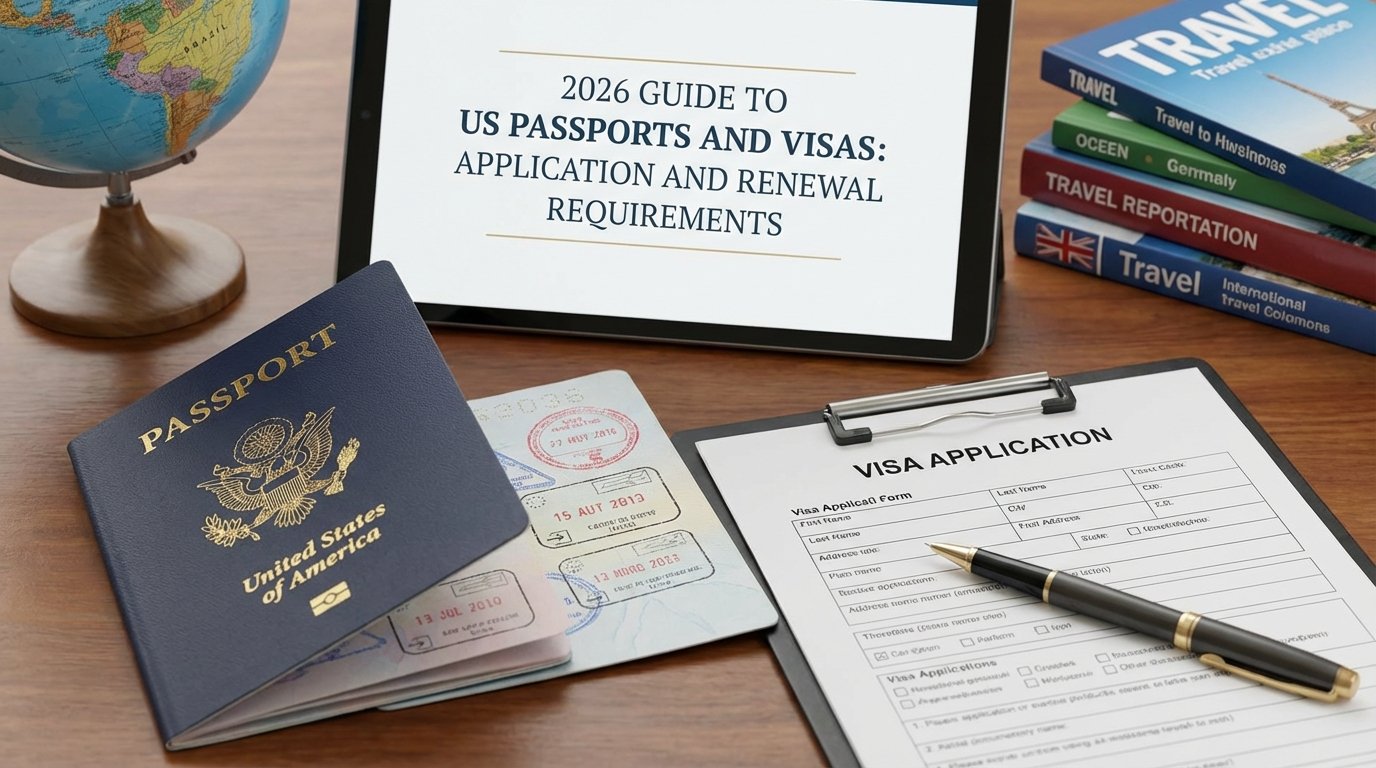
Documentation
- Passport with at least six months of validity remaining, with recently updated biometric information.
- Visa or travel authorization (ETIAS for the EU, ETA for the UK)
- REAL ID-compliant driver’s license for US domestic flights and airport security
- National park permits and reservations for Yosemite, Yellowstone, and Grand Canyon.
- Travel insurance and health proofs such as vaccination cards.
- Digital boarding passes and e-tickets
- Extra seat purchase confirmation if required by airline policies
All documents must conform to the new global standards. For instance, the REAL ID is now required for US flights and some airlines charge a penalty for passengers without one. Check document expiration dates in advance of travel. Digitize and save a copy of that either in secure cloud storage or a travel wallet app. This guarantees rapid access should your originals be misplaced or inspected by border officials.
Digital Readiness
Get ready for new travel. Almost all countries now have online travel authorizations. The UK ETA system allows travelers to submit applications online or via a mobile application. Learning to use these is key. Heads up: ETIAS for the EU is launching in late 2026, so travelers from over 60 visa-exempt nations need to enroll prior to visiting.
Add new travel apps for booking, navigation, or translation. Airports and airlines increasingly require mobile check-in, and digital wallets accelerate payments overseas. Some parks utilize AR apps for tours. Check out these virtual travel tricks ahead of time to sidestep last second tech headaches!
Get set for fresh travel. Some carriers will want notice and a surcharge if you need more than one seat. A new “TSA ConfirmID” charge applies if you’re lacking a REAL ID, so budget accordingly.
Health Planning
- Make appointments for current vaccinations and physicals.
- Collect and store digital versions of vaccine records
- Make a local healthcare resource list at your destination.
- Review health advisories and destination-specific regulations
International health insurance is key. Compare plans that cover emergencies, telemedicine and prescriptions. Does your destination have any specific health regulations, like vaccine entry requirements? Locate urgent care clinics or pharmacies near your accommodations. Early planning can save you from surprises on the road.
Your Privacy, Your Data
International travel in 2026 will demand a lot more from travelers in terms of personal data. New protocols will reinvent how governments and companies manage, share and secure traveler data. These shifts raise legitimate concerns around privacy, data ownership, and information security that traverses borders. These issues are critical to know for anyone preparing to travel abroad, as what occurs with your data can define your whole trip.
Data Ownership
Travelers already give up tons of information when they book trips – names and addresses and payment details and now, increasingly, they’re handing over more social data. Under new rules, you’re required to provide social media accounts, phone numbers, emails, and even your family members’ information just to request a visa waiver. This brings up major issues over who owns this data once it’s gathered. In certain locations, such as the EU, stringent regulations provide you with explicit ownership of your data. Other countries deal with it less severely. For instance, certain Asia-Pacific or African countries are only now beginning to establish regulations for ownership and utilization. If you want to maintain control, you have to read terms, use privacy tools, and question travel providers about what they do with your data. Not all companies make this easy, so being proactive helps you keep your info safe.
Consent Models
Consent is explicit consent to use your data. In 2026, travel companies by and large will shift toward more granular consent models. You could encounter such forms requesting consent to gather data for booking, security screening, or marketing, each with its own tick box. Consent is not all the same. Some do a great job explaining and letting you choose what you share. Others keep it ambiguous or bury consent in lengthy agreements. In the travel industry, there is pressure to be more transparent about how they obtain and utilize your consent, particularly when regulations vary between nations. If you want to stay in control, seek clarity and inquire prior to consent.
Traveler Rights
- Right to know how your personal data will be used and stored.
- Right to access, change, or delete your information
- Bericht über Ihre Privatsphäre, Ihre Daten einschließlich Achtung des Rechts auf Verweigerung bestimmter Nutzungen Ihrer Daten, beispielsweise an Dritte weiterzugeben.
- Right to withdraw consent at any time
- Right to get help if your data is misused. If not, you can complain to travel authorities or privacy regulators in whatever country you visit. New regional rules, such as those arriving to APAC and LATAM, seek to simplify and clarify these rights. Staying on top of the news alerts you to issues promptly. If you observe a breach or misuse, reporting it immediately can safeguard you and others.
The Future of Borders
New world travel system in 2026 will transform human border crossing, security, and engagement. Digital authorisation and biometrics checks are here to stay, with ETIAS in Europe and the UK ETA paving the way. These protocols seek to simplify arrival and they offer promise and challenge to travelers and border agencies alike.
Protocol | Trend | Example | Impact |
|---|---|---|---|
ETIAS & ETA | Pre-travel authorization | ETIAS in Europe, ETA in UK | Faster processing, upfront checks |
EES & Biometrics | Digital identity at borders | EES kiosks in Schengen airports | More secure, less manual work |
Global Standards | Shared rules | U.S. ESTA, ETIAS | Smoother multi-country travel |
Tech at Borders | Automation | Biometric kiosks, e-gates | Shorter lines, adaptation needed |
Global Standards
To set standards globally so more travelers can anticipate the same steps at other borders. Both ETIAS and ETA each require pre-approval before arrival via online forms and small fees, with ETIAS at €20, around $24. These work in conjunction with systems like the U.S. ESTA, which provides a good common framework. Standards are supposed to enhance efficiency. Travelers complete forms in advance, and approval is valid for multiple years, with ETIAS for three years, for example. Not every country will have the same tech or schedules. Travelers should check each destination’s protocols, as some may still use legacy systems or have bespoke additional steps. This drive toward common standards ought to reduce uncertainty, but adjusting to local particulars will still be a facet of international travel.
Economic Impact
About: The future of borders New travel rules shape tourism and local jobs. If identity is to be verified using authorization and biometrics, airports and border crossings have to purchase new technology and train their personnel. This can generate employment for tech support, security, and customer service. For destinations, slicker entry may translate into more visitors if systems perform cohesively, but initial deployment usually brings longer waits at congested hubs. Local economies might incur short-term loss as systems take off, but they may see long-term profits if tourism returns. Travelers ought to look out for fluctuating fees as regulations evolve and plan for potential additional expenses.
Human Element
Even with more automation, people are still key. Biometric kiosks and online forms expedite checks, yet travelers frequently require assistance, particularly amid system upgrades or if something malfunctions. Well-trained staff can shepherd people through kiosks, answer questions, and manage exceptions. Quality customer service matters; it is the difference between a stressful or smooth process. This marriage of tech and staff will define how intimate and comfortable border crossings become.
Navigating the New Era
Travel 2026 looks a lot different than it did even just a few years ago. New rules, shifting habits and digital tools define how we travel and how we cross borders. To keep pace, voyagers must concentrate on some fundamentals.
Seeking means to keep on top in this shifting landscape is now essential. For starters, a lot of travelers — especially Gen Z and Millennial travelers — make trips at the very last minute. They scout for bargains, verify admission policies and let up-to-the-minute news determine their destination. Being plugged in isn’t just about reading official sites. What that means is monitoring travel advisories, local news and trusted apps that provide alerts about new mandates or updates. AI tools make this all the easier. Already more than 60% of younger travelers are using AI to inspire and plan trips. These tools assist people in adapting plans quickly, identifying emerging trends and even monitoring wellness or sustainability alternatives.
Adaptability is more important than ever. Off-the-beaten-path destinations like Toledo, Spain, or Brandenburg, Germany, are attracting travelers seeking a quieter, more restorative experience. Road trips are on the uptick as folks seek liberty, solitude, and a way to economize. Wellness and sustainability top the list. Four in ten travelers seek a wellness break, with about half having opted for a green trip at least once. The trend for ‘quietcations’ reveals that comfort and peace are king, with many seeking a low-stress, restorative break.
Broadcasting what you discover and live through is yet another piece to the new travel puzzle. Social media still influences decisions, but the impact is a blend. India and the UAE experience robust influence, whereas in Europe, more than half of travelers claim social networks do not steer their agenda. By swapping tips and candid reviews online or in person, we help each other locate the good stuff and skip the duds.
As travel prices soar and new post-pandemic expectations emerge, forward-thinking planning and adaptability will allow travelers to maximize their journeys.
Conclusion
New rules will define how we move, check in and share info by 2026. Tech speeds trips and reduces waits. Digital passes and face scans shift border checks. Strict regulations provide greater control over personal information. More individuals will flow from region to region as policies become transparent and easy. Travel safer and smoother with these steps. To prepare, keep informed and leverage new tools as they launch. Keep an eye out for news from reliable sources. Discover new destinations with more ease and less hassle. For global travel tips and news, come back often. Stay inquisitive and receptive as travel continues to evolve.
Frequently Asked Questions
What are the main changes in global travel protocols for 2026?
For 2026, travelers, global travel protocols include contactless check-ins, digital health certificates, and updated security measures. These shifts emphasize security, speed, and a more streamlined travel experience globally.
How is technology improving travel in 2026?
Smart passports, biometric screening, and AI-powered apps are speeding up travel. These tools minimize wait time and increase personal safety for everyone traveling.
Will my personal data be safe with new travel technologies?
New protocols impose stringent data protection requirements. Governments and companies must encrypt and control your personal data while you travel.
How should I prepare for the new travel requirements in 2026?
Verify entry requirements prior to each trip. Carry updated digital documents and lock your device. Keep up with new health and border regulations for your destination.
What does the future of international borders look like?
Borders will leverage more technology, such as biometric gates and real-time data sharing. These developments should boost security and decrease hold-ups for visitors of every nation.
Are digital health certificates required for all international trips in 2026?
Digital health certificates will be needed for entry by most countries. These certificates demonstrate vaccination or recent health status and are accepted digitally or on paper.
How can travelers stay updated on global travel changes?
Monitor official government travel sites and reliable global news sources. Utilize travel apps that offer up-to-the-minute protocol updates, safety notices, and border modifications.