
Tuscany Itinerary: Essential Hill Towns and Driving Routes
Table of Contents
- Your First-Time Tuscany Trip: Prioritizing the Must-Visit Towns
- 1. Florence: The Indispensable Renaissance Hub
- 2. Siena: Medieval Grandeur and Cultural Immersion
- 3. Chianti Wine Region: Scenic Routes and Vintage Tastings
- 4. Val d’Orcia: Iconic Landscapes and Southern Tuscany Highlights
- 5. 5 Days in Tuscany: The Essential Driving Route
- 6. Extending Your Trip: Must-Visit Towns Off the Main Route
- 7. Where to Stay Tuscany: Essential Hill Town Comparison
- 8. Expert Travel Advisory and Logistics
- Frequently Asked Questions
- What is the best way to travel between Florence and Siena?
- Is it Better to Stay in a City or the Countryside in Tuscany?
- The Must-Try Wines on Your First Tuscany Vacation
- Is Volterra Worth Including in Your First Tuscany Itinerary?
- What is the Best Time to Visit Tuscany and Avoid Crowds?
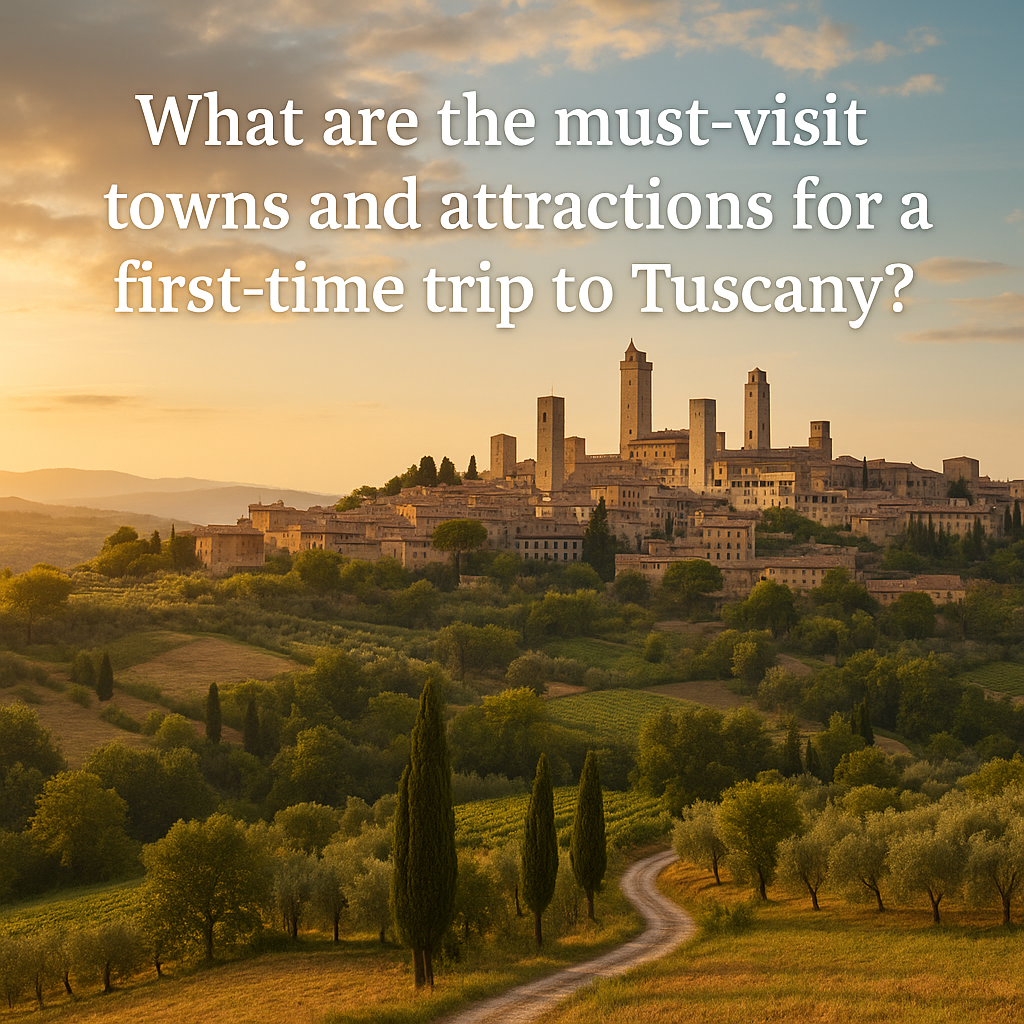
Tuscany offers an unparalleled blend of Renaissance history and stunning countryside. For the first-time visitor, maximizing sightseeing time requires strategic planning, especially when navigating the iconic hilltop towns.
This comprehensive Tuscany travel guide focuses on logistics and efficiency. We detail the most efficient driving routes, critical cultural landmarks, and expert strategies for avoiding peak crowds.
Your First-Time Tuscany Trip: Prioritizing the Must-Visit Towns
Our tiered approach ensures you experience the absolute Tuscany highlights efficiently. We begin with the major cultural hubs, such as Florence, before diving into the picturesque landscapes of the Val d’Orcia region.

This itinerary provides the critical roadmap for connecting world-famous destinations. You will seamlessly link Siena, the Chianti wine region, Montepulciano, and Pienza.
Following this plan ensures you see the best places Tuscany offers, from the artistic wonders of the Florence Duomo to the UNESCO-recognized stunning countryside.
1. Florence: The Indispensable Renaissance Hub
Definition: Florence is the undisputed cradle of the Renaissance and remains Italy’s most visited city. It is the essential starting point for any comprehensive Tuscany itinerary and serves as the region’s main logistical gateway.

Benefit: We recommend allocating at least 3 days in Florence to fully appreciate its scale. This duration allows deep immersion into world-class art history, architecture, and unparalleled culinary experiences, crucial elements of any first-time Tuscany vacation.
Example: Key Tuscany highlights include climbing the massive Florence Duomo (Cathedral of Santa Maria del Fiore) and crossing the iconic shops of the Ponte Vecchio over the Arno River. Explore the immense art collections within the Palazzo Pitti, where the political and artistic influence of the powerful Medici Family is evident everywhere.
Essential travel advice for this high-traffic hub: Secure timed entry tickets months in advance for major sites. This strategy is crucial for maximizing your sightseeing time and avoiding the significant queues that dominate the Renaissance core, making your Florence travel guide experience efficient.
2. Siena: Medieval Grandeur and Cultural Immersion
Siena is the essential second stop on any comprehensive Tuscany itinerary. As Florence’s historical rival, Siena maintains a beautifully preserved medieval center recognized as a UNESCO World Heritage site.

Siena offers a crucial counterpoint to the Renaissance style of Florence. You will find a deeper, more intimate cultural immersion here, making it a must-visit Tuscany destination.
Key Siena Highlights for First-Time Visitors
The central feature of Siena is the iconic Piazza del Campo, considered one of Italy’s most beautiful public spaces. This unique, shell-shaped square is the heart of the city’s pedestrian-focused experience, offering a distinct advantage over the larger scale of Florence.
Ensure you visit the spectacular Siena Duomo, known for its elaborate striped facade and intricate marble floor, a true highlight of medieval Italian art and architecture.
Twice yearly, in July and August, the square hosts the famed Palio di Siena (Horse Race). While spectacular, this cultural tradition causes significant crowding, requiring strategic planning if you schedule your Tuscany vacation during these months.
Siena serves as the critical midpoint, offering practical logistical guidance before you drive south into the Chianti wine region and the stunning Val d’Orcia corridor.
3. Chianti Wine Region: Scenic Routes and Vintage Tastings
Definition: The Chianti wine region is the heart of the Tuscany itinerary, geographically situated between Florence and Siena. This iconic area is world-renowned for its dramatic rolling hills, ancient stone farmhouses, and, crucially, the production of Chianti Classico wine. It showcases some of the most stunning countryside views in all of Tuscany.
Benefit: Chianti is a must-visit Tuscany destination for travelers seeking relaxation and epicurean immersion. The scenic drives along the historic Chianti Road (SR 222) are essential for maximizing your visual experience. The landscape is also perfect for Tuscany cycling trips, offering challenging yet rewarding routes through the vineyards.
Example/Logistics: Focus your exploration on the historic villages, particularly Greve, Radda, and Castellina in Chianti. Modern wineries throughout the Chianti wine region provide structured wine tastings and guided cellar tours. For the best cultural immersion and to fully appreciate the local gastronomy, expert travel advice recommends integrating at least one overnight stay here into your comprehensive Tuscany travel guide plan.
4. Val d’Orcia: Iconic Landscapes and Southern Tuscany Highlights
Definition: The Val d’Orcia is the centerpiece of any southern Tuscany itinerary. Characterized by iconic rolling hills, solitary cypress trees, and historic agricultural estates, this region holds UNESCO World Heritage status for its stunning, carefully preserved scenery.

Benefit: This area provides the quintessential image of the Tuscany vacation. For first-time visitors to Italy, the Val d’Orcia offers unparalleled photographic opportunities and access to world-famous wines like Brunello and Noble Wine, making it a crucial stop on your Tuscany travel guide route.
4.1. Pienza: The Ideal Renaissance Town
Pienza is celebrated as a “touchstone of Renaissance urbanism,” having been redesigned in the 15th century to represent the ideal city. This small town offers some of the best panoramic views of the entire Val d’Orcia landscape.
You must sample the local specialty: Pecorino cheese. Pienza is one of the must-visit Tuscany locations for experiencing both history and local gastronomy.
4.2. Montepulciano: Home of Noble Wine
Montepulciano is a high-perched hill town famous for its elegant Renaissance palaces and producing the esteemed Noble Wine of Montepulciano. This is one of the key locations for understanding Tuscan viticulture and is a highlight of any Tuscany travel guide.

Be prepared for a steep climb to the town center. The effort is rewarded with fantastic views of the stunning countryside and access to historic underground wine cellars.
4.3. Montalcino: Prestigious Brunello Wine
Montalcino is often considered slightly more off the beaten path than Pienza, but it is internationally famous as the birthplace of Brunello Wine of Montalcino. Brunello is consistently ranked among Italy’s most prestigious and expensive wines.
The town’s medieval fortress provides exceptional, 360-degree views over the surrounding hills. This beautiful town Tuscany offers a perfect combination of history and world-class wine tasting experiences.
5. 5 Days in Tuscany: The Essential Driving Route
For first-time travelers, a 5 days in Tuscany itinerary requires strategic planning and a rental car to maximize efficiency. This essential route focuses on central and southern Tuscany highlights: Florence, Siena, Montepulciano, Pienza, and Volterra.
This plan is designed to minimize backtracking and ensure you capture the most beautiful towns Tuscany offers, alongside the necessary logistical guidance.
5.1. Day-by-Day Tuscany Itinerary
This Tuscany itinerary prioritizes cultural immersion and scenic driving, beginning and ending in the region’s main hub.
- Day 1 & 2: Florence (Arrival and Art). Focus on the Florence travel guide staples. You must see the Florence Duomo, the Ponte Vecchio, and the Renaissance masterpieces housed in the Uffizi Gallery. Dedicate time to the massive Palazzo Pitti for a full appreciation of the Medici Family‘s influence. Pick up your rental car on the morning of Day 3 to avoid city driving fees.
- Day 3: Siena and Chianti. Drive south from Florence to Siena (approx. 1.5 hours). Spend the morning exploring the magnificent shell-shaped Piazza del Campo, the heart of the city and home to the historic Palio di Siena horse race held in the summer. In the afternoon, drive through the scenic Chianti wine region. Stop in Castellina in Chianti for a wine tasting experience before overnighting near Siena or in a Chianti vineyard.
- Day 4: Val d’Orcia Core. This is the crucial driving day focused on the UNESCO-protected landscapes. Start early, heading south toward the Val d’Orcia heartland. Visit the beautiful towns Tuscany is known for: Pienza and Montepulciano. Enjoy the stunning countryside characterized by rolling hills and solitary cypress trees. Overnight near Montepulciano or Pienza.
- Day 5: Volterra and Departure. Visit the Etruscan hill town of Volterra. Then, loop back north toward Florence or Pisa airport. This allows for flexibility depending on your departure logistics.
5.2. The Optimal Driving Logistics and Safety
The most efficient route for visiting the core hill towns minimizes backtracking and uses the scenic regional roads (often designated SR or SP). This strategy ensures you experience the iconic landscape of the Crete Senesi region.
A critical piece of travel advice for your Tuscany vacation involves parking. Remember that many historic centers enforce ZTLs (Limited Traffic Zones), which prohibit unauthorized driving. Always park outside the city walls in designated paid lots to avoid heavy fines.
5.3. Core Driving Sequence for Southern Tuscany
Day 4 is essential for covering the Val d’Orcia efficiently. This sequence allows you to compare the best places Tuscany offers within a tight timeframe.
- Siena to Montepulciano: Approximately 1 hour 15 minutes. This drive takes you through the stunning landscape of the Crete Senesi region, offering excellent photo opportunities of the stunning countryside.
- Montepulciano to Pienza: Approximately 20 minutes. This is a quick hop, allowing you ample time to explore both of these must-visit Tuscany hill towns easily.
- Pienza to Volterra: Approximately 1 hour 45 minutes. This longer drive crosses the regional center, offering different panoramic views before arriving at the Etruscan stronghold.
5.4. Chianti Wine Region: Scenic Drives and Tasting
The Chianti wine region is a non-negotiable stop on any Tuscany travel guide. This area, famed for its vineyards and world-renowned Chianti wines, is best explored via the scenic routes connecting its charming villages.
Competitors emphasize spending time in villages like Radda and Greve, but Castellina in Chianti is logistically sound for a quick stop between Florence and Siena. This area provides the perfect opportunity for local food and wine experiences and offers crucial insight into Tuscan agricultural life.
Spending at least one night in the Chianti wine region is highly recommended. Not only does it allow for deeper immersion, but it places you strategically for the drive into the Val d’Orcia the following morning.
6. Extending Your Trip: Must-Visit Towns Off the Main Route
While the core Tuscany itinerary focuses on the essential highlights, Florence, Siena, and the Val d’Orcia region, extending your Tuscany vacation provides deeper insight into the region’s diversity.
These secondary destinations are excellent additions for a longer trip or for travelers seeking beautiful towns Tuscany offers outside the main tourist path. Exploring these areas allows you to experience more of the quiet, stunning countryside.
6.1. Lucca: The Walled City and Day Trip Option
Lucca is a highly recommended destination, especially for those basing themselves near Florence or Pisa. It is famous for its remarkably preserved, wide Renaissance-era city walls, which are among the most unique places to visit Tuscany offers.
The city walls are wide enough for walking or cycling the entire perimeter, offering superb views and logistical guidance. Its pedestrian-friendly center and historic squares provide a relaxing contrast to the hustle of Florence.
If your Tuscany travel guide spans 7 days or more, scheduling a dedicated Lucca day trip is essential for seeing the northern region’s highlights.
6.2. Cortona: Hilltop Views and Literary Charm
Cortona sits high on a hill, offering dramatic, panoramic views over Lake Trasimeno and the surrounding stunning countryside. This town gained international recognition thanks to the popular book and film “Under the Tuscan Sun.”
Known for its picturesque medieval streets and unique artisan galleries, Cortona is a culturally rich addition to any itinerary. It serves as an excellent base if you plan on exploring both Umbria and southern Tuscany near the Val d’Orcia.
Cortona provides a quiet alternative for travelers interested in art history and avoiding the congestion found in larger hubs like the Florence Duomo or Piazza del Campo.
7. Where to Stay Tuscany: Essential Hill Town Comparison
Choosing where to stay Tuscany depends entirely on your travel priority: culture, landscape, or logistical ease. A strategic base maximizes your sightseeing time and improves your overall Tuscany itinerary.
For a first-time Tuscany vacation, Siena often serves as the best hub due to its central location and robust cultural offerings. However, towns like Montepulciano provide unmatched access to the stunning countryside of the Val d’Orcia region.
| Town | Primary Focus | Best For | Logistical Note |
|---|---|---|---|
| Siena | Medieval Culture, History | Cultural immersion, Palio di Siena | Excellent base for Chianti tours. |
| Montepulciano | Wine (Vino Nobile), Architecture | Fine dining, wine cellar visits | Hilly, parking required outside ZTL. |
| Pienza | Landscape, Pecorino Cheese | Photography, relaxation, Val d’Orcia views | Very small, easily walkable. |
| Volterra | Etruscan History, Alabaster Craft | Off the beaten path exploration | Less crowded than San Gimignano. |
Siena: The Cultural Powerhouse
Siena is a critical stop for any serious Tuscany travel guide. Known for its breathtaking Duomo and the iconic fan-shaped Piazza del Campo, Siena offers deep cultural immersion and is one of the most beautiful towns Tuscany features.
If your trip aligns with July or August, experiencing the historic Palio di Siena (Horse Race) is a must-visit Tuscany highlight. Staying here provides easy access to the vineyards of the Chianti wine region to the north.
Montepulciano and Pienza: Val d’Orcia Bases
These two hill towns are the definitive bases for exploring the UNESCO-protected Val d’Orcia. Montepulciano is larger and famous for its Vino Nobile wine and impressive Renaissance architecture.
Pienza, designated a World Heritage Site, is perfect for photography and relaxation. It offers some of the region’s most stunning countryside views and is internationally renowned for its production of Pecorino cheese.
Volterra: Off the Beaten Path History
For travelers interested in deep Etruscan history and avoiding the primary tourist crowds, Volterra is an excellent choice. It specializes in ancient history and the craft of alabaster carving, providing a true off the beaten path experience.
Volterra provides a genuine glimpse into Tuscan life, far from the hustle of Florence, making it a highly recommended addition for travelers planning 5 days in Tuscany or more.
8. Expert Travel Advisory and Logistics
The success of your first Tuscany itinerary hinges on effective logistical planning. Trafels.com prioritizes providing practical, actionable travel advice to ensure you maximize time seeing the must-visit Tuscany sites while navigating the region efficiently.
8.1. Transportation: The Essential Rental Car
While high-speed rail efficiently connects major hubs like Florence and Siena, exploring the heart of the region requires wheels. To access the Chianti wine region and the iconic landscapes of the Val d’Orcia, a rental car is mandatory.
Buses serve the smaller towns, but schedules are infrequent and unreliable for time-sensitive travelers. For maximum flexibility and access to the most stunning countryside, the car is necessary, despite the navigation challenges in city centers.
8.2. Critical Driving Warning: Restricted Traffic Zones (ZTLs)
A common and costly mistake for drivers on a Tuscany vacation is entering Restricted Traffic Zones (ZTLs). These zones restrict vehicle access in historic city centers (including Florence, Siena, and Lucca), often resulting in steep fines issued months later.
Always park outside the historic walls and walk in. Providing logistical guidance on regional transportation methods like this is critical for avoiding hundreds of Euros in penalties during your trip.
8.3. Personalized Expert Planning and Consultation
For travelers seeking complex routes or specialized interests, utilizing personalized travel consultation services is invaluable. This refines your Tuscany itinerary from generic Tuscany highlights to truly off the beaten path experiences.
Consultants like Stefano, often found on resources such as goaskalocal.com, offer proven regional expertise. This ensures content segmentation based on traveler duration and priority, helping you select the best places Tuscany specific to your interests.
8.4. Editorial Credibility and Financial Transparency
As an expert Tuscany travel guide, Trafels.com maintains strict editorial standards. We ensure financial transparency regarding referral compensations and focus on revenue generation through non-advertisement methods.
This commitment is key to establishing credibility through proven regional expertise and providing objective, unbiased logistical guidance for your trip to Florence and beyond.
Frequently Asked Questions
Trafels.com receives many questions from first-time visitors planning their trip. This section provides critical answers to common logistical and destination queries, ensuring your Tuscany travel guide is complete.
1. How many days are ideal for a first-time Tuscany itinerary?
For a comprehensive overview of the region’s primary attractions, we recommend a minimum of 5 days in Tuscany. This duration allows you to explore the Renaissance art of Florence and still dedicate two full days to the hill towns and Val d’Orcia.
If you have only three days, focus intensely on the triangle of Florence, Siena, and the nearest part of the Chianti wine region. A longer Tuscany itinerary (7 to 10 days) allows for deep exploration, including Tuscany cycling trips and time in Lucca.
2. Where should I base myself for sightseeing?
The best answer to Where to stay Tuscany depends on your priorities. For art and rail access, base yourself in Florence. It is Italy’s most visited city and an ideal hub for day trips.
If you prioritize the iconic stunning countryside and vineyard experiences, choose a centralized agriturismo (farm stay) near Siena or in the Chianti wine region. This minimizes driving time between the beautiful towns Tuscany offers, such as Pienza and Montepulciano.
3. What are the absolute must-visit Tuscany highlights in Florence?
As the epicenter of the Renaissance, Florence is essential. It is known globally for its Renaissance art and architecture. Your visit must include the Florence Duomo (Cathedral of Santa Maria del Fiore) and the historic Ponte Vecchio, the only bridge spared during WWII.
Explore the history of the powerful Medici Family by visiting the Palazzo Pitti. For logistical guidance, remember that Florence is a major hub, and a good Florence travel guide emphasizes walking tours along the Arno River.
4. Is Siena worth spending a full day?
Absolutely. Siena is a must-visit Tuscany destination, offering cultural immersion distinct from Florence. Competitors agree that Siena’s Piazza del Campo and Duomo are among Italy’s most beautiful medieval structures.
If your trip aligns with early July or mid-August, you can witness the famous historic horse race, the Palio di Siena (Horse Race), which transforms the city center. The city requires a full day to appreciate its medieval street layout and architectural grandeur.
5. Which wine region is best for a first-time visitor: Chianti or Val d’Orcia?
Both regions offer world-class wine and stunning countryside, but they offer different experiences.
Chianti Wine Region
The Chianti wine region is geographically closer to Florence and Siena, making it highly accessible. It is famous for its vineyards, offering wine tastings and scenic drives among charming villages like Greve, Radda, and Castellina in Chianti.
This region is excellent if your focus is on world-renowned Chianti Classico wines and rolling, wooded hills. It is recommended to spend at least one night here to enjoy the local cuisine.
Val d’Orcia
The Val d’Orcia area, south of Siena, is famed for its iconic, often photographed rolling hills and cypress-lined roads. It holds UNESCO World Heritage status specifically for its landscape.
This region is home to key towns like Pienza, Montalcino, and Montepulciano, where you can sample famous wines such as Brunello di Montalcino and Vino Nobile. If your priority is photography and classic Tuscan vistas, Val d’Orcia is the superior choice.
6. Can I do a Lucca day trip from Florence?
Yes, a Lucca day trip is highly recommended and logistically simple via train or car. Lucca is one of the most beautiful towns Tuscany offers, known for its remarkably preserved Renaissance-era city walls.
The city center is pedestrian-friendly, making it ideal for a relaxed day of cycling atop the walls and exploring historic squares and towers. It provides a wonderful contrast to the dense artistic intensity of Florence.
7. What about towns like Cortona and Volterra?
These towns are excellent choices for visitors seeking off the beaten path experiences or those with more than five days in their Tuscany itinerary.
Cortona, famously featured in the book and film “Under the Tuscan Sun,” provides picturesque medieval streets and stellar hilltop views overlooking Lake Trasimeno. It is a culturally rich base for exploring southern Tuscany and neighboring Umbria.
Volterra is a stunning Etruscan and medieval town known for its alabaster craftsmanship and commanding views, offering another look at the rich history contained within the places to visit Tuscany list.
8. How can I get personalized travel advice for my trip?
For highly customized itineraries, Trafels.com offers targeted travel consultation services. We specialize in providing logistical guidance on regional transportation methods and strategies for maximizing sightseeing time.
We believe in establishing credibility through proven regional expertise, ensuring you receive personalized travel advice tailored to your specific duration and priority list of Tuscany highlights.
What is the best way to travel between Florence and Siena?
For efficient travel between Florence and Siena, the direct express bus service is the superior option. This method provides critical logistical guidance, typically taking around 75 minutes.
Unlike the regional train, the bus terminates much closer to Siena’s historic center and the famous Piazza del Campo. Choosing the bus saves you significant time and effort navigating local transport upon arrival in this must-visit Tuscany highlight.
If you are starting a driving tour, taking the scenic route through the Chianti wine region is highly recommended. This drive turns transportation into a valuable part of your Tuscany itinerary, allowing you to experience the stunning countryside and stop at key villages like Castellina in Chianti.
This route is essential for first-time visitors seeking the best places Tuscany offers, blending urban exploration with the beauty of the vineyards.
Is it Better to Stay in a City or the Countryside in Tuscany?
For maximizing your sightseeing on a first-time trip, especially for a dedicated 5 days in Tuscany itinerary, the optimal strategy is a hybrid approach. This allows you to capture the cultural intensity of major cities while enjoying the tranquility of the stunning countryside.
Phase 1: City Immersion (Florence or Siena)
Begin your Tuscany travel guide experience with two to three nights based in either Florence or Siena. Florence is Italy’s most visited city for a reason, providing immediate access to critical Renaissance landmarks.
Starting in Florence simplifies early logistics and allows you to visit essential sites like the Florence Duomo, Ponte Vecchio along the Arno River, and the Palazzo Pitti. This is crucial for understanding the region’s history, particularly that of the powerful Medici Family.
Alternatively, a base in Siena provides a rich medieval experience. You can easily immerse yourself in the culture surrounding the Piazza del Campo and potentially witness the historic Palio di Siena (Horse Race) if traveling in July or August.
Phase 2: Countryside Base (Chianti or Val d’Orcia)
After experiencing the cities, transition to a centralized farm stay or villa rental in a rural area. This is essential for accessing the best places to visit Tuscany is famous for, like the hilltop towns.
The Chianti wine region is a perfect rural base, offering scenic drives and easy access to charming villages, including Castellina in Chianti. You can dedicate time here to wine tastings and exploring modern wineries producing world-renowned Chianti wines.
For the iconic landscape views, choose a base focused on the Val d’Orcia. This UNESCO World Heritage site is where you will find the most picturesque scenery, rolling hills, and beautiful towns Tuscany is known for, such as Pienza and Montepulciano.
This split structure ensures your Tuscany vacation covers both art history and viticulture, providing comprehensive Tuscany highlights.
The Must-Try Wines on Your First Tuscany Vacation
A first-time Tuscany vacation is incomplete without experiencing the iconic red wines that define the landscape and culinary traditions. These wines are directly linked to the must-visit Tuscany hill towns, making wine tasting a crucial part of your Tuscany itinerary.
Chianti Classico: The Heart of the Region
The most recognizable wine is Chianti Classico. This Sangiovese-based wine comes from the historic Chianti wine region, situated between Florence and Siena. Look for the Black Rooster seal, which denotes the highest quality.
The Chianti wine region offers superb scenic drives. Competitors emphasize visiting charming villages, such as Castellina in Chianti, for authentic wine tastings and a full appreciation of the vineyards.
Val d’Orcia’s Noble Reds
When exploring the stunning countryside of the Val d’Orcia area, you encounter two globally renowned, high-value wines. These are produced in or near the region’s beautiful towns Tuscany, connecting directly to your driving route.
Brunello di Montalcino
This powerful, long-aged red wine originates solely from the vineyards surrounding the hilltop town of Montalcino. Brunello is internationally praised and is a key highlight of any Val d’Orcia itinerary. Tasting this wine offers insight into the dedication required for premium Tuscan viticulture.
Vino Nobile di Montepulciano
Produced in the vicinity of Montepulciano, this “Noble Wine” offers exceptional depth and complexity. It is essential to try both Nobile and Brunello to compare the distinct terroir found within the Val d’Orcia region, cementing the area as a global wine destination.
Is Volterra Worth Including in Your First Tuscany Itinerary?
Yes, Volterra is highly recommended, but only if your initial Tuscany itinerary spans five days or more. It is truly one of the most beautiful towns Tuscany offers, providing a fascinating look at Etruscan history alongside impressive medieval structures.
For travelers seeking places to visit Tuscany that feel authentic and slightly off the beaten path, Volterra is ideal. It is typically less crowded than nearby destinations like San Gimignano, allowing for a more relaxed experience exploring the historic core.
Volterra’s inclusion requires strategic planning. It is positioned west of the core routes connecting Florence and Siena. Expert travel advice suggests combining it with a drive through the western edge of the Chianti wine region or as a dedicated stop on a longer Tuscany vacation focusing on history and archaeology.
What is the Best Time to Visit Tuscany and Avoid Crowds?
The optimal time for your Tuscany vacation is during the shoulder seasons: late April to early June, and September through October. This period offers the perfect balance of excellent weather and manageable crowds.
While major sites in Florence, such as the Florence Duomo and the Ponte Vecchio, will always draw large numbers, the reduced summer heat makes navigating the city much easier. This is essential logistical advice for maximizing your sightseeing time.
The shoulder season is also ideal for maximizing your time in the countryside. Temperatures are perfect for Tuscany cycling trips through the Chianti wine region or scenic drives across the rolling hills of the Val d’Orcia area.
Exploring Siena and its historic Piazza del Campo is far more pleasant in the spring or fall. You gain better access to the beautiful towns Tuscany offers without the peak summer accommodation prices.
If avoiding crowds is your top priority for your Tuscany itinerary, focus on late September and early October. Crucially, avoid July and August if your trip includes Siena, as the city becomes completely overwhelmed during the famous Palio di Siena (Horse Race).
References
- A Quick Guide to Tuscany’s Prettiest Places – Go Ask A Local
- Must-see destinations for first-time visitors to Tuscany
- 10 Tuscan villages to visit during a trip to Italy – The Florence Insider
- THE 15 BEST Things to Do in Tuscany (2026) – Must-See Attractions
- Places to visit in Tuscany: top 10 things to see and do | Italoblog