

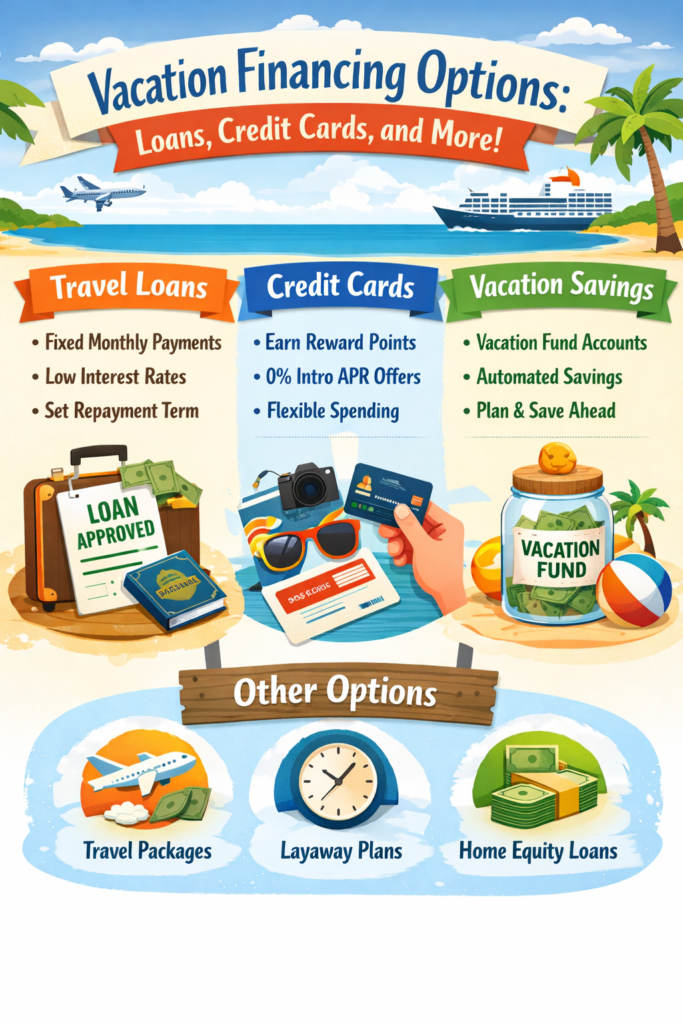
- Key Takeaways
- Your Vacation Financing Options
- Loans Versus Credit Cards
- The True Cost of Financing
- Create Your Financing Strategy
- The Psychology of Travel Debt
- Alternatives to Borrowing
- Conclusion
- Frequently Asked Questions
- Can I finance my vacation expenses with a personal loan?
- Is it better to use a credit card or a loan for vacation financing?
- What is the real cost of financing a vacation?
- How do I create a smart financing strategy for my vacation?
- Are there alternatives to borrowing for a vacation?
- How can travel debt affect my finances?
- Is financing a vacation a good idea?
Key Takeaways
- There are a variety of different ways to finance your vacation such as personal loans, travel cards, installment plans, and provider financing, each with their own advantages and tradeoffs.
- By comparing interest rates, repayment terms, and potential fees from different financing options, you can select a method that fits your budget and financial situation.
- Financing a vacation can play a role in your credit score and ability to borrow in the future. It’s important to consider how each option affects your long-term financial health.
- Knowing the actual cost of borrowing, such as hidden fees and interest accrual, will prepare you to steer clear of surprises and tackle your repayment wisely.
- Establish a travel budget and savings plan to avoid vacation debt.
- Options like saving ahead, travel rewards, or side income can finance your vacation without debt.
People can finance vacation expenses through several options, including credit cards, personal loans, or travel financing plans from banks and travel agencies. Several banks provide quick loans for travel and a few agencies partner with lenders to create easy installment plans. Credit cards are ubiquitous when it comes to booking flights and hotels, but interest rates can snowball if you don’t pay it off right away.
Certain employers or associations have special loan programs available for holiday travel. Online lenders have fast approval personal loans as well, which can fund expenses such as flights, accommodation, and dining. Each option has different fees, rates, and terms, so it’s important to dig into those specifics before you decide. The following section will dissect each financing alternative and what to look out for.
Your Vacation Financing Options
A lot of folks seek means to fund travel besides saving. Almost 3 in 10 are willing to go into debt for a vacation. It’s crucial to compare the alternatives and plan in advance to avoid getting caught in a long-term financial bind. Here are some ways people finance vacations:
- Personal loans for lump-sum funding and steady repayments
- Travel credit cards offering points, miles, and travel perks
- Installment plans to break up payments over time
- Provider financing through travel agencies or booking platforms
- Setting aside a share of monthly income
- Using a vacation club account for savings
- Earning extra through side hustles
- Adopting a no-spend month to boost travel funds
1. Personal Loans
Personal loans are a frequent choice for financing big travel expenses. With fixed interest rates and predictable monthly payments, they are easier to budget. Borrowers receive a lump sum, meaning they can cover plane fare, hotels, and other expenses in advance without maxing out their credit cards.

It typically involves income verification, a credit check, and occasionally collateral. A robust credit score can mean lower APRs, sometimes lower than most credit cards. It is about comparing lenders and that transparency around terms, fees, and where you will get the best rate. This option fits those with steady income who prefer to know their repayments and overall loan costs upfront.
2. Travel Credit Cards
Travel credit cards allow you to earn points or miles on every purchase that can be redeemed for flights, hotels or upgrades. Most cards offer travel insurance and purchase protection to provide peace of mind. Cardholders can earn the most points by using the card for everyday spending prior to their trip.
Remember, these cards can come with annual fees and high interest rates if you don’t pay the balance off each month. Be sure to read the fine print for each card’s terms and consider your travel frequency to make sure the perks are worth the expenses.
3. Installment Plans
A few travel suppliers present installment plans, which break vacation bills into bite-sized chunks. This brings larger trips closer within reach without a giant upfront payment. Travelers should see if their airline, hotel, or booking site offers such options.

Add what you will be paying, interest or fees included, to not be caught off guard later. Check all terms and make sure installments work with your monthly budget.
4. Provider Financing
Travel agencies and booking platforms occasionally have their own finance programs. These can offer low or even zero interest for a specific length of time, allowing you to cover a vacation without additional fees. Booking and financing all in one place is convenient, but it is best to read customer reviews before you enroll.
Check for any hidden fees and ensure the provider is reputable. This way can be quick and easy, but as with any financing, it is important to read the fine print on the total cost.
Loans Versus Credit Cards
Financing a vacation can mean a personal loan or a credit card. Both have their associated costs, benefits, and longer term implications. Which is right for you depends on your financial habits, needs, and repayment plan. Below is a quick comparison:
| Factor | Personal Loan | Credit Card |
|---|---|---|
| Interest Rate | Usually fixed, may be lower with good credit | Often variable, usually higher |
| Repayment Term | Fixed, 1–7 years, set monthly payment | Flexible, no fixed end date |
| Credit Impact | May lower score at first, fixed debt | Affects credit utilization, impacts score |
| Flexibility | Less flexible, lump sum | More flexible, pay as you spend |
| Rewards | None | Possible, like cash back or travel points |
| Early Repayment | Sometimes fees | No penalty for early payoff |
Interest Rates
Personal loans have fixed interest rates, so you pay the same amount in interest every month until it’s paid off. If you have a strong credit score and stable income, you might be eligible for a lower APR, sometimes as low as 6 to 10 percent. Credit cards, on the other hand, commonly have variable rates. These interest rates can be over 20 percent if you don’t pay off your balance monthly. If you borrow €2,000 for a vacation, with a personal loan at 8 percent APR over two years, that translates into roughly €173 per month, including roughly €152 in interest. A credit card at 19 percent, paid only by minimums, might cost far more in interest. The rate you receive with either depends a lot on your credit score; higher scores get better rates.
Repayment Terms
Personal loans have fixed terms, so you know when you’ll be done paying. You pay the same amount each month, with terms typically one to seven years. This makes budgeting and planning easier. Credit cards provide far more flexibility. You can pay the minimum, more than the minimum, or the entire balance each month. This can assist if your cash flow shifts, but it means you can carry the debt around for years if you’re not cautious. Some loans have an early repayment fee, while credit cards enable you to pay off as quickly as you desire, with no interest if you pay in full.
Credit Impact
Personal loans can cause your credit score to dip slightly at first because of the hard inquiry and new debt. Over time, on-time payments can help your score rebound and even strengthen. Credit cards for vacation expenses impact your credit utilization ratio, which is the percentage of your total credit you’re using. High balances will decrease your score. Paying on time generates good credit history. Even a loan or credit card debt that you’re carrying for a long time can burden your overall credit profile and reduce future borrowing flexibility.
Flexibility
Credit cards are generally the more flexible choice for travel. You can charge just what you need, cover surprise expenses, and alter your plans without a new loan. If you’d like to carry a balance over time, there’s no prepayment penalty. Perks like travel points or cash back can help balance out some of the vacation expenses. Personal loans, though less versatile, are great for big, fixed costs and put you on a repayment schedule. If things switch up or the price tag is higher than expected, you can’t just add more to the loan.
The True Cost of Financing
Vacation financing may feel like an easy solution. The actual price tag extends further than just airfare and hotel charges. Too many travelers don’t realize how fees and interest compound, making the journey exponentially more costly. Here are some costs to watch for when considering financing your next trip:
- Interest charges on loans or credit cards
- Late payment fees
- Upfront loan origination fees
- Currency conversion charges
- Cash advance fees
- Higher costs due to rising recreation and food prices
- Potential impact on long-term savings goals
- Lost opportunity to invest or save the money instead
Interest Accumulation
Vacation loan and credit card interest rates span the spectrum, with 9% for good credit and 36% for bad credit. This spread causes travelers to pay far more than they anticipate. Just like paying down a credit card balance, if you make only minimum payments, the cost can balloon quickly.
| Loan Type | Interest Rate (Annually) | Vacation Cost (€3,000) | Repayment (36 Months) | Interest Paid |
|————————–|:———————:|:———————-:|:———————:|:——————:|
| Bank Loan (Good Credit) | 9% | €3,000 | €95/month | €420 |
| Credit Card (Avg) | 20% | €3,000 | €100/month | €600 |
| Credit Card (Min Pay) | 25% | €3,000 | €75/month | €1,040 |
| Subprime Loan (Bad Credit)| 36% | €3,000 | €120/month | €1,320 |
With compounding, interest piles up every month, particularly at minimum payments. Paying more than the minimum or using a low interest personal loan can help keep the interest down. Commitment to a repayment schedule makes borrowing cheap.
Credit Score Effects
How you pay for your trip can help or harm your credit score. Smart credit usage, such as making timely payments and keeping utilization low, can increase your score. Omitting payments or overutilizing credit can damage it. Once you’ve taken out a loan or charged a trip, monitor your credit report for updates. A good credit score simplifies borrowing for larger needs down the road, like a home. On-time payments for months build good credit history.
Future Borrowing
Vacation debt can transform your lenders’ perception of you. If your debt-to-income ratio rises, you may not be eligible for other loans or lower rates. Vacation debt can reduce your opportunities for saving or investing. The higher your debt, the tougher it is to obtain additional credit if you require it. Maintain your score and borrow what you can afford.
Create Your Financing Strategy
A solid strategy can help turn vacation dreams into reality without resulting in chronic money stress. Start with a checklist: set a clear budget, review your regular income and spending, sort out high-interest debt, compare lenders, and make a plan to pay back what you borrow. These steps can assist you in determining what financing mix suits your requirements and objectives.
Assess Affordability
First, determine the true cost of your journey. Consider transport, accommodations, food, activities, and souvenirs. Cap meals and fun per day, so you’re not blowing money. Take a look at your monthly income and fixed costs, such as rent or utilities, to determine your vacation residual. Knowing you have a reliable source of revenue that can support those additional payments is essential if you intend to take out a loan. Start putting away a fixed percentage of your monthly pay—somewhere in the 5 to 20 percent range—to contribute to a vacation fund. Think about eliminating non-essential expenditures for a few months. Reserving a surprise safety net can stave off last-minute stress. Prioritizing needs over wants and committing to a defined plan keeps your trip within your grasp.
Compare Lenders
Investigate vacation and personal loan lenders. Explore banks, credit unions, and online lenders. Shop online to compare interest rates, repayment terms, and loan amounts. Make sure to read reviews and ratings to see how lenders treat their customers. Inquire about additional fees, as some could have secret fees or early repayment fines. Not every lender is transparent about fees, so read the fine print. Having multiple lenders allows you more leverage to choose the best deal.
Read the Fine Print
Be sure to read every line of a loan agreement before you sign. Be on the lookout for sneaky fees, harsh repayment policies, or restrictions on spending. Know what occurs if you miss or are late with a payment, as this may increase your charges or damage your credit. Find out the repayment schedule and whether the loan term can be variable. Mapping out your repayment timeline reduces late-stage financial headaches. If possible, look into alternatives like side jobs or savings challenges to reduce how much you have to borrow.
The Psychology of Travel Debt
Going on vacation on credit sounds like a good idea. The soul-crushing taste of travel debt is genuine. A lot of people experience the thrill of reserving a trip, but this quickly morphs into stress when they’re confronted with post-vacation bills. It’s a fine line between creating memories and creating debt. While a few are elated by travel, others find that it’s the expense that long sticks around. They warn that travel debt is “bad debt,” particularly when you’re having difficulty paying the bills or making ends meet.
Post-Vacation Stress
Vacation-financing folks, beware: stress may await you back home. Typical symptoms are difficulty sleeping, moodiness, or a nagging concern about future payments. Such stress can swamp the high from your trip. Not even a dream destination shines when debt shadows your return. Easy tips can assist, such as monitoring your spending or planning a repayment schedule in advance of departure. For some, discussing these fears with friends or relatives provides comfort and an actionable plan. Talking about it out loud can help you find support or find creative ways to cut costs going forward.
The Enjoyment Paradox
There’s something hard to balance about having a good time on the road while knowing you’re in debt. Thinking about those bills while you’re on the trip can make it difficult to truly unwind. Debt robs us of remembering the sights and the time shared. It ties our memories to stress instead of happiness. Mindful spending, selecting what’s important rather than what’s just flashy, can help you keep your attention on the experience. Measuring every purchase against your budget allows you to savor the trip and not kick yourself later. Establishing boundaries ahead of time and honoring them provides a sense of agency, which gives spice to every moment.
Breaking the Cycle
- Begin a travel savings account, however tiny.
- Set clear, realistic travel goals matched to your finances.
- Make temporary budget cuts to reach your savings target.
- Review each expense—need or want—before booking.
- Avoid using credit for non-essential travel when possible.
- Focus on building habits for financial independence.
- If debt is inevitable, construct a plan to pay it off quickly.
By saving ahead for travel, you can sidestep debt and keep options in your control. It empowers you to say yes to what counts and no to what eats your budget. With time, this mindset shift increases confidence and promotes more fulfilling travel.
Alternatives to Borrowing
Vacation — we’ll show you how to pay for travel without new debt. Most are seeking realistic options for financing a trip that won’t strain future finances. All of these choices have tradeoffs. Some routes are more manageable and less risky.
Savings or cash reserves is one of the most straightforward ways to pay for vacations. Even a little bit a month can add up. For instance, setting aside $100 (€92) a month for a year yields $1,200 (€1,100) for your adventure. This approach allows you to roam free of monthly payments and interest rates. Some maintain a dedicated travel savings account. Others utilize cash envelopes to segregate money from routine expenses. The key advantage is the peace of mind to relax and enjoy your trip knowing it has already been paid for.
Travel rewards programs can assist. A large number of credit card companies provide points or miles for each purchase. Some airlines and hotels have their own reward programs that don’t require you to borrow. If you plan ahead and use these rewards, you can significantly reduce the cost of flights, hotels, or other travel expenses. Perhaps you book flights with points accumulated throughout the year or use hotel loyalty points for free nights. These programs usually have you sign up, but don’t have you carry a balance or pay any interest. Make sure to check blackout dates and minimum spend rules so your rewards work for your plans.

Earning side income is another avenue to achieving your vacation objective. Several folks do freelancing, sell some stuff, or work part-time. For instance, tutoring online, driving for a ride-share service, or selling crafts can contribute to your travel fund. This option won’t leave you in debt and can even help you acquire new skills. It helps to set a definite goal, such as making $500 (approximately 460 euros) over a few months, so you can gauge your effort.
Conclusion
It might be tempting to finance a vacation with a loan or card. It almost always ends up more expensive. Examine your alternatives, fee structures and consider how debt will feel when the good times fade. Saving up or choosing a smaller excursion can reduce tension and keep you in control. Baby steps, say a travel fund or rewards, tend to work best. A lot of people struggle with these decisions. You’re not alone. Experiment with what makes sense for your budget and objectives, not just what sounds good at the moment. Click here to see additional tips or hear some real world stories. Browse additional plans or submit your own. Your next trip deserves to feel good now and later.
Frequently Asked Questions
Can I finance my vacation expenses with a personal loan?
Yes, a lot of banks and lenders offer personal travel loans. Be sure to shop around for the best interest rates, fees and repayment terms.
Is it better to use a credit card or a loan for vacation financing?
Credit cards provide flexibility. They usually have higher interest rates than personal loans. Loans offer fixed payments and lower rates. They demand good credit and approval.
What is the real cost of financing a vacation?
The true cost is what you borrow, plus interest and fees. Before you finance your trip, always determine how much you will repay.
How do I create a smart financing strategy for my vacation?
Establish a reasonable budget, investigate all of your financing options, and determine monthly payments. Don’t borrow more than you can easily afford to pay back once you return from your trip.
Are there alternatives to borrowing for a vacation?
Yes, save in advance, go somewhere cheaper, or travel off season. These strategies help you avoid debt.
How can travel debt affect my finances?
Travel debt can inhibit your ability to save for other goals. High interest payments can stress your monthly budget and credit score.
Is financing a vacation a good idea?
Financing a vacation can be dicey if you don’t have a repayment plan. Think about your finances and consider your long-term financial well-being before taking on debt.