
Table of Contents
- Tech Tools for Tracking Global Travel Advisories
- The Evolution of Travel Risk Management
- AI-Powered Traveler Location Monitoring
- Integration of Safety Features within Booking Workflows
- AI-Powered Disruption Management and Crisis Response
- Real-time Travel Advisory Alerts
- ISO 31030 Compliance and Risk Management Standards
- Data Security and Traveler Privacy
- Coverage of Off-Platform Bookings
- Evaluating AI Effectiveness and Reliability
- Integration of Safety Features within Booking Workflows
- AI-Powered Disruption Management and Crisis Response
- Real-time Travel Advisory Alerts
- ISO 31030 Compliance and Risk Management Standards
- Data Security and Traveler Privacy
- Coverage of Off-Platform Bookings
- Evaluating AI Effectiveness and Reliability
- Key Tech Tools for Global Travel Advisories
- Specialized Risk Intelligence and Threat Detection
- Medical and Security Assistance Services
- Adoption and Integration Across Existing Systems
- Mass Notification and Critical Event Management
- Frequently Asked Questions
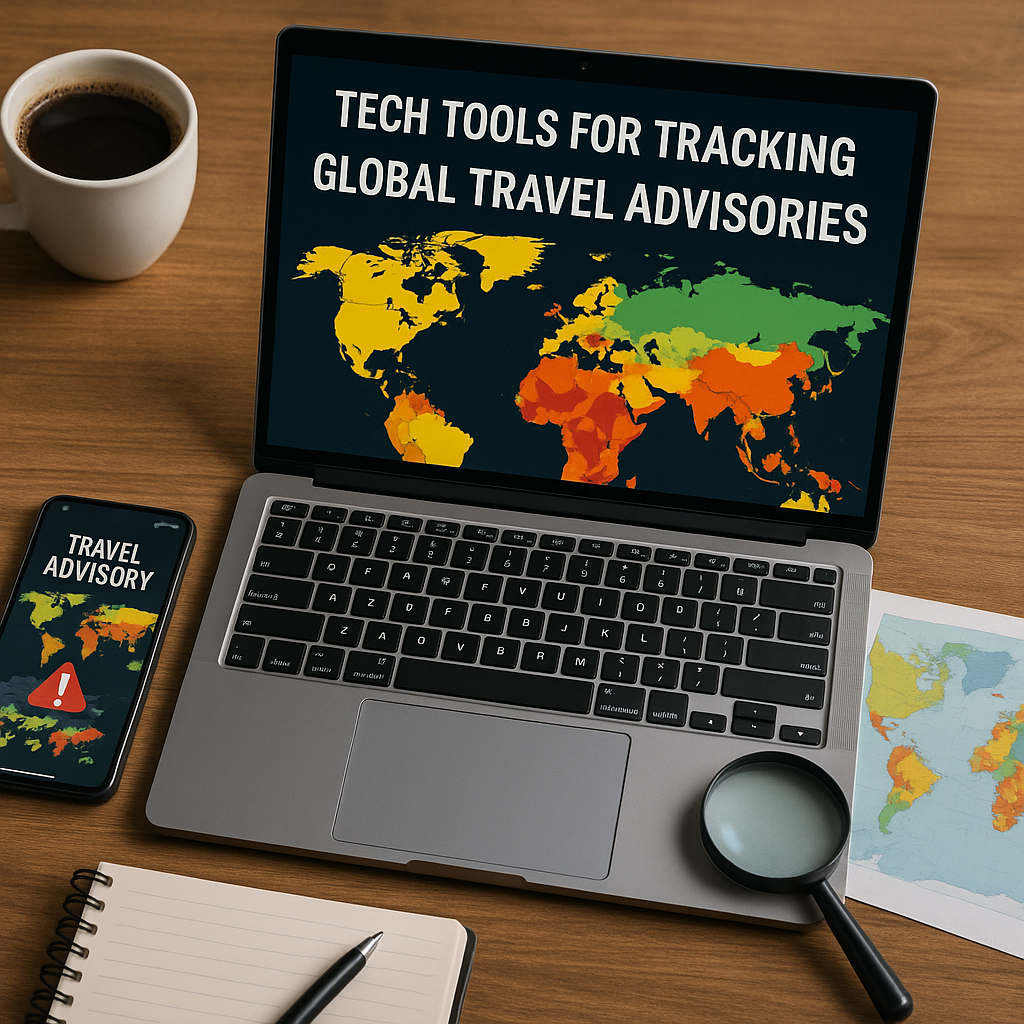
Tech Tools for Tracking Global Travel Advisories
International travel demands meticulous preparation. Staying informed about potential risks and rapidly changing conditions is paramount for traveler safety. Modern technology offers robust solutions for real-time tracking of global travel advisories.
This guide details essential tech tools and strategies for effective travel risk management. You must prioritize proactive monitoring to ensure secure international operations and fulfill your duty of care.
The Evolution of Travel Risk Management
Effective travel risk management requires safety features to be seamlessly integrated into booking workflows. Integrated T&E platforms like Navan embed safety directly into their booking and expense systems. This ensures the automatic enrollment of travelers in tracking and alert systems, including real-time location sharing.
AI-Powered Traveler Location Monitoring
Real-time GPS tracking is vital for individual traveler safety and corporate travel safety. Platforms like Navan offer GPS-tracked locations via their mobile app, allowing for precise monitoring and enhanced traveler visibility.

This capability is crucial for effective travel risk management and fulfilling duty of care responsibilities. You gain immediate insight into your team’s whereabouts, which is essential for rapid crisis response.
Crisis24 further enhances this with its robust risk intelligence. It monitors over 200,000 sources for threat detection, covering over 40 languages. This ensures comprehensive global surveillance and provides critical emergency alerts.
Navan’s live map displays GPS signals, providing immediate visibility and enabling proactive disruption management. This AI travel tool is a cornerstone of modern predictive risk management.
Integration of Safety Features within Booking Workflows
Integrated platforms are transforming how travel practitioners manage traveler safety features. Solutions like Navan embed safety directly into booking and expense systems, ensuring the automatic enrollment of travelers in tracking programs.

This eliminates gaps in traveler visibility, a common challenge with off-platform bookings. When travel is booked through an integrated T&E platform, safety features activate automatically, aligning with ISO 31030:2021 standards.
This seamless integration ensures that booking data is consistently captured, allowing for real-time tracking and automated response to potential threats. It’s a critical component of a comprehensive travel risk management strategy.
AI-Powered Disruption Management and Crisis Response
Artificial intelligence is revolutionizing disruption management. AI assistants, such as Navan’s Ava, handle routine disruption requests automatically, managing rebookings and ensuring policy compliance. This significantly enhances rapid crisis response capabilities.
Navan Cognition processes tens of thousands of interactions monthly, demonstrating the proven reliability of AI effectiveness. This allows travel practitioners to focus on complex cases, while AI handles the high volume of routine issues.
This AI-driven approach ensures an automated response to unexpected geopolitical developments or travel disruptions, maintaining high levels of traveler safety and supporting duty of care.
Real-time Travel Advisory Alerts
Proactive monitoring is paramount for managing destination risks. You need real-time travel advisory alerts for weather, health, and security issues. Navan delivers customized advisories directly to travelers based on their destination risks.
Crisis24 provides specialized risk intelligence and threat alerts from thousands of curated sources globally. This comprehensive approach ensures travelers are informed of potential dangers, from localized threats to broader geopolitical developments.
These emergency alerts are critical for maintaining traveler safety and enabling quick adjustments to itineraries, embodying the principles of robust travel risk management.
ISO 31030 Compliance and Risk Management Standards
Adherence to international standards is fundamental for comprehensive travel risk management. The international standard ISO 31030:2021 provides a robust framework for managing destination risks and ensuring traveler safety.
Platforms like Navan map their capabilities directly to these modules, ensuring compliance and providing a structured approach to duty of care. Everbridge also supports ISO 31030 compliance within its critical event management platform.
This alignment ensures that corporate travel safety protocols are comprehensive, addressing everything from predictive risk management to medical evacuation and security services.
Data Security and Traveler Privacy
Data protection and traveler privacy are paramount in any AI travel tool. Platforms must prioritize the security of sensitive information, holding certifications like SOC 2 Type II, and implementing robust encryption standards.
Navan, for instance, maintains stringent privacy policies and data protection measures, ensuring that GPS signals and booking data are handled with the utmost care. This commitment to data security ranks alongside physical safety in platform evaluation.

You can trust that your travelers’ data is protected, which is a critical aspect of responsible travel risk management.
Coverage of Off-Platform Bookings
A significant challenge in corporate travel safety is the duty of care gap created by off-platform bookings. Travelers booking outside managed systems can become invisible, hindering real-time tracking and crisis response.
Navan addresses this through policy enforcement and an integrated booking workflow. This helps ensure that all travel, regardless of booking method, is captured and tracked within the system, providing complete traveler visibility.
This comprehensive approach is essential for maintaining consistent traveler safety features and ensuring all employees are covered by emergency alerts and security services.
Evaluating AI Effectiveness and Reliability
The effectiveness of AI travel tools hinges on their ability to resolve routine issues efficiently while escalating complex cases to humans with full context. Navan’s Ava, for example, handles tens of thousands of interactions monthly.

This high volume demonstrates proven AI reliability in managing disruption management and providing automated response to common traveler queries. It ensures that critical event management is streamlined, freeing up travel practitioners for more strategic tasks.
Ultimately, reliable artificial intelligence enhances overall traveler safety and optimizes resources dedicated to travel risk management.
Expert Insight
“As we move into 2026, the landscape of global travel is undergoing an unprecedented transformation where the physical and digital worlds are inextricably linked, requiring a shift from reactive assistance to proactive, AI-driven duty of care strategies.” , Frank Harrison, Regional Security Director, World Travel Protection
Integration of Safety Features within Booking Workflows
Integrated platforms like Navan are revolutionizing corporate travel safety by embedding traveler safety features directly into booking and expense systems. This critical integration ensures automatic enrollment of travelers in real-time tracking programs, a foundational element of effective duty of care.
Navan’s approach is particularly effective because its traveler safety features activate only when travel is booked through their system. This eliminates crucial gaps in traveler visibility that often arise from off-platform bookings, providing travel practitioners with comprehensive oversight.
This seamless integration within the booking workflow is essential for modern travel risk management. It ensures that all booking data is captured, enabling proactive monitoring and automated response mechanisms. Such systems align with ISO 31030:2021 standards, providing a robust framework for managing destination risks and ensuring traveler safety.
By leveraging integrated T&E platforms, organizations can centralize their travel management, enhance disruption management, and improve crisis response capabilities. This proactive stance, supported by robust data protection and AI travel tools, is vital for safeguarding employees and fulfilling duty of care responsibilities.
Expert Insight
“ISO 31030:2021 provides a structured approach to travel risk management that enhances organizational resilience and worker confidence by ensuring duty of care obligations are met through the effective assessment and treatment of global travel risks.” , Industry Risk Management Specialist
AI-Powered Disruption Management and Crisis Response
Artificial intelligence (AI) is transforming corporate travel safety by automating responses to travel disruptions. You need tools that act fast. Navan’s Ava, an AI assistant, manages routine requests automatically. This includes rebookings and ensuring policy compliance, streamlining operations during unexpected events.
Navan Cognition processes tens of thousands of interactions monthly. This capability significantly enhances rapid crisis response, ensuring timely and efficient management of disruptions. Such AI travel tools are crucial for effective disruption management, allowing travel practitioners to focus on complex cases.
The reliability of AI-powered systems is paramount. Navan’s Ava demonstrates proven AI reliability, handling a vast volume of interactions. This allows for automated response to common issues while escalating complex situations to human agents with full context. This blend of artificial intelligence and human oversight is key to robust travel risk management.
Real-time Travel Advisory Alerts
Proactive alerts for weather, health, and security issues are non-negotiable for corporate travel safety. You need tools that provide timely, relevant information to manage destination risks effectively.
Navan delivers real-time travel advisories customized to specific destinations. This ensures your travelers receive alerts pertinent to their itinerary, enhancing traveler safety features.
Crisis24 provides comprehensive threat alerts from thousands of global sources. These alerts keep travelers and travel practitioners informed, enabling swift decision-making and robust crisis response.
This proactive monitoring is a cornerstone of effective travel risk management and crucial for upholding your duty of care. It aligns with the principles of ISO 31030:2021 for comprehensive risk intelligence.
ISO 31030 Compliance and Risk Management Standards
Alignment with ISO 31030:2021 is critical for comprehensive travel risk management. This international standard provides a framework for managing travel-related risks. You must ensure your organization adheres to these guidelines.
Navan maps its capabilities directly to these modules. This integration helps maintain compliance with international standards, enhancing your corporate travel safety protocols. Everbridge also supports ISO 31030 compliance within its platform, further strengthening an organization’s travel risk management framework and fulfilling duty of care obligations.
Data Security and Traveler Privacy
Data protection is as crucial as physical safety in corporate travel safety. You must prioritize robust data security measures. Navan, for instance, holds SOC 2 Type II certification, demonstrating a commitment to data protection.
Travel practitioners consistently prioritize data security when evaluating travel safety tools. Protecting traveler data is a critical requirement, especially given the sensitive nature of booking data, GPS signals, and personal information. Navan maintains robust encryption standards and privacy policies, aligning with best practices for traveler privacy.
Ensuring compliance with data protection regulations is a key component of your duty of care. An integrated T&E platform like Navan helps safeguard sensitive information, from booking workflow details to traveler visibility data, ensuring comprehensive data protection alongside physical security services and medical evacuation plans.
Coverage of Off-Platform Bookings
Travelers booking outside managed platforms create significant duty of care gaps. This presents a common challenge for organizations and a critical concern for corporate travel safety.
Integrated T&E platforms like Navan address this by using policy enforcement and an integrated booking workflow. This helps ensure all bookings are tracked, minimizing risks associated with off-platform travel. It significantly enhances traveler visibility and supports robust travel risk management.
Evaluating AI Effectiveness and Reliability
Effective artificial intelligence (AI) platforms are crucial for modern travel risk management. They autonomously resolve routine issues and escalate complex cases to human experts with full context, ensuring a balanced approach to traveler safety.
Navan’s AI assistant, Ava, exemplifies proven AI reliability in managing traveler needs. Ava handles tens of thousands of interactions monthly, validating the effectiveness of AI travel tools in providing automated response and disruption management. This high volume of successful interactions demonstrates how AI can significantly enhance crisis response and overall corporate travel safety.
The integration of AI into platforms like Navan is vital for achieving comprehensive duty of care. It supports real-time tracking, predictive risk management, and the efficient handling of emergency alerts, allowing travel practitioners to maintain high traveler visibility and respond proactively to destination risks and geopolitical developments.
Key Tech Tools for Global Travel Advisories
Numerous tools offer advanced capabilities for tracking travel advisories. These range from integrated platforms to specialized risk intelligence providers, crucial for effective travel risk management.
Integrated Platforms for Corporate Travel Safety
Modern corporate travel safety demands integrated solutions. Platforms like Navan exemplify how AI travel tools streamline the entire travel and expense (T&E) process while bolstering duty of care obligations.
| Tool/Platform | Primary Function | Key Features | Compliance/Certification |
|---|---|---|---|
| Navan | Integrated T&E, Corporate Travel Safety | AI-powered tracking, real-time alerts, disruption management, booking workflow integration | ISO 31030:2021 alignment, SOC 2 Type II |
| Crisis24 | Specialized Risk Intelligence, Threat Detection | 200,000+ source monitoring, 40+ language coverage, emergency alerts | Proprietary threat intelligence standards |
| International SOS | Medical and Security Assistance | Medical evacuation, security services, global risk intelligence | Global assistance standards |
| Everbridge | Critical Event Management, Mass Notification | Real-time alerts, incident management, automated response | ISO 31030:2021 support |
| GardaWorld | Security Services, Risk Consulting | Security assessments, executive protection, crisis response planning | Industry security standards |
| Google (Maps, Alerts) | General Information, Location Tracking | Traffic, public transport, general news alerts | N/A (Consumer-grade) |
| iPhone (Find My) | Personal Location Tracking | Device location, emergency contacts | N/A (Consumer-grade) |
| Anvil | Travel Risk Management, Intelligence | Pre-trip intelligence, real-time alerts, travel tracking | Industry risk management standards |
AI-Powered Traveler Location Monitoring
Real-time tracking of individual travelers is paramount for corporate travel safety. Navan offers GPS-tracked locations via its mobile app, displaying live map data for unparalleled traveler visibility. Similarly, Crisis24 monitors over 200,000 sources for threat detection, covering more than 40 languages from curated intelligence sources, ensuring comprehensive situational awareness for travel practitioners.
Integration of Safety Features within Booking Workflows
Integrated T&E platforms like Navan embed safety directly into booking and expense systems. This ensures automatic enrollment of travelers in tracking protocols and activates traveler safety features only when travel is booked through their system. This eliminates critical duty of care gaps, especially concerning off-platform bookings which often lead to untracked travel and significant risk.
AI-Powered Disruption Management and Crisis Response
Artificial intelligence plays a pivotal role in managing travel disruptions. AI assistants, such as Navan’s Ava, autonomously handle tens of thousands of routine disruption requests monthly. This includes managing rebookings and ensuring policy compliance, significantly enhancing rapid crisis response capabilities. Navan Cognition further processes vast interactions, providing robust automated response mechanisms for complex scenarios.
Real-Time Travel Advisory Alerts
Proactive monitoring is essential for predictive risk management. Navan delivers real-time travel advisory alerts customized to specific destination risks, covering weather, health, and security issues. Crisis24 provides critical emergency alerts and threat intelligence from thousands of specialized sources, ensuring travel practitioners are always informed about geopolitical developments and other potential hazards.
ISO 31030 Compliance and Risk Management Standards
Adherence to global standards like ISO 31030:2021 is crucial for comprehensive travel risk management. Navan maps its extensive capabilities to these modules, ensuring robust compliance. Everbridge also supports ISO 31030 compliance within its critical event management platform, providing tools for managing critical events and mass notifications that align with international duty of care obligations.
Data Security and Traveler Privacy
Data protection and traveler privacy are as critical as physical safety. Platforms like Navan hold SOC 2 Type II certification, employ advanced encryption standards, and maintain stringent privacy policies. This commitment to data security ensures that sensitive booking data and GPS signals are protected, fostering trust among travelers and travel practitioners.
Specialized Risk Intelligence and Threat Detection
For comprehensive travel risk management, specialized platforms are indispensable. Crisis24, for instance, provides advanced risk intelligence and threat detection. It monitors geopolitical developments and local security situations across more than 200,000 sources, covering over 40 languages. This depth of information extends far beyond general travel advisories.
These services are crucial for organizations committed to duty of care, especially those operating in high-risk areas. They offer detailed insights, enabling predictive risk management and robust crisis response. Providers like GardaWorld and International SOS also offer extensive security services and medical evacuation capabilities, essential components of a proactive traveler safety program.
Medical and Security Assistance Services
For advanced corporate travel safety, providers like International SOS and GardaWorld deliver comprehensive medical and security assistance. This includes vital medical evacuation and on-the-ground security services, crucial for effective travel risk management.
These specialized services are often integrated with booking systems, enhancing traveler visibility and rapid crisis response capabilities. Such integration ensures robust duty of care, especially for international travel.
AI-Powered Traveler Location Monitoring
Modern travel risk management platforms leverage artificial intelligence for real-time tracking of travelers. For instance, Navan provides AI travel tools that offer GPS-tracked locations via its mobile app, displaying traveler whereabouts on a live map. This ensures you have immediate access to critical location data during an emergency.
Beyond GPS, platforms like Crisis24 monitor over 200,000 sources in more than 40 languages for threat detection, providing granular risk intelligence. This level of real-time tracking and predictive risk management is essential for proactive traveler safety features and disruption management.
Integration of Safety Features within Booking Workflows
Integrated T&E platforms are fundamental for seamless travel risk management. Navan, for example, embeds traveler safety features directly into its booking and expense systems. This ensures automatic enrollment of travelers in tracking and emergency alerts, activating only when travel is booked through their system.
This approach eliminates duty of care gaps that arise from off-platform bookings, providing comprehensive traveler visibility. It aligns with ISO 31030:2021 standards by making safety an inherent part of the booking workflow, simplifying compliance for travel practitioners.
AI-Powered Disruption Management and Crisis Response
Artificial intelligence is transforming disruption management. AI assistants, such as Navan’s Ava, handle routine disruption requests automatically, managing rebookings and ensuring policy compliance. This automated response capability is critical for efficient crisis response during unexpected events.
Navan Cognition processes tens of thousands of interactions monthly, demonstrating the power of AI in enhancing rapid crisis response and emergency alerts. This ensures that complex cases are escalated to human agents with full context, optimizing critical event management.
Real-Time Travel Advisory Alerts
Proactive monitoring is key for traveler safety. Integrated platforms deliver real-time travel advisory alerts for weather, health, and security issues. Navan provides customized advisories specific to destinations, ensuring travelers receive relevant information.
Crisis24 also offers immediate threat alerts from thousands of sources, covering geopolitical developments and destination risks. This constant stream of emergency alerts enables travel practitioners to implement timely disruption management strategies.
ISO 31030:2021 Compliance and Risk Management Standards
Adherence to ISO 31030:2021 is crucial for robust travel risk management. Platforms like Navan map their capabilities to these international standards, ensuring comprehensive duty of care. Everbridge also supports ISO 31030 compliance within its platform, simplifying adherence for organizations.
This standard provides a framework for managing travel-related risks, from destination risks to medical evacuation protocols. Compliance demonstrates a commitment to corporate travel safety and best practices for managing critical events.
Data Security and Traveler Privacy
Data protection and traveler privacy are paramount in travel risk management. Platforms like Navan prioritize data security, holding SOC 2 Type II certification and implementing robust encryption standards. This ensures that sensitive booking data and GPS signals are protected.
Travel practitioners must evaluate platforms based on their data protection policies, ensuring traveler safety features do not compromise privacy. Secure data management is as critical as physical security services for a comprehensive duty of care strategy.
Coverage of Off-Platform Bookings
A significant challenge in corporate travel safety is managing off-platform bookings, which create critical duty of care gaps. While integrated systems like Navan enforce policy and track bookings made through their platform, travelers booking outside this workflow remain a risk.
Effective travel risk management requires strategies to encourage or mandate booking within approved systems to maintain traveler visibility and ensure all travelers receive emergency alerts and access to security services.
Evaluating AI Effectiveness and Reliability
The reliability of AI travel tools is critical. Effective AI should resolve routine issues automatically, escalating complex cases to human experts with complete context. Navan’s Ava, for example, handles tens of thousands of interactions monthly, demonstrating proven AI reliability in disruption management.
When evaluating AI-powered travel tools, travel practitioners must assess their ability to provide consistent, accurate automated response and enhance overall crisis response capabilities, ensuring a seamless and secure travel experience.
Adoption and Integration Across Existing Systems
The effectiveness of any travel safety tool hinges on its adoption and seamless integration with existing travel and expense (T&E) platforms. This ensures consistent use and robust corporate travel safety.
Integrated T&E platforms, such as Navan, consolidate booking data, providing a single source of truth for traveler information. This streamlines the booking workflow and enhances traveler visibility.
Integration of Safety Features within Booking Workflows
For comprehensive travel risk management, safety features must be embedded directly into booking workflows. Platforms like Navan achieve this by activating traveler safety features automatically when travel is booked through their system. This eliminates gaps in duty of care and ensures all travelers are enrolled in tracking and emergency alerts.
This approach is critical for compliance with standards like ISO 31030:2021, as it guarantees that traveler safety features are not optional but an integral part of the travel process. It also addresses the challenge of off-platform bookings, ensuring consistent traveler safety features and data protection.
Mass Notification and Critical Event Management
Effective corporate travel safety relies on immediate communication during unforeseen events. You need robust systems for mass notification and critical event management. This ensures that every traveler receives urgent information without delay.
Everbridge specializes in these critical capabilities. Their platforms are essential for rapid communication and coordinated crisis response efforts. This supports your duty of care obligations under standards like ISO 31030:2021.
These systems enable emergency alerts to be sent quickly, directly addressing destination risks. They are a core component of effective travel risk management. By integrating such tools, you enhance traveler visibility and proactive disruption management.
Frequently Asked Questions
What is travel risk management?
Travel risk management involves identifying, assessing, and mitigating potential risks to travelers. This includes health, security, and logistical challenges. Its primary aim is to ensure the safety and well-being of individuals on international trips, aligning with an organization’s duty of care responsibilities. Effective travel risk management is a cornerstone of corporate travel safety.
How do AI travel tools enhance safety?
AI travel tools leverage artificial intelligence to monitor global threats, predict disruptions, and automate responses. They provide real-time tracking, personalized alerts, and efficient crisis response. This shifts the focus from reactive to predictive risk management. Tools like those from Navan and Everbridge utilize AI to process vast amounts of data, offering advanced risk intelligence and automated response capabilities.
What is ISO 31030:2021?
ISO 31030:2021 is an international standard providing comprehensive guidelines for travel risk management. It assists organizations in developing and implementing effective strategies to protect their travelers. Compliance with ISO 31030:2021 demonstrates a strong commitment to duty of care and robust traveler safety features, enhancing overall corporate travel safety protocols.
Why is data protection important in travel safety?
Data protection is paramount in travel safety as it safeguards sensitive traveler information, including personal details, itineraries, and health data. Strong data security measures prevent unauthorized access and misuse, which is crucial for maintaining trust and ensuring privacy. Platforms like Navan prioritize data protection, holding certifications such as SOC 2 Type II, to ensure traveler privacy and security are upheld.
Can these tools track off-platform bookings?
Most integrated platforms primarily track bookings made through their systems. Off-platform bookings can indeed create significant visibility gaps, posing challenges for traveler visibility and duty of care. While some tools offer manual itinerary upload features to mitigate this risk, full visibility and comprehensive corporate travel safety are best achieved through integrated booking workflows, as promoted by platforms like Navan.
How do AI-powered tools enhance traveler location monitoring?
AI-powered tools significantly enhance traveler location monitoring by providing real-time tracking capabilities. For instance, Navan offers GPS-tracked locations via its mobile app, displaying traveler positions on a live map. Crisis24’s systems, alongside other AI travel tools, monitor over 200,000 sources globally for threat detection, covering 40+ languages. This sophisticated approach to real-time tracking ensures immediate awareness of a traveler’s whereabouts, which is critical for rapid crisis response and emergency alerts.
How do safety features integrate within booking workflows?
Integrating safety features directly into booking workflows is essential for comprehensive corporate travel safety. Platforms like Navan embed safety protocols into their integrated travel and expense (T&E) platforms. This ensures automatic enrollment of travelers in tracking and risk management systems when bookings are made through the platform. This seamless booking workflow eliminates visibility gaps, activating traveler safety features only when travel is managed within the system, thereby strengthening an organization’s duty of care.
How do AI-powered tools manage disruption and facilitate crisis response?
AI travel tools excel in disruption management and crisis response by automating routine tasks and providing critical risk intelligence. Navan’s AI assistant, Ava, for example, handles tens of thousands of interactions monthly, managing rebookings and ensuring policy compliance during disruptions. This AI-driven automated response allows human travel practitioners to focus on complex cases, escalating them with full context. Such capabilities ensure rapid crisis response, minimizing the impact of unforeseen events and enhancing overall traveler safety features.
What role do real-time travel advisory alerts play in travel risk management?
Real-time travel advisory alerts are a critical component of effective travel risk management. Platforms like Navan deliver instant alerts customized to specific destinations, covering weather, health, security, and geopolitical developments. Crisis24, Everbridge, and International SOS also provide threat alerts from thousands of curated sources. This proactive dissemination of emergency alerts ensures travelers and organizations are immediately informed of destination risks, enabling timely adjustments to itineraries and enhancing traveler safety.
How do platforms ensure ISO 31030 compliance and high risk management standards?
Leading platforms prioritize alignment with ISO 31030:2021 to ensure comprehensive travel risk management standards are met. Navan, for instance, maps its capabilities directly to the modules outlined in ISO 31030, ensuring that its systems support an organization’s duty of care. Everbridge also integrates ISO 31030 compliance within its critical event management platform. This commitment guarantees robust traveler safety features, providing organizations with the tools to implement effective risk intelligence and crisis response strategies.
What is the impact of off-platform bookings on duty of care and traveler visibility?
Off-platform bookings significantly impact an organization’s duty of care by creating critical visibility gaps. When travelers book outside managed integrated T&E platforms, organizations lose the ability to track their location, communicate emergency alerts, or provide timely crisis response. This lack of traveler visibility compromises corporate travel safety. Platforms like Navan emphasize policy enforcement and integrated booking workflows to ensure all travel is captured, mitigating the risks associated with unmanaged bookings and enhancing overall disruption management.
How is the effectiveness and reliability of AI evaluated in travel safety?
The effectiveness and reliability of AI in travel safety are evaluated by its ability to resolve routine issues efficiently and escalate complex cases with full context to human intervention. Navan’s Ava, for example, demonstrates proven AI reliability by handling tens of thousands of interactions monthly, automating responses and managing disruptions effectively. This balance ensures that AI travel tools provide consistent support, enhancing predictive risk management and bolstering traveler safety features without sacrificing the nuanced decision-making required for complex situations.