
Key Takeaways
- Global travel safety in 2026 needs a wider scope encompassing digital, bio, environmental, and geo-political hazards so you ought to evaluate multi-tiered risks prior to and throughout every journey.
- Stay on top of real-time alerts and local sentiment. Keep loose plans and backup routes so you can pivot fast to sudden border closures, climate disasters, or social unrest.
- Fortify your digital identity and financial info using robust encryption, VPNs, and safe payment instruments. Steer clear of public Wi‑Fi or untrusted charging ports.
- Take personal records, your own meds, check health and vaccination rules for each stop, and update insurance for evacuations and new biosecurity risks.
- Create a local support network, collect emergency contacts and resources, and stay under the radar as much as possible to minimize the risk of being targeted for your nationality or apparent affluence.
- Go for trusted, official resources and live apps instead of stale guidebooks. Have back-up plans with flexible reservations and encrypted digital copies of key documents.
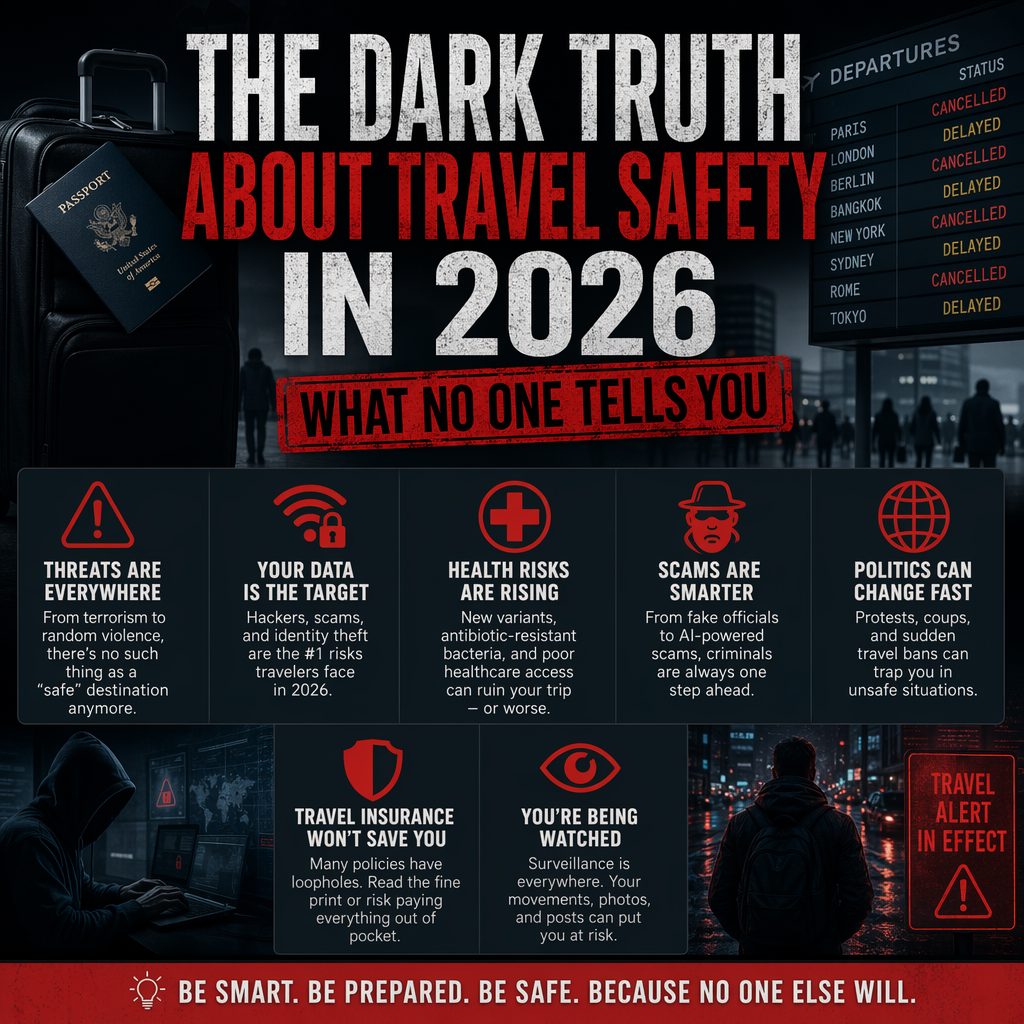
The dark truth about travel safety in 2026 (what no one tells you) is that risks now mix old dangers with new tech-driven vulnerabilities. Reports reveal a spike in fraud, targeted theft, and data breaches linked to travel apps and smart hotels. Health risks remain in busy transit hubs and differ by geography and season.
Local crime trends, emergency response capabilities, and data privacy regulations influence traveler vulnerability more than ever. The actionable measures of securing your devices, only using vetted or public transport, and continually checking local advisories mitigate damage but do not eliminate risk. The remainder of this post breaks down actual threats, how to identify scams, and easy to follow tips to reduce your risk of loss or injury on the road in 2026.
The 2026 Travel Shift
Safe travel in 2026 no longer correlates with the old checklist of locks, passport copies and smart routes. The instability of the world, including political unrest, supply-chain shocks and climate extremes, has made risk systemic instead of episodic, shifting how travelers plan, move and insure. What used to seem locally contained now bounces from continent to continent within days, so safety means heeding global warnings, not just local advisories.
How global instability has redefined “safe travel” in 2026
State-level fractures, economic sanctions, and more rapidly moving climate events mean borders and services can shut with short notice. Travelers must factor in cascading risks: a fuel shortage in one region can halt flights worldwide, and a banking freeze can cut off card networks in another.
Safe travel now means having a backup plan if services are interrupted, having multiple forms of payment available, and flexible bookings. For example, a business trip that used to need only a return ticket now requires a backup route, digital copies of visas, and a local contact who can help if services fail.
Impact of rapid tech advances on traveler vulnerability
New tech assists and damages. Biometric entry hastens border control, yet it introduces single points of failure should databases be compromised. Smart locks and connected luggage simplify travel but may reveal location and personal information.
Travelers face more attack surfaces: deepfake scams that spoof official messages, malware that drains accounts, and social-engineering tactics that exploit travel apps. Concrete measures involve using hardware-backed authentication, restricting app permissions, and keeping travel firmware and devices patched.
Rise of unpredictable regulations affecting cross-border movement
Regulatory change is speedier and more opaque. Countries can introduce sudden health guidelines, digital tax measures, or data-localization laws impacting apps and cloud backups. Travelers encounter new documentation, quarantine regulations, and digital needs within days. Maintain a directory of authoritative government and embassy sites, sign up for real-time alerts, and keep hard-copy backups of critical documents.
- Tips to adapt travel plans to geopolitical and environmental realities: * Diversify payment methods: cash in local currency, prepaid cards, and an emergency credit line.
- Use layered communications: local SIM, roaming, and an encrypted messaging app.
- Stay portable with power and offline maps; plot routes with alternate transport.
- Book flexible fares and refundable accommodations whenever you can.
- Register plans with your embassy and share itineraries with someone trusted.
- Insure for political evacuation and climate disruption.
Unseen Travel Dangers in 2026
Travel now encounters quieter dangers that typically surpass pickpockets and bad neighborhoods. These new risks are multi-layered and cross physical, digital, political, and biological lines. Here are concentrated areas where travelers need to change how they plan and behave to remain secure.
1. Social Friction
Increasing resource stress fuels local frictions in numerous destinations, from water scarcities to congested public facilities. Tourists perceived as outsiders or flaunting their wealth could be targeted for theft, scams or harassment. Check local news, social feeds and municipal alerts before and during a trip to get a feel of sentiment.

Read up on simple local customs and don’t act in ways that can be interpreted as disrespectful. Small signs of cultural awareness go a long way to defusing tension.
2. Ecological Collapse
Severe storms, wildfires, and flooding now disrupt flights, rail, and road connections at short notice, marooning travellers for days. Pollution and polluted water put tourists at respiratory and stomach dangers, particularly in areas where healthcare is overwhelmed.
Register for real-time environmental alerts, monitor weather warnings, and plan detours and shelters. Pack water purification tablets and consider flexible tickets and climate coverage travel insurance.
3. Digital Ghosts
IDENTITY THEFT AND TRAVEL-FOCUSED SCAMS ARE EVERYWHERE Unsecured Wi-Fi and public charging stations can swipe credentials or deploy malware. Use robust device encryption, a trustworthy VPN, and two-factor authentication for important apps.

Store as little as possible on devices and back everything up before you leave. Anticipate additional facial recognition and automated surveillance at checkpoints. Be aware of the biometric data you surrender and opt out where you can.
4. Invisible Borders
Diplomatic shifts can change entry rules overnight. Pacts that once permitted visa-free travel are more often temporary. Double-check entry requirements, including on the day of departure, and carry electronic and printed copies of permits and vaccination cards. Have alternate routes and plans for if borders close or flights are diverted.
5. Biosecurity Gaps
Health checks and quarantine regulations range and change fast. Drug‑resistant infections are raising alarms in tourist hotspots and making ordinary care more difficult. Bring a brief medical history, prescriptions in their original containers, and a mini first‑aid kit. Check vaccination and quarantine regulations at every destination, and be aware of where to find quality medical assistance nearby.
Rethinking Your Safety Net
Traveler 2026 risks extend beyond lost luggage or missed flights. These new threats, including cyber-enabled scams, sudden local restrictions, climate-driven disruptions, and targeted infrastructure outages, mean a barebones travel kit and cash aren’t sufficient.

Savvy voyagers don’t take security for granted; they go on offense against risk. Rethink your safety net. Upgrade insurance, plan communication, map local help, and even rehearse evacuation options so uncertainty becomes manageable.
Revise policies to insure new risks. Standard trip cancellation and medical plans frequently overlook pandemic-era or climate evacuations, cyber extortion, and pandemic quarantine expenses. Seek out policies that specifically cover emergency transport for health or safety,
forced rebooking from government orders, and digital theft of identity or travel documents. Contrast limits for medical evacuation in metric distance and demand COVID written clauses for quarantine lodging and repatriation. Save copies of policy numbers and claim procedures offline.
Prepare a concise emergency contact and resource list:
- Local emergency number(s) and embassy or consulate contact
- Nearest hospital and private clinic with 24-hour service
- Local police station address and non-emergency line
- Nearest major airport and regional transport hub
- Local trusted taxi or ride-hailing company and contact
- Travel insurer 24/7 hotline and claim email
- Primary and backup contact in your home country
- Local translator service or language helpline

Emphasize flexible booking and cancellation. Opt for fares and accommodations with free cancellation or credit vouchers, and select flexible train or ferry tickets if available. For business travel, strike corporate clauses that permit last-minute routing changes without a fee. Store receipts and change confirmations in one searchable folder.
Have a defined evacuation or lockdown plan. Agree on emergency meet-up locations with your group before departure and establish short, simple communication protocols: who sends the first message, which app to use as a backup, and when to switch to phone calls. Back your team with live status updates when disruptions occur to minimize uncertainty.
Post-travel, conduct a short debrief to capture what worked and where things went wrong. Tracking destination-specific hazards prior to and throughout travel transforms vague concern into action, and foresight and strategizing can transform ambiguity into assurance while away.
Outdated Travel Advice
A lot of old travel advice presupposes borders and hazards and amenities remain static. They don’t. Political changes, infrastructure overhaul and evolving local mores since 2020 make some advice wrong or unsafe. What were once secure paths, common practice or accessible services might be different.
What was once marked dangerous is perhaps now commonplace. It’s a big deal because outdated advice can cause you to leave opportunities on the table, blow money or actually create genuine security holes.
Planning a trip? Old, pre-2026 travel tips could be useless or even hazardous because they’re based on historical snapshots, not present reality. Security landscapes change: checkpoints move, criminal groups disperse, and local law enforcement shifts priorities.
Health advice shifts too—different disease risks, clinic availability, and vaccine guidance. Transport options change: roads reopen, new domestic flights start, and ride apps expand or vanish. Counting on old info can land you in no-man’s-lands of medical assistance or keep you emulating behaviors that attract attention instead of deflecting it.
Don’t believe guidebooks or blogs that discount recent changes. Most print guides are updated once every few years and are easily out of date on nuanced risks. Blogs are notorious for recycling content with new-old posts.
The media really locks a country into a crisis frame and that’s even more the case with Iraq. Coverage forgets rebuilt neighborhoods, secure tourist routes, and open hearts. That skew can have you looking at places like Kurdistan through a lens of terror, even as it remains one of the safer areas with peaceful, welcoming cities.
Instead, get current info from officials and locals. Consult government advisories and verify them with up-to-date reports from local tourism boards, expat message boards, and travelers who have visited within the last six months. Call hotels, local guides, and regional consulates for updated safety notes. Use real-time tools such as route planners, health alert services, and embassy SMS alerts.
Substitute antiquated travel advice with tips for navigating the present. Instead of saying entire countries can’t be trusted, look at specific regions and neighborhoods. Travel with emergency cash, local SIM cards, and trusted ride apps.
Find out what cultural etiquette is different and which security precautions are up to date. Old warnings shouldn’t shut down travel to Mosul, Karbala, Najaf, or Baghdad when recent visitors say it’s calm there and rebuilding is underway.
Smart Traveler Strategies
Smart travel begins with situational awareness. Utilize real-time travel alert apps that aggregate official advisories, local news and user reports to monitor disruptions such as strikes, weather or security incidents. Opt for apps that allow you to configure geofenced push alerts and language filters.
Cross reference app alerts with embassy notices and airline updates. For smart traveler strategies, store a screenshot of crucial messages and a brief offline note of emergency numbers in case connectivity falters.
Develop a tight, trusted network of local sources for boots-on-the-ground information. This could be a hotel manager, a tour guide, a trusted taxi driver, or an expat community connection. Inquire in advance about suggested secure pathways, roadwork or festival locations, and neighborhood rumors.
Europeans typically distinguish opinions of governments from hospitality toward travelers. A gracious local contact will provide blunt, unpolitical advice. Keep contacts in your phone and on paper, and provide one trusted person at home a basic itinerary.
Equip yourself with smart traveler strategies. A lightweight waterproof jacket, a mini first-aid kit, a power bank, and quick-dry clothes prepare you for weather changes and delays. Pack a small foldable bag for random shopping or random evacuations.
Store copies of important documents in the cloud and on paper. For hot spots, bring a sun hat and refillable water bottle. For chilly or variable climates, go with layers. Tailor gear to alternatives: visiting Porto instead of Lisbon or Glasgow instead of Edinburgh often means fewer crowds and less strain on local resources, so pack for local weather rather than tourist-season extremes.
Keep a low profile. Minimize obvious displays of affluence, stagger valuables among individuals or backpacks, and utilize inconspicuous money belts if necessary. Be aware when snapping photos or looking at your map. Be smart about where and when you travel – a double whammy of avoiding peak crowds and prices,
and a way to help support your favorite destinations by visiting lesser-known places and less popular times. Understand local culture and laws such as ETIAS updates, be aware of peak seasons, and monitor local news for weather or construction that could impact your visit.
Essential Digital Tools
Travelers are at more digital risk than ever. Here, we provide a rundown of critical tools and useful tips to maintain accounts, finances, and identity secure while overseas.
Must-have cyber security apps for secure web surfing abroad 1. VPN: Choose a paid VPN with a no-logs policy and audited code when using hotel or public networks to encrypt all your traffic at once. Steer clear of free VPNs that monetize your data.
2. Password manager: Store long, unique passwords and generate passkeys where supported. Password managers sync securely across devices and cut down on the reuse that causes account takeover.
3. Authenticator app: Prefer time-based one-time codes or hardware keys. MFA is a must-have; it adds that second layer past passwords and significantly reduces risk from compromised credentials.
4. Mobile security suite: Install apps that scan for phishing links, unsafe Wi-Fi, and malicious apps. Opt for solutions that offer device tracking and remote wipe. 5. Encrypted messaging: Use end-to-end encrypted apps for sensitive conversations. Check contact keys for urgent messages.
Tools for translation and emergency communication. Employ offline-capable translation apps that download language packs so you’re not hostage to public Wi-Fi. Save emergency contacts to both your local and cloud copies, and prepare a bare-phrase list for police, hospital and embassy visits. Store an ICE (in case of emergency) contact on your lock screen and arrange a daily check-in with someone you trust.
Safe payment gateways to avoid phishing. Favor card networks or wallets that support tokenization and one-time codes. Use virtual card numbers for online purchases abroad and set up transaction alerts. Do not type your bank details on public networks. If you have to, use a VPN and the bank’s app, not a browser. Inform your bank of travel dates and spending limits on cards.
Your encrypted cloud backups of important documents. Backup passports, visas, insurance, and itinerary in an encrypted cloud service and keep an offline copy on an encrypted external drive. Apply robust MFA and passkeys to cloud accounts. Forward thinking and notifying everyone who can access backups minimizes setbacks if docs go MIA.
Public Wi‑Fi continues to be ubiquitous – millions of open networks and too many users connecting indiscriminately. Limit it when performing sensitive activities and never recycle passwords or pins during travel.
Conclusion
Travel in 2026 stays changing fast. New tech, new rules, new risks define every trip. Realistic planning reduces danger. Pack a physical copy of important details, back up your digital documents to a secondary device, and opt for local SIMs or eSIMs that have transparent data limitations. Use simple checks: confirm routes, note safe zones, and set meeting points with travel mates.
Opt for public spaces that remain bustling and reserve accommodations with genuine guest testimonials and transparent personnel information. Don’t forget to brush up on a few local phrases and bring a physical emergency plan. Little habits compound. They safeguard time, money, and peace of mind. Want a printable or saveable checklist? Download the one below and customize it for your next scheme.
Frequently Asked Questions
What new travel risks emerged in 2026 that I should know about?
In 2026, with sharper climate events, specifically targeted cyberattacks on travel infrastructure and uneven services because of geopolitics, this personal risk only increased. Subscribe to local news and updates and stay informed before and during your travels.
Are traditional travel insurance policies still reliable?
Most policy is way behind current threats. Look for cyber, climate cancellations, and medical evacuation coverage. Compare providers and read exclusions carefully.
How can I protect my digital identity while traveling?
VPN, MFA, offline backups, and avoiding public Wi-Fi are essential. Keep your devices updated and install privacy-minded apps to minimize your footprint.
What should I change about my emergency contacts and plans?
Add local emergency services, embassy contacts and a trusted local fix, such as a hotel or guide. Tell someone at home your simple evacuation and communication plan.
Which travel advice is now outdated and risky to follow?
Don’t just take paper maps, one-way communication (phone, alone, only), or ‘assuming the local infrastructure is working’ advice. Anticipate slower response and build in redundancies.
What cheap, high-impact safety steps deliver the best protection?
Sign up with your embassy, take a travel-centric credit card for protection, bring a small first-aid kit, and store photocopies of important documentation in an encrypted cloud folder.
Are digital tools worth relying on for real-time safety updates?
Sure—reliable weather, health, and local security apps provide quick, actionable updates. Double check alerts with official sources and do not rely on a single app.