
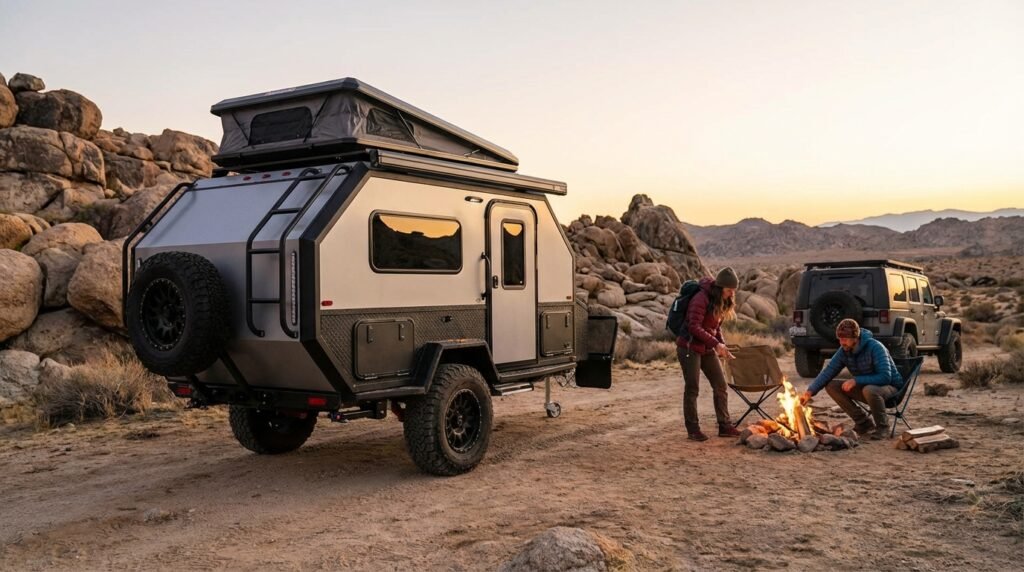
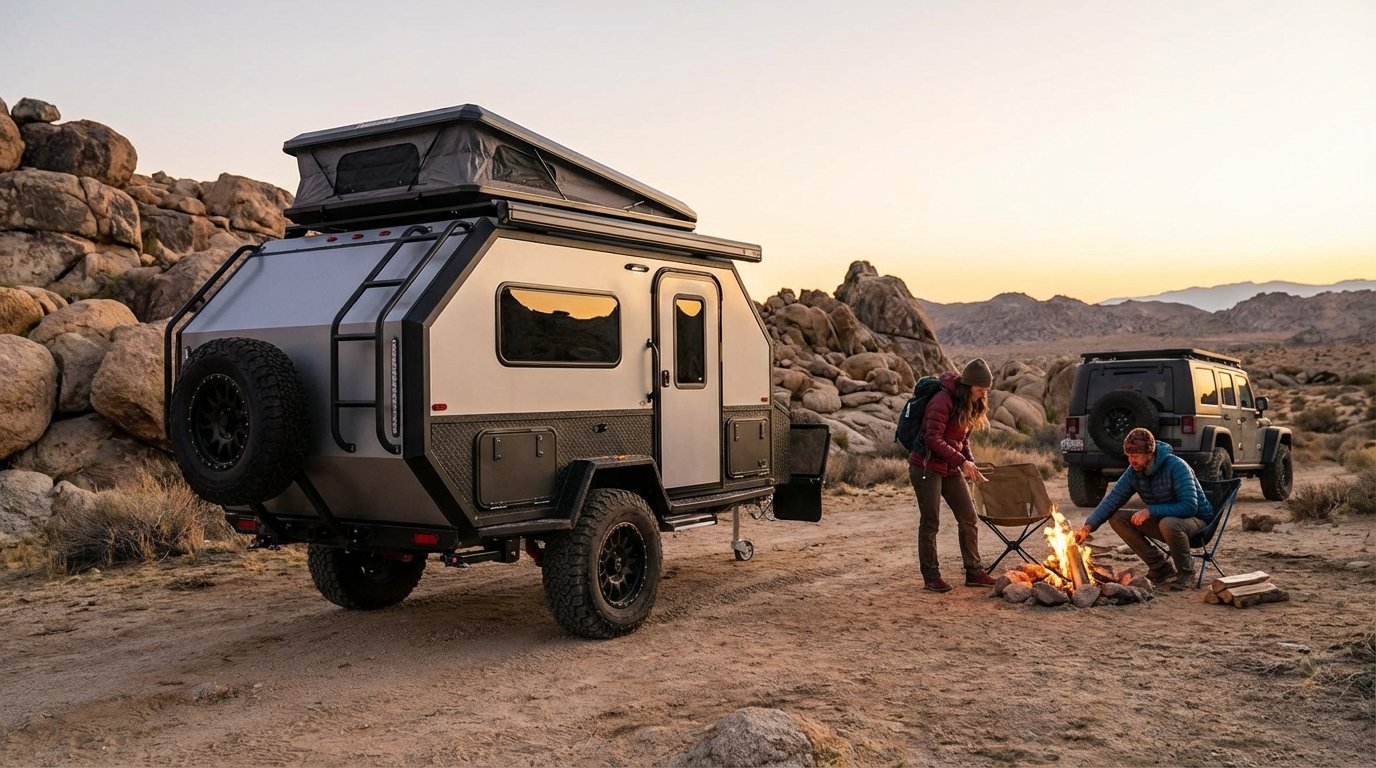
Rugged Off-Road Travel Trailers Guide 2026
Table of Contents
- 1. Defining the High-Quality Off-Road Travel Trailer
- 2. Advanced Suspension and Ground Clearance
- 3. Mastering Off-Grid Camping Power Solutions
- 4. Essential Features Defining Rugged Off-Road Travel Trailers
- 5. Leading Brands Defining the Off-Road RV Market
- 6. Mastering Weight Capacity and Towing Safety
- 7. Mastering Off-Grid Amenities and Essential Upgrades
- 8. Essential FAQs for Choosing Your Off-Road Travel Trailer
- Final Takeaways: Choosing Your Rugged Off-Road Travel Trailer
The landscape of adventure travel is changing. Modern explorers demand more than a typical recreational vehicle; they require a true Overlanding coach built for tackling remote locations.

Off-road travel trailers are purpose-built for extreme durability and extended Off-grid camping. They shift the focus from luxury amenities to structural integrity and self-sufficiency.
Brands like the Palomino Pause and specialized models offered by RVs of America (ROA) set the industry standard. These manufacturers prove what a serious towable camper must deliver.
This comprehensive guide details the essential features, cutting-edge technology, and leading brands driving this rugged revolution in 2026. You need a high-quality trailer that can truly follow your truck.
1. Defining the High-Quality Off-Road Travel Trailer
A true off-road trailer is fundamentally different from a standard travel trailer. These units, sometimes called Off-road RVs or an Off-road caravan, are engineered from the ground up to endure extreme stresses, vibrations, and debris encountered on challenging trails.

These High-quality trailers prioritize robust structural integrity and self-sufficiency over lightweight, conventional materials. They are built to function as a true Overlanding coach, ready for remote Off-grid camping in locations like ARIZONA or UTAH.
Construction: Materials That Last
Durability starts with the frame. Leading manufacturers utilize advanced structural components to ensure resilience when navigating unforgiving landscapes. Many top-tier models, including those offered by RVs of America (ROA Off-Road), feature a reinforced chassis.
Look for the proven Huck-Rivet Aluminum Frame, often sourced from MORryde. This construction method minimizes stress points and prevents frame fatigue, ensuring your towable camper maintains integrity on the roughest tracks.
Composite Construction for Durability
To prevent water damage and improve insulation required for year-round travel, many rugged travel trailers move away from traditional wood framing. Brands like Palomino (a division of Forest River RV) use advanced Composite Construction Materials for the walls, flooring, and roof on models like the Palomino Pause.

This build philosophy ensures the trailer remains structurally sound and resistant to the elements. Units from MDC USA and Kimberley Kampers also utilize similar composite techniques, guaranteeing longevity whether you are in COLORADO or SOUTH CAROLINA.
Essential Feature 1: Advanced Suspension Systems
The defining feature of a true Off-road travel trailer is its suspension system. Standard leaf springs are insufficient for boulder hopping or washboard roads.
Top models require advanced systems such as the MORryde Independent Air Ride Suspension paired with Bilstein Shocks. These setups offer up to 12 inches of wheel travel, enabling the trailer to glide over obstacles and maintain stability on challenging trails where lesser Travel trailers would fail.
This rugged suspension is crucial for protecting the internal components and ensuring the trailer can follow the tow vehicle through demanding terrain like the Moab Project.
Essential Feature 2: High Ground Clearance
Maximum ground clearance dictates where you can go. High-quality off-road trailers are designed to clear significant obstacles without scraping the underbelly or damaging essential plumbing.
Models like the Pause travel trailers (including the Pause Reboot Edition) boast impressive ground clearance, often exceeding 25 inches. This clearance, combined with a reinforced, puncture-resistant aluminum underbelly and protected systems, is non-negotiable for serious overlanding.
This allows models like the Roamer trailers, Ibex trailers, and Tribe trailers to navigate steep approach and departure angles effectively, preventing hangups.
Essential Feature 3: Robust Off-Grid Power
True Off-grid camping capability requires massive power reserves. A high-quality Off-road RV must support extended stays without hookups.

Modern systems require a substantial Solar package. Look for integration that includes 800W to 1000W of rooftop solar power, high-capacity lithium batteries (270AH+), and advanced Victron inverter/chargers. This robust setup ensures you can run appliances, charge devices, and maintain climate control far from civilization.
These systems are managed by sophisticated battery management systems, giving you complete control over your energy use, which is essential for remote adventures.
2. Advanced Suspension and Ground Clearance
The ability of an Off-road travel trailer to handle challenging terrain hinges entirely on its suspension performance and adequate clearance. Without these high-performance features, even a mild dirt road can quickly damage a conventional Travel trailer.
This is where High-quality trailers distinguish themselves, ensuring you maintain stability and structural integrity during intense Off-grid camping excursions.
Independent Off-Road Suspension Systems
The centerpiece of any serious off-road setup is the suspension. Forget standard leaf springs; the industry standard for modern Rugged travel trailers now includes independent systems designed for extreme use.

Leading manufacturers like Palomino and MDC USA emphasize advanced systems such as the MORryde Independent Air Ride Suspension paired with high-performance Bilstein shocks.
This sophisticated setup is vital because it allows each wheel to move independently, maximizing contact with the ground and smoothing out extreme bumps. These systems are engineered to offer impressive wheel travel, often exceeding 12 inches.
This massive articulation enables the Off-road RVs to crawl over large obstacles and maintain stability through deep ruts, essential for navigating challenging routes like the Moab Project trails in UTAH or rocky passes in ARIZONA.
Achieving Critical Ground Clearance
Ground clearance is the single most important metric for true deep off-road capability. You need maximum height to prevent undercarriage damage.
Top-ranking models, including the Pause travel trailers (like the Pause Reboot Edition) and select offerings from MDC USA, boast ground clearance figures ranging from 25 to 25.6 inches.
This exceptional height prevents the trailer’s frame or tanks from scraping or catching on rocks and debris when exploring COLORADO or SOUTH CAROLINA.
Furthermore, true Towable campers designed for Overlanding feature a Heated and Insulated Underbelly and reinforced protective plating. This ensures that crucial components, like water tanks and plumbing, are shielded from puncture or impact damage when traveling through rough patches.
Look for composite construction materials and a Huck-Rivet Aluminum Frame to ensure maximum structural durability alongside that critical clearance.
3. Mastering Off-Grid Camping Power Solutions
Extended independence far from civilization requires robust electrical and water systems. True Off-grid camping capability means generating and storing enough power to run essential systems indefinitely, even when you are far from any traditional hookups.
This is a defining feature of High-Quality Off-Road Travel Trailers. Without reliable power, your exploration ends quickly.
Robust Solar Package Integration
Modern Off-road travel trailers are designed with powerful integrated solar solutions. To support demanding systems like air conditioning, induction cooktops, and advanced monitoring, a high-capacity Solar package is mandatory.
Top-tier Rugged travel trailers often feature significant power generation, typically incorporating 800W to 1000W of rooftop solar panels. This ensures rapid replenishment of your battery bank even on cloudy days.
This raw power is funneled through highly efficient components, typically including advanced battery management systems and specialized Victron inverter/chargers. These systems ensure stable, reliable power conversion, maximizing the utility of the stored energy for all your appliances.
Lithium Battery Power Storage
Energy storage relies heavily on advanced lithium technology. Lithium batteries offer lighter weight, faster charging times, and deeper discharge cycles compared to traditional lead-acid systems.
Most high-quality units, such as the Pause Reboot Edition or Tribe trailers, now include multiple lithium batteries, often exceeding 270AH (Amp Hours) of usable capacity.
This substantial power reserve allows users of these Off-road RVs to run essential electronics and systems, including lighting and refrigeration, overnight without relying on a loud generator or shore power connection.
Essential Off-Grid Water and Waste Systems
Beyond electricity, true independence requires significant fresh water capacity and intelligent waste management. Many leading Off-road trailers include large freshwater tanks (often 80+ gallons).
Look for features like a heated and insulated underbelly to protect tanks and plumbing lines from freezing, allowing you to venture into extreme climates.
Advanced monitoring systems, often integrated with a central control panel like a Garmin System, allow you to precisely track water levels, ensuring you conserve this vital resource during extended Off-grid camping excursions.
4. Essential Features Defining Rugged Off-Road Travel Trailers
While robust power is essential for extended Off-grid camping, the physical construction and advanced control systems are what truly define a high-performance Off-road RV. These specialized Off-road travel trailers are purpose-built to withstand abuse that standard Travel trailers cannot handle.
Choosing the right unit means looking beyond the interior comforts and focusing on the mechanical and structural integrity required for remote exploration.
4.1. Unrivaled Durability and Construction Standards
The foundation of any serious Overlanding coach is its frame and body materials. You need a trailer that can handle continuous vibration and impact from rugged terrain and challenging trails.
Top-tier manufacturers prioritize extreme durability. Many utilize a Huck-Rivet Aluminum Frame system, often supplied by specialized partners like MORryde, ensuring the structure remains flexible yet secure even under extreme articulation and stress.
Crucially, these Rugged travel trailers feature exceptional defense against damage. Look for a reinforced, puncture-resistant underbelly that is often Heated and Insulated, protecting critical water tanks and plumbing from sharp rocks and debris encountered during deep-woods Off-grid camping.
4.2. Advanced Off-Road Suspension and Ground Clearance
Navigating technical terrain requires specialized mechanics far beyond typical leaf springs. The best Off-road trailers utilize sophisticated suspension systems to maintain stability and optimal wheel contact.
The ultimate setup is the Air Ride Suspension System, such as the MORryde Independent Air Ride Suspension paired with high-performance Bilstein shocks. This advanced configuration often provides up to 12 inches of wheel travel, enabling the trailer to glide over significant obstacles.
Exceptional Ground clearance is non-negotiable for true off-road capability. High-quality models, including the Pause X Travel Trailers and the Pause Reboot Edition, typically boast 25 inches or more of clearance. This height allows you to clear large rocks and washouts without damaging the chassis.
4.3. Smart Control and Towing Safety Systems
Managing complex systems while miles from civilization requires centralized control. Modern Off-road travel trailers integrate smart technology to simplify remote operations.
Units like the Palomino Pause utilize sophisticated digital hubs, such as the proprietary Garmin System. This centralized interface allows you to monitor battery life, water tank levels, climate control, and lighting from a single screen, making management of your Off-grid camping setup effortless.
Towing safely across uneven surfaces demands specialized gear. An Articulating Hitch is essential, providing full rotational freedom between the tow vehicle and the Off-road caravan, preventing trailer binding on steep ascents or descents.
Furthermore, a reliable Tire Pressure Monitoring System (TPMS) is critical. Checking tire health in real-time prevents blowouts caused by low pressure or punctures, a frequent hazard when traversing rocky trails like those found near the Moab Project.
4.4. Comparison of Leading High-Quality Off-Road Trailers
The market for High-Quality Off-Road Travel Trailers is competitive, featuring specialized brands known for focused engineering. You can often find these specialized units through networks like RVs of America (ROA), which operates major RV dealership locations across states like ARIZONA, COLORADO, SOUTH CAROLINA, and UTAH.
Brands such as MDC USA, Kimberley Kampers, Tribe trailers, Roamer trailers, and Ibex trailers offer varying degrees of ruggedness. Review these core specifications when choosing your next Towable camper.
| Model Focus | Ground Clearance (Approx.) | Suspension Type | Minimum Solar Package | Example Brand/Model |
|---|---|---|---|---|
| Extreme Overlanding | 25.5+ inches | Independent Air Ride | 800W+ | Pause X Travel Trailers |
| Rugged Hybrid | 20.0 inches | Independent Coil Spring | 400W | MDC USA XT Series |
| Mid-Range Adventure | 18.5 inches | Torsion Axle/Lift Kit | 200W | Ibex trailers |
5. Leading Brands Defining the Off-Road RV Market
The segment of Off-road RVs is defined by manufacturers specializing in rugged, export-proven designs built for the toughest terrain. When seeking High-Quality Off-Road Travel Trailers, consumers often rely on specialized dealers like RVs of America (ROA).
ROA operates experience centers across the country, including ARIZONA, COLORADO, SOUTH CAROLINA, and UTAH, focusing exclusively on these durable, high-end units designed for serious Off-grid camping.
Palomino Pause Travel Trailers: The Overlanding Coach
The Palomino Pause, a flagship product from Forest River RV, is specifically marketed as an Overlanding Coach. It sets the benchmark for domestic rugged travel trailers by integrating advanced features essential for deep backcountry exploration.
The Pause travel trailers, including the premium Pause Reboot Edition and Pause X Travel Trailers, feature robust composite construction and exceptional specifications. They often boast over 25 inches of Ground clearance, allowing them to traverse challenging trails that standard Travel trailers cannot handle.
Advanced Suspension and Power Systems
A key defining feature of the Pause line is the integration of the MORryde Independent Air Ride Suspension System with Bilstein shocks. This system provides superior articulation and up to 12 inches of wheel travel, crucial for obstacle avoidance.
For extended Off-grid camping, these units incorporate substantial power systems, typically featuring a robust Solar package (often 800W or more), lithium batteries, and advanced battery management systems like Victron components.
MDC USA and Kimberley Kampers: Australian Influence
Brands like MDC USA and Kimberley Kampers introduced the robust, high-performance Off-road caravan concepts perfected in the challenging Australian outback to the American market.
Their designs prioritize extreme durability, high approach and departure angles, and heavy-duty chassis construction. They are built for deep backcountry exploration and highly efficient use of space, setting a high standard for imported Off-road trailers.
Domestic Competitors: Roamer, Tribe, and Ibex
The success of the imported and high-end domestic models has spurred competition, leading to several innovative domestic options. Brands like Roamer trailers, Tribe trailers, and Ibex trailers offer comparable durability and features tailored for the American landscape.
The Moab Project by a prominent manufacturer is another example of a specialized towable camper line built specifically to handle the rugged environment of the Utah desert. These units frequently feature reinforced Huck-Rivet Aluminum Frames and heated and insulated underbellies.
When selecting a unit, look for the integration of standard features like the Air suspension system, a powerful Solar package, and reinforced chassis construction to ensure the unit meets the demands of true Off-road travel trailers.
6. Mastering Weight Capacity and Towing Safety
Understanding the weight limitations of your tow vehicle and off-road travel trailers is non-negotiable for safe overlanding. Overloading a towable camper can lead to catastrophic failure, especially on rugged terrain.
Calculating Gross Vehicle Weight and Cargo
When selecting a high-quality off-road caravan, always check the Gross Vehicle Weight Rating (GVWR). This is the absolute maximum weight the trailer can handle when fully loaded.
The Cargo Carrying Capacity (CCC) is equally critical. True off-grid camping requires substantial extra provisions, water, fuel, supplies, and gear, all of which count against the CCC.
Weight Impact of Off-Road Technology
Be aware that specialized off-road RVs often carry a heavier base weight due to necessary upgrades. Features like the robust Air suspension system components and reinforced Composite Construction Materials add bulk.
Furthermore, critical Solar package integration, including large lithium banks (often 270AH or more) and inverter systems, drastically reduces available CCC. Models like the Pause Travel Trailers are engineered with high capacity to support these heavy, high-demand features.
Ensuring Capability for Extreme Terrain
The weight distribution must account for the stress of rough trails. Manufacturers like MDC USA and Palomino design their rugged travel trailers with structural integrity to handle full loads while traversing obstacles.
Always ensure your tow vehicle’s capacity exceeds the trailer’s GVWR, allowing a healthy margin for steep ascents and uneven weight shifts inherent to true off-road camping.
7. Mastering Off-Grid Amenities and Essential Upgrades
The true measure of an Off-road travel trailers is its ability to support extended self-sufficiency. These features go beyond standard comfort, turning a simple towable camper into a complete, self-reliant base camp for deep Off-grid camping adventures.
High-quality trailers, such as the Pause X Travel Trailers offered by RVs of America (ROA), integrate systems designed specifically for remote operation. You need reliable power, insulation, and maintenance tools to tackle rugged terrain safely.
7.1 Robust Power: Solar Package Integration for Independence
Achieving true off-grid independence requires a powerful, reliable electrical system. Top-tier Off-road RVs prioritize maximizing power generation and storage.
Look for a comprehensive Solar package featuring between 800W and 1000W of roof-mounted solar power. This energy is stored in advanced lithium batteries, often exceeding 270AH, managed by sophisticated systems like Victron inverter/chargers.
This massive power capability ensures you can run essential systems, like refrigerators and lighting, for days or even weeks without needing shore power, crucial when exploring remote areas of ARIZONA or UTAH.
7.2 Advanced Water and Waste Management Systems
Extended stays demand smart water solutions. Off-road trailers are equipped with oversized fresh water tanks and efficient grey/black water management systems.
These systems often include high-quality water filtration and robust pumps that can handle varied water sources, ensuring potable water even when far from civilization. Proper waste management is non-negotiable for responsible Off-grid camping.
7.3 Superior Insulation and Climate Control
To maintain comfortable interior temperatures, insulation is key. Standard RV windows are insufficient when facing extreme heat or cold.
Features like Piuma Dual Pane Acrylic Windows provide superior thermal insulation compared to traditional glass, efficiently maintaining interior temperatures. This technology keeps the interior cool in the scorching desert heat and warm during freezing nights in the COLORADO mountains, making your rugged travel trailers usable year-round.
Many premium models, including those from manufacturers like Palomino and MDC USA, also feature a Heated and Insulated Underbelly to protect plumbing and tanks from freezing while traversing challenging environments.
7.4 External Kitchens and Outdoor Living
Maximizing interior space is essential in smaller Off-road caravan models. External amenities significantly enhance the outdoor living experience.
Many models feature slide-out or fold-down external kitchens complete with sinks, refrigerators, and burners. This keeps cooking heat, odors, and grease outside, maximizing the usable living space inside your Overlanding coach.
7.5 Onboard Air Compressor and Tire Management
Managing tire pressure is a safety necessity for navigating varied terrain. Off-road trails require airing down tires for maximum traction and obstacle avoidance, while highway travel requires full pressure.
An Onboard Air Compressor makes this process fast and easy, essential for safely adjusting tire pressure multiple times a day. This tool, paired with an effective Tire Pressure Monitoring System, ensures you can optimize your ground clearance and handling across any environment.
8. Essential FAQs for Choosing Your Off-Road Travel Trailer
Navigating the specialized market of Off-road travel trailers often brings up specific questions regarding investment and capability. When selecting an Overlanding coach, you need precise answers on durability and performance.
How much ground clearance do I actually need for rugged terrain?
For true off-road capability, you should aim for a minimum of 20 inches of clearance. The most capable Off-road RVs, like the Palomino Pause X Travel Trailers, achieve 25 inches or more.
This substantial Ground clearance is essential. It prevents critical damage to the reinforced undercarriage when traversing large rocks, deep ruts, and steep inclines on challenging trails.
Why are these rugged travel trailers significantly more expensive?
The higher cost reflects substantial investment in specialized technology and structural integrity. These High-Quality Off-Road Travel Trailers require heavy-duty chassis, composite construction materials, and advanced independent suspension systems.
For instance, units distributed by authorized dealers like RVs of America (ROA) often feature the MORryde Independent Air Ride Suspension with Bilstein shocks. This system offers up to 12 inches of wheel travel, ensuring unmatched reliability in extreme conditions.
The expense also covers robust power systems necessary for extended Off-grid camping, such as integrated 800W+ Solar package components, lithium batteries, and Victron inverter/chargers.
Can I take a standard travel trailer on serious off-road paths?
A standard Towable camper can handle well-maintained gravel roads, but they are not designed for rough terrain. They lack the necessary Ground clearance and rely on weak leaf spring suspension.
Conventional construction materials make them highly susceptible to frame damage, appliance vibration failure, and puncture wounds to the underbelly when attempting serious Off-grid camping routes.
What is the benefit of the MORryde Huck-Rivet Aluminum Frame construction?
The MORryde Huck-Rivet Aluminum Frame uses specialized fasteners instead of traditional welding in key stress areas. This technique is often seen in heavy machinery and aviation because of its superior strength.
This process creates a stronger, more resilient joint that is highly resistant to vibration and fatigue. For a rugged travel trailer, this means the chassis is far less likely to crack or fail under the constant pounding of extreme off-road travel.
This construction is vital for maintaining the structural integrity of your Off-road caravan, especially when tackling rough trails like those found in the Moab Project areas.
Final Takeaways: Choosing Your Rugged Off-Road Travel Trailer
Investing in a true Off-road travel trailer is investing in freedom and capability. You are selecting an Overlanding coach built specifically to handle challenging trails and extended Off-grid camping, unlike standard Travel trailers.
Focus on three critical areas when evaluating High-Quality Off-Road Travel Trailers from brands like Kimberley Kampers, MDC USA, or the innovative Pause travel trailers.
Durability and Off-Road Suspension
True ruggedness starts with the frame. Demand construction featuring the specialized MORryde Huck-Rivet Aluminum Frame, which resists vibration fatigue better than traditional welding. This ensures your Rugged travel trailers hold up under constant pounding.
Combine this frame integrity with an advanced Air Ride Suspension System, often featuring Bilstein shocks, for up to 12 inches of wheel travel. This system is essential for obstacle avoidance and smooth towing across challenging routes in locations like ARIZONA or UTAH.
Unmatched Ground Clearance
Do not compromise on height. The most capable Off-road RVs, such as the Pause X Travel Trailers from Palomino, feature Ground clearance exceeding 25 inches. This clearance is vital for protecting the reinforced underbelly and critical systems from large rocks and deep ruts encountered during remote exploration.
Off-Grid Power Independence
Extended independence relies on a robust Solar package. Look for systems offering 800W to 1000W of solar power integrated with 270AH+ lithium batteries and advanced battery management systems. This ensures your Off-grid camping experience remains comfortable and powered, allowing you to bypass the need for an RV dealership indefinitely.
Ultimately, selecting the right Off-road trailers from a trusted source like RVs of America (ROA) guarantees your new Towable camper is ready for any adventure, from the Moab Project trails to the mountains of COLORADO.