
Key Takeaways
- AI travel planners accelerate trip planning by automating itineraries, booking comparisons, and real time recommendations so you save time and discover more possibilities.
- Experiment with various AI tools to discover the strengths that align best with your requirements, whether that’s itinerary creation, budget optimization, real-time assistance or hidden-gem discovery.
- Check AI outputs before booking by verifying addresses, opening hours, and links. Don’t share unnecessary personal info to safeguard your privacy.
- Employ well-defined prompts and provide preferences such as budget, travel style and dietary requirements to obtain more precise, personalized itineraries.
- For the best of both worlds, pair AI speed with human oversight. Use AI for research and drafts and then engage a person to add nuance, local expertise, or handle complicated requests.
- Look for AI travel tools that become more powerful with real-time updates, voice and translation capabilities, and closer integration with airlines and hotels. Remain open to testing new tools and refining your process.
The future of travel planning: AI tools you must try refers to emerging software that helps people find, book, and shape trips with machine learning and automation. They accelerate research, aggregate site-to-site pricing comparisons, and provide personalized recommendations based on previous itineraries and preferences.
A number of apps can generate day-by-day itineraries, highlight delays or visa requirements, and recommend local experiences with real-time updates. Adoption slashes planning time and reduces price by identifying superior routes and bundled offers. Humans make the ultimate selections, while AI manages the data and the busywork. Below, we highlight standout tools, demonstrate real-world use cases, and provide advice to select the best apps for various trip types and budgets.
Why AI in Travel Planning?
AI travel tools accelerate planning by processing what used to take hours. They collect points of interest, activities, lodging, and dining and display them as a list or complete itinerary. By processing reviews, timetables, and booking options simultaneously,

these systems reduce research time and provide route optimization, matched flights and hotels, and real-time updates. Most tools say they are 85% accurate or so, which means they are useful, not magical, and you still need to verify information.
The Problem
Manual planning has them search through dozens of sites, forum posts, and irrelevant pages. It is easy to get lost while searching for updated hours, correct addresses, or new reviews. Standard aggregator sites frequently produce long lists with minimal evidence of customization.
Travelers are confronted by too many options and insufficient assistance in reducing them through genuine preferences. Keeping track of expenses, booking links, confirmations, and itinerary changes in spreadsheets or email chains introduces additional friction and risk of errors.
The Solution
AI planners such as Trip Builder and Wonder Plan can generate whole itineraries from a few inputs: dates, interests, pace, and budget. They generate day-wise plans with suggested timings, travel routes, and alternatives. Chatbot interfaces enable users to ask follow-up questions and receive immediate restaurant recommendations or time-specific advice.
Built-in booking APIs allow that same tool to compare flights, rental cars, and hotels in real-time so users can identify cheaper connections or shorter layovers. AI then generates comparison tables and lists that display costs, distances, and ratings side by side, aiding users in evaluating trade-offs efficiently.
The Risk
AI still makes mistakes: wrong opening hours, closed businesses, or stale reviews. Others overlook local nuance, such as seasonal festivals, shifts in neighborhood safety, or small, family-run experiences a local agent would have been aware of. Privacy, of course, is important — you’ll want to be careful about providing passport, payment, or itinerary information to third-party services. AI can keep pushing hot places over and over again, which could amplify overtourism if users mindlessly take recommendations. Be sure to check booking links, addresses, and ticket availability prior to payment.
AI Tools Changing the Game
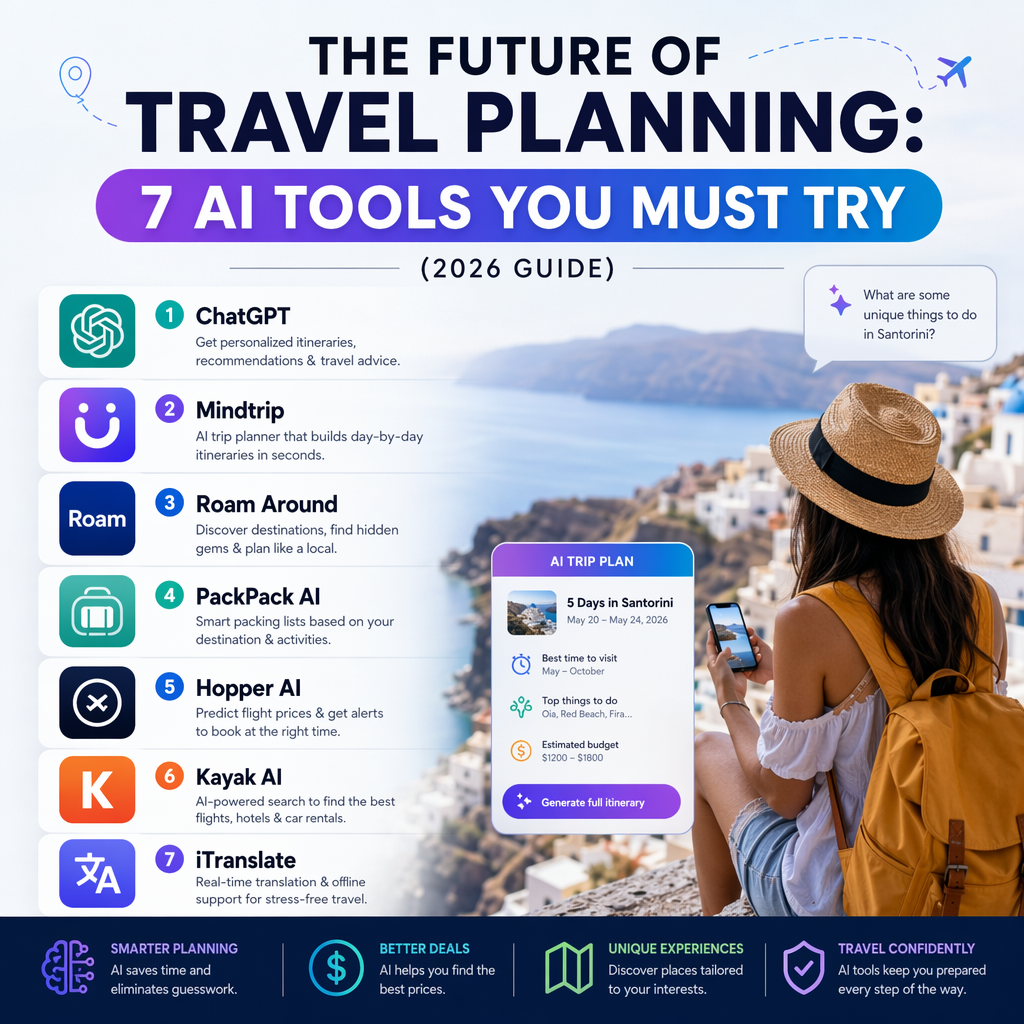
AI Tools Gamechanger. Planning is accelerated with AI tools that provide deep analysis of massive amounts of data, personalized recommendations and automate tedious work. They extend beyond basic chatbots to solutions that customize deals, detect price reductions, assist in interpreting insurance jargon, and recommend what to pack according to your schedule and tastes. Here are game changers — top tools transforming trip planning.
- Top AI travel tools: Hopper, Skyscanner with AI features, Google Travel with AI integrations, TripIt Pro, Rome2rio, Utrip, Kayak Explore, Roadtrippers AI features, Lumo, and local-focused apps with machine learning driven recommendations.
1. The Itinerary Crafter
Use AI planners to construct day-by-day itineraries that combine attractions, hikes, and meals. AI can map out routes, provide travel-time estimates, and include directions for every stop. Add can’t miss locations such as the Indianapolis Motor Speedway Museum or Eagle Creek Park as recommended destinations. Let the tool rework days when weather or newfound enthusiasm arise mid-chat and it will rebalance time and transit choices. These planners highlight packing necessities by activity, so you don’t overpack for a city getaway or a multi-day hike.
2. The Budget Optimizer
AI tools transform the experience with total trip cost estimates that pull fares, hotels, and car rentals into one view. They can create basic tables displaying price gaps for roundtrip flights, minivan rentals, and hotels with various booking functions. Set budget, travel style, and dates to receive personalized cost-saving suggestions, like alternative airports or night-shift layovers. Track spending as it happens and receive instant notifications for bargains or unexpected price spikes. Watch out for biases in data sources and cybersecurity risks when connecting payment information.
3. The Real-Time Assistant
AI chatbots respond to flight times, gate information, and dinner availability instantaneously. They track flight status, alert you to delays, and recommend rebooking routes or alternate connections via text or email. If plans shift, get immediate local restaurant or activity suggestions, depending on where you are. These assistants eliminate friction and free travel pros to deliver more higher-touch services.
4. The Hidden Gem Finder
AI reveals hidden gems and local attractions, trails and eateries based on reviews and feedback from users. Request quirky lists in unknown cities or kid-friendly and halal options. The tool filters through rankings and reviews to showcase genuine experiences not found on popular lists.
5. The Experience Matchmaker
Feed in flavors of adventure, culture or recuperation. AI customizes destinations, activities and food to match. It suggests group excursions, day trips, or romantic dinners based on diet and accessibility preferences. Get balanced plans that blend sights and downtime, and free trials help you try what works best. AI might move work around, but it generates new work, particularly in the realm of human service.
The AI Personalization Engine
Our AI personalization engine connects traveler data, behavior, and feedback into a single continuous profile to provide personalized planning at scale. It can remember past trips, favorite hotels, preferred cabin classes, and dietary requirements and automatically apply those details to future recommendations without you needing to re-enter them. This allows platforms to simultaneously serve millions of travelers with individual preferences while liberating staff from mundane lookups.
Think of AI chatbots as blazing-fast context-aware search engines. They take a prompt – “weekend beach escape with family, under 2,000 USD, kid-friendly activities” – and return ranked options that reflect preferences they have saved. As users rate hotels or like or skip activities, the engine fine-tunes its model and future selections. This feedback loop transforms periodic inputs into persistent learning, so suggestions improve after every journey.
The engine grows selection by exposing users to options they wouldn’t discover otherwise. Out of visit history and seasonality, it can recommend hidden gem beach towns in shoulder season or food tours for daredevil foodies. These recommendations add trip diversity and maintain interest. The engine can promote recommendations that align with individual behavior while stepping out and including some new stuff to expand horizons.
Adaptability is key. For solo travelers, it can prioritize social hostels, walking tours or communal dinners. For families, it values short transfers, kids’ menus and safe activities. For gastronomy-minded travelers, it highlights market walks, reservation-only restaurants and local food tours. Real-time updates allow the engine to adjust an itinerary on the fly by rerouting around a storm, suggesting indoor substitutes, or recommending a different train if there is a delay.
Behind the scenes, AI pulls together data from reservations, loyalty systems, customer service logs and third-party reviews to remove silos. It automates admin—booking confirmations, visa reminders, itinerary syncing—so human agents focus on relationship building and bespoke touches. Brands deploy AI agents to leave behind static lists and instead provide ongoing, individualized journeys that cultivate loyalty. With roughly 70% of US travelers already leveraging AI to plan on the go, this engine is turning into the pragmatic heart of today’s travel.
Human vs. Machine

AI tools accelerate tasks that used to take hours. They scrape prices, schedules and user reviews from dozens of sources in seconds, aggregate choices and display side-by-side information. This makes them perfect for early-stage research, price checking, and constructing skeleton itineraries for multi-city trips. Machines can run through thousands of possible routings, check visa rules and flag travel advisories faster and with fewer mistakes than a single human working alone.
AI Efficiency
AI searches, sorts, and ranks options across flight, hotel, and ground-transport databases in a flash. It reduces planning time by automating forms, filling in traveler details, and suggesting routes based on constraints like budget, time, and layover length. AI processes massive amounts of data to generate bite-sized summaries—rate trends, best-value days, and bundled itineraries—that enable travelers to easily compare options. It works 24/7, and last-minute changes, rebooking, or emergency reroutes can be done on the spot by chatbots or automated systems.
Human Empathy
Humans read tone, sense discomfort and inquire with follow-ups about who you’re traveling with, what “special” translates to for you, or the value of relaxation versus activity. Travel agents reminisce about previous journeys and recommend that hidden-away little gallery or that peaceful morning market to spark the moments machines can overlook. They can gauge crowds from local knowledge and discern by experience when a hotel’s pictures are deceptive. In charged moments like broken connections or medical scares, agents provide soothing, flexible assistance and comfort in ways that fully automated services rarely equal.
The Hybrid Future
Best practice marries machine speed to human judgment. Employ AI to assist with research, draft itineraries and bookings for time savings. Then bring an expert or concierge in to refine details: special-access requests, accessibility needs, or tailoring pacing. Look for companies that combine AI dashboards with human advisors. They will allow the algorithms to do the heavy lifting while the humans do the nuance and trust building. Travelers who rely on both receive fast, wide-ranging suggestions and the human nuance required for genuinely unforgettable and robust journeys.
Navigating the AI Landscape
AI tools for travel planning now span a wide range of functions: inspiration, itinerary building, price forecasting, local recommendations, and booking facilitation. Evaluate tools by feature set, data sources, accuracy, and user experience. Check whether a planner uses real-time feeds, such as flight and hotel inventories, crowdsourced reviews, or static knowledge bases. Tools that cite sources and show update timestamps usually offer more reliable results. Test response speed, mobile usability, and how well the tool adapts when you change constraints like budget or travel dates.
Your Data
Protect your personal information by restricting what you share to what’s required to plan rather than book. AI tools cram in search history, preference tags (food, activities), location, and sometimes passport or payment info when integrated with booking engines. These data are leveraged to customize itineraries and suggestions. Check privacy policies for retention and third-party sharing. Opt out of analytics or marketing if you can. Never type in your passport number or national ID or full payment details in chat prompts. Only transact through secured booking pages. For frequent use, register with very limited profile information and use pseudonyms for preference labels if you want less trackable history.
Your Prompts
Checklist of common prompt mistakes to avoid:
- Vague goals with no dates or price limits.
- Missing traveler details such as age or accessibility needs.
- Overlong, mixed requests that merge planning and booking steps.
Clear prompts that work:
- Three-day cultural itinerary in Lisbon for two adults, €150 to €250 per night, emphasis on modern art and vegan cuisine.
- “7-day adventure holiday in Costa Rica for 1 person on a €1200 budget includes 1 guided canopy tour and 1 lesson in surfing.”
Try different prompt styles: narrow constraints for specific itineraries and open-ended prompts for inspiration to exploit “destination less” searches. Try the tool out to check whether it suggests vegan and LGBTQ-friendly zones or contemporary art venues when queried.
Your Judgment
AI can overlook niche choices or insider advice and provide incorrect or biased information, so always double check addresses, booking links and opening hours on official sites. Cross-reference suggestions with reliable sources and local agents. As with any AI-generated advice, temper it with your personal needs, physical health limitations, and travel objectives. An AI won’t know a traveler has mobility issues unless you tell it. Apply human judgment prior to any final reservations. Gen Z and Millennials accept AI planners more frequently, 53% and 57% respectively, but even they combine AI with human guidance.
The Future of AI Travel
AI will transform the way we plan and experience trips by incorporating smarter tools at every stage. Real-time translation will empower travelers to converse and read in local languages while on the move, reducing friction at markets, transit hubs, and hotels. Voice-activated planning will allow users to create or modify itineraries without using their hands,
which is helpful when you’re busy or when keyboards aren’t feasible. Immersive experiences, such as virtual site visits and augmented reality guides, will allow travelers to preview hotels, neighborhoods, and routes prior to committing.
AI will integrate more closely with airlines, hotels and travel platforms to smooth out booking. Anticipate API-level connections that coordinate itineraries, seat switches and baggage notifications across vendors. For instance, a flight delay may activate AI that rebooks connections, alerts hotels and searches for replacement transport in a single stream.
Hotels might leverage AI to align room configurations with guest preferences extracted from previous visits. Airlines could provide tailored rebooking choices considering loyalty tier and travel record.
Smarter models will deal with challenging group trips in a more competent manner. AI will plan multi-leg, multi-person itineraries balancing preferences, budgets, and visa rules. It will surface trade-offs, such as longer layovers for lower cost or adding a night to avoid risky connections and give you transparent options.
Still, accuracy issues persist. Some tools deliver 70 to 80 percent reliable information, which can lead to errors in visas, schedules, or local rules. For high-stakes plans, humans are still vital for empathy, negotiation, and on-the-ground hacks, particularly for clan travel or last-minute disruptions.
Employ AI to slice through selection excess. Algorithms can sift through options by priorities, such as price, sustainability, or accessibility, and generate curated shortlists. That cuts through hours of comparing dozens of listings and gets travelers to options that fit their needs more quickly. At the same time, balance environmental consequences and cybersecurity concerns. AI systems use energy and can leak personal information if unprotected.
Travel advisors will probably benefit from AI automating admin work, allowing them to focus on relationship-building and creating richer personalization. As tools continue to develop quickly, new options will emerge regularly. Subscribe to vendor updates and industry newsletters to remain up to date.
Conclusion
AI now makes travel planning faster, smarter, and more personal. It pulls flight and hotel options in seconds. It detects price trends and discovers routes that maximize savings and time. It learns traveler preferences and recommends trips matching actual needs, such as family trips that minimize transit time or solo trips with peaceful places and excellent cafes. Human judgment remains essential for safety, ethics, and empathy.
Leverage AI to refine options, validate concepts, and automate mundane tasks. Test a few tools side by side. Compare results for the identical route and date. Select the tools that fit your style and budget. Are you prepared to alter how you plan your journey? Give one AI tool a try on your next jaunt and experience the change.
Frequently Asked Questions
What are the top benefits of using AI for travel planning?
AI saves time, finds better deals and personalizes suggestions. It crunches big data fast to fit flights, hotels and activities to your preferences and budget.
Which AI tools should travelers try first?
Begin with AI trip planners, price prediction apps, and chatbot assistants from reliable sources. Opt for tools with robust reviews, transparent data usage, and clear refund or change policies.
How accurate are AI travel price predictions?
Most models are accurate within a useful range, typically forecasting near-term price tendencies. Accuracy varies by route and season, so use predictions as a guide, not a promise.
Can AI replace human travel agents?
AI accelerates planning and personalization. Human agents continue to provide value for complex itineraries, negotiation, and expert local knowledge. The best results mix the two.
How does AI protect my personal data while planning trips?
Trusted tools utilize encryption, anonymization, and transparent privacy policies. Verify permissions, data retention policies, and whether the service shares data with third parties prior to usage.
Will AI make travel cheaper overall?
AI can save you money by identifying discounts, promoting off-peak alternatives and optimizing routes. Savings vary based on flexibility, timing and how many tools you utilize.
How do I choose a trustworthy AI travel tool?
Seek out transparent data practices, reputable developers, independent reviews, and customer support. Favor tools that justify their advice and allow you to dictate data use.